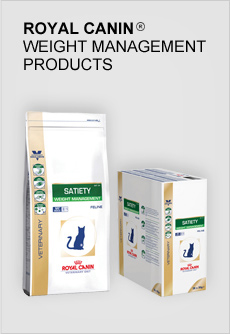
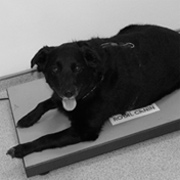
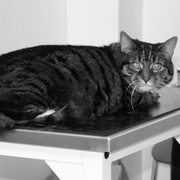
- About the Clinic
About the Clinic
The weight management clinic is the first of its kind in Europe, and aims to provide an outstanding service to clients and veterinary surgeons alike. Cases referred to the clinic will be investigated and treated in the same professional manner as with all of the referral services the hospital provides. Given that this is a referral service, we can provide more than would normally be available through your usual veterinary practice.
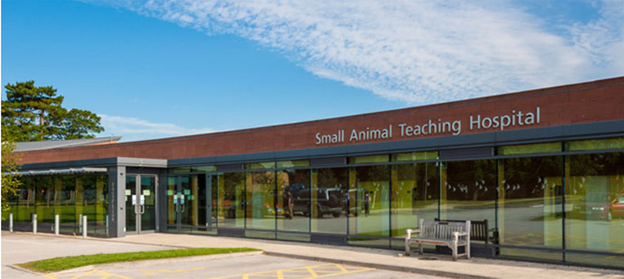
- Additonal benefits
A thorough consultation and clinical evaluation . The initial consultation usually lasts 60 to 90 minutes, and covers all aspects of your pet’s lifestyle and previous medical history
Blood tests and urine analysis. These tests check the health status of your pet, and assess whether there may be related problems (e.g. hypothyroidism – under-active thyroid gland).
Blood pressure measurement. All pets have their blood pressure checked at the time of the consultation.
DEXA scan. With our DEXA scanner (not available at standard veterinary practices), we can accurately measure the amount of adipose (fatty) tissue present in the patient and, thus, calculate how overweight they really are. This is more precise than the standard estimates of obesity.
Regular follow-up contact. Because we employ a veterinary nurse who runs the clinic full-time, we maintain regular contact to ensure that the weight loss programme is a success. This includes telephone contact and regular ‘weigh-in’ sessions, all of which are free-of-charge.
Reports to your veterinary surgeon. We keep your usual veterinary surgeon informed, by writing reports after the initial and final visit.
Subsidised service. All of the consultations and tests directly related to the weight problem are free-of charge. In addition, you also get the first bag of the diet food free!
- Why are we doing this study?
It is estimated that approximately 40% of the UK pet population is either overweight or obese and, as in people, rates appear to be increasing over time. Like in human obesity, weight problems in pets pose a serious threat to health, and can lead to many other health disorders such as diabetes, arthritis, breathing problems, and incontinences, to name just a few.
Obesity can also decrease your animal’s life span: your pet only has to be 20% over their normal body weight to be “clinically obese”. Unfortunately, limited data still exist on the causes and consequences, and control of obesity remains problematic. Due to the major health concerns that surround obesity, the Small Animal Teaching Hospital at Leahurst has opened the ROYAL CANIN® Weight Management Clinic. This is a referral service for both dogs and cats that are overweight. By introducing the clinic in the North West, which is the first of its kind in Europe, we hope to increase the profile of the companion animal obesity condition.
We wish to encourage owners to recognise this growing problem and take their pets to their veterinary surgeons to seek advice. By running this clinic we are hoping to address the direct health concerns linked to obesity and improve our understanding of the global problem of companion animal obesity. We are happy to enroll any overweight cats and dogs referred from their Veterinary Surgery, with or without other concurrent disease problems. Our preference is to recruit cases, which have not yet commenced a weight reduction regime. However, challenging or problem cases are also suitable e.g. where progress has been poor or problematic. Cases already making good progress on a weight reduction program would not be suitable for referral.
The ROYAL CANIN® Weight Management Clinic was established to improve the health and wellbeing of the pets it cared for, by investigating and treating their obesity problems. By enrolling as many patients as possible to our clinic, and studying their weight management regime, we hope to generate important data about companion animal obesity. It is hoped that this information will improve our understanding of the condition and how it can best be managed.
- What will happen during the first appointment at the clinic?
The two people who you will see during your appointment are Dr Alex German and Mrs Shelley Holde, the two co-ordinators of this project. The initial appointment will be divided into four parts:
The initial part will be with the clinic nurse who will discuss your pet’s current diet and exercise, will weigh your pet, measure your pet with a tape measure, body condition score and take photographs.
The second part of the consultation is with Dr Alex German, and he will perform a full medical examination of your pet and take a full clinical history.
The third part will be when your animal is admitted into the hospital and we check blood pressure, take blood samples, test the urine sample, take more photographs, then sedate your pet and perform the DEXA scan.
The final part will include discussion of the DEXA scan results. We will also provide you with a full weight loss program for your pet including the recommended diet to start the weight loss (free of charge). We will also talk you through the ideal exercise plan for your animal. All information discussed will be given to you in a written format so you can take everything home and keep for reference. You will also be given diaries to complete on a daily basis.
- What happens after my pet has completed their weight loss plan?
When your animal has completed the weight loss phase and has reached an agreed ideal weight we will repeat the initial appointment again including blood samples, photographs, blood pressure and the DEXA. You will be provided with a selection of before and after pictures to keep for comparison. We will then advise on the most suitable plan post weight loss and support you through this second phase. Like humans keeping the weight off once an ideal weight has been achieved, can also be difficult so it is important to continue with all the advice you have been give and the clinic will continue to support you and your pet for as long as you need us to.
- What are the benefits to my pet and to me for participating in the study?
The staff that run the clinic are very experienced in dealing with weight problems in pets. Successful weight loss on the programme is likely to improve the health and wellbeing of your pet, and help he/she to live a happier and more contented life. In addition, you will not be charged for any of the investigations performed that are related to the weight clinic, for the follow-up weight check appointments, and for the first food we supply.
- How does the study benefit from my pet attending the clinic?
By agreeing to participate in the study, you will give permission for the data collected during the study to be used in examining current obesity trends. Data provided in the initial information we take from you, the blood and urine results and the DEXA reports can be analysed in conjunction with those from many other pets with similar problems. This helps us to spot key aspects in terms of common causes, problems and reasons for positive and negative outcomes. We can also assess the success of current management strategies to determine what works best and what is less successful. This information is vital in informing us as to what the current ‘best practice’ for obesity management should be. In addition, with your permission, any surplus blood, urine or faeces (e.g. after the clinical assessments have been performed for your pet’s benefit), will be stored rather than being discarded. These samples will be archived for up to six years, in the first instance, and may be used in future projects. The samples will anonymised so that it will not be possible to obtain your personal details from information on the tube. The aim of any future projects that use these samples will be to learn more about causes and consequences of obesity and associated disorders). We hope that the information gained will be of benefit to pets in the future who suffer from similar problems
- What happens to the data on my pet?
For the purposes of the study all of the data collected about your pet will be anonymised (so that it is not possible to determine your personal details) and stored in an electronic database. As with the samples, the data will be kept for six years in the first instance. Only the people working on the project will be allowed to access the data from the study. The study findings will be published in veterinary and scientific journals and also in the non-veterinary animal press. This allows us to disseminate the novel insights that we have gained to the wider veterinary community and to the pet- owning public. It will not be possible to identify either you or your pet from these articles. Finally, under the Data Protection Act, you can at any time ask for access to the information you provided, and can also request the destruction of that information if you wish.
- What next?
If you would still like to have your pet referred to the clinic then please contact your Veterinary Surgery so they can do this for you.