How to Get a Free Service Dog: Funding, Training, and Legal Steps
Key Takeaways
- If you've been wondering how to get a free service dog, this guide will walk you through every step, from understanding eligibility and finding nonprofit programs to navigating funding options and knowing your legal rights.
- Several nonprofit organizations provide fully trained service dogs at no cost to qualified individuals with disabilities.
- Training a service dog can cost upwards of $30,000, but these organizations cover that expense through donations, grants, and fundraising.
- There is no universal federal program supplying free service dogs to all eligible individuals, so obtaining one typically means navigating nonprofit programs that absorb training costs on your behalf.
If you’ve been wondering how to get a free service dog, this guide will walk you through every step, from understanding eligibility and finding nonprofit programs to navigating funding options and knowing your legal rights.
Can I get a free service dog?
Yes. Several nonprofit organizations provide fully trained service dogs at no cost to qualified individuals with disabilities. Training a service dog can cost upwards of $30,000, but these organizations cover that expense through donations, grants, and fundraising. There is no universal federal program supplying free service dogs to all eligible individuals, so obtaining one typically means navigating nonprofit programs that absorb training costs on your behalf.
It is also worth noting right away: the ADA does not require service dogs to be registered or certified. Any website selling you an ID card or certificate is not providing something the law demands.
Who qualifies for assistance dogs and service dogs?
Under the Americans with Disabilities Act, service dogs must perform specific tasks directly related to an individual’s disability. Applicants must demonstrate a disability for service dog need, and the dog’s trained work must mitigate functional limitations caused by that disability.
Common qualifying disabilities include:
-
Physical disabilities – mobility impairments, balance disorders, seizure conditions
-
Sensory disabilities – vision loss, hearing loss
-
Psychiatric disabilities – PTSD, severe anxiety, major depressive disorder
-
Intellectual and developmental disabilities – autism spectrum disorders in children and adults
Service dogs assist with both physical and psychiatric disabilities, and the types of tasks they perform are as varied as the individuals they serve. Emotional support animals, by contrast, do not require specialized training and lack the same legal rights as service dogs under the ADA.
Eligibility criteria are defined at the federal level by Department of Justice regulations (28 C.F.R. §35.136 and §36.302(c)), but note that rules and available programs vary by state. Some states maintain voluntary registration systems, while others offer specific state-level grants or allowances. Always check your state’s disability services agency for local resources.
How do nonprofit programs provide free assistance dogs?
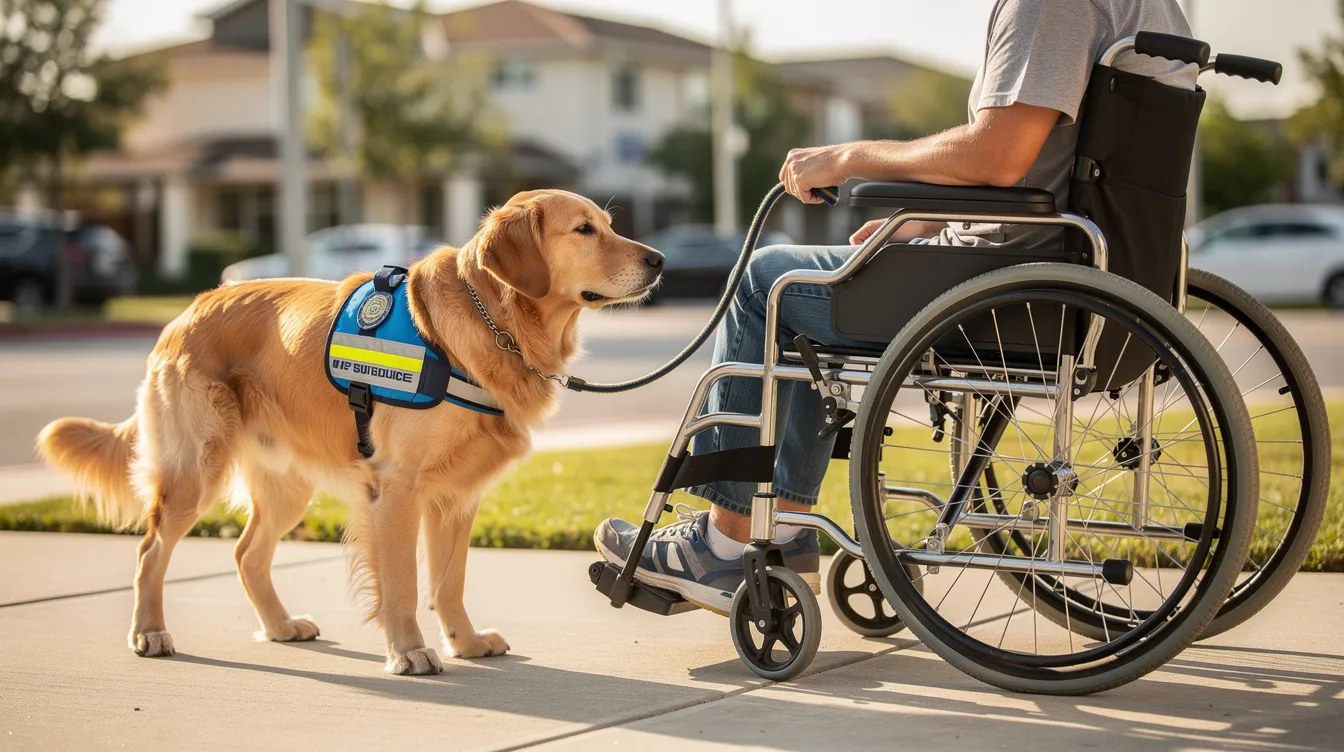
Organizations offering free service dogs rely on donations, grants, and fundraising to cover the substantial costs of breeding, raising, and training each dog. Obtaining a free service dog often involves navigating these nonprofit programs, which have structured application and placement processes.
Typical application steps
Most programs require applicants to complete detailed applications that cover:
-
Nature and documentation of the disability
-
Specific needs for a service dog, including the tasks required
-
Home environment and ability to care for a dog
-
Daily routines and daily challenges the dog would help address
-
Proof of a stable living situation
The application process for service dogs generally involves interviews and home evaluations. Non-profit organizations often require proof of stable living situations, and some programs have age requirements that restrict eligibility based on the applicant’s age.
Waitlists for placement
High demand leads to waitlists for service dogs commonly spanning 12 months to over 3 years. Waitlists for trained service dogs can be up to two years depending on the organization and type of service needed. Programs with limited resources or highly specialized training, such as psychiatric service dog training, tend to have the longest waiting periods.
Fundraising or applicant contributions
Even when a program provides the dog free of charge, some expect recipients to cover travel expenses to training facilities or to fundraise a portion of ongoing costs. However, organizations like Canine Companions and Dogs for Better Lives state they provide dogs and training fully free to clients. Always ask about any expected contributions before you apply.
Accreditation verification
To ensure quality, verify that any organization you consider is accredited by Assistance Dogs International (ADI) or the International Guide Dog Federation (IGDF). ADI has 167 accredited member organizations globally. Accreditation requires adherence to strict standards for training, ethical treatment, health protocols, and follow-up support. Organizations must be members of Assistance Dogs International to qualify for many grant programs.
How do I get service dog training?
Service dogs undergo extensive training for specific tasks before they are placed with a handler. There are two primary paths: receiving a trained dog from a program or training your own.
Receive a trained dog from a program
To obtain a service dog through a nonprofit, applicants must confirm medical and legal eligibility. Here is what you should prepare:
-
Medical documentation – a letter from your physician or clinician describing your disability, functional limitations, and how a service dog would help
-
Proof of handler capability – applicants must demonstrate the ability to safely handle the dog in public, manage food and veterinary care, and maintain a safe environment
-
Personal references – some programs request references from families, caregivers, or community members
When evaluating a program, ask about:
-
ADI or IGDF accreditation status
-
Training standards and methods used
-
Matching criteria (temperament, size, task specialization)
-
In-home or community training phases
-
Follow-up support after placement
Most programs include a matching assessment, a trial period where the dog lives with you, and handler education sessions before the placement is considered complete.
Train your own service dog
The ADA permits individuals to train their own service dog without using a professional program. However, this path requires significant commitment, and service dog training can take 1 to 2 years for self-trained dogs.
Core milestones to achieve:
-
Basic obedience – reliable responses to commands in all public settings
-
Task training – the dog must perform specific work tied to your disability (for example, retrieving dropped items, providing balance support, interrupting a PTSD episode, or alerting to medical events)
-
Public access behavior – calm and controlled behavior in crowded, novel, and high-stimulus environments
-
Health compliance – current vaccinations, spay/neuter as appropriate, regular veterinary care
Hiring qualified trainers for oversight is strongly advised, especially for public access compliance. Under the ADA, a dog may be excluded from a public space if it is out of control and the handler cannot regain control, or if it is not housebroken. Professional training of a service dog can exceed $20,000, but the investment in expert guidance reduces the risk of washout.
What funding options exist for free or reduced-cost service dogs?
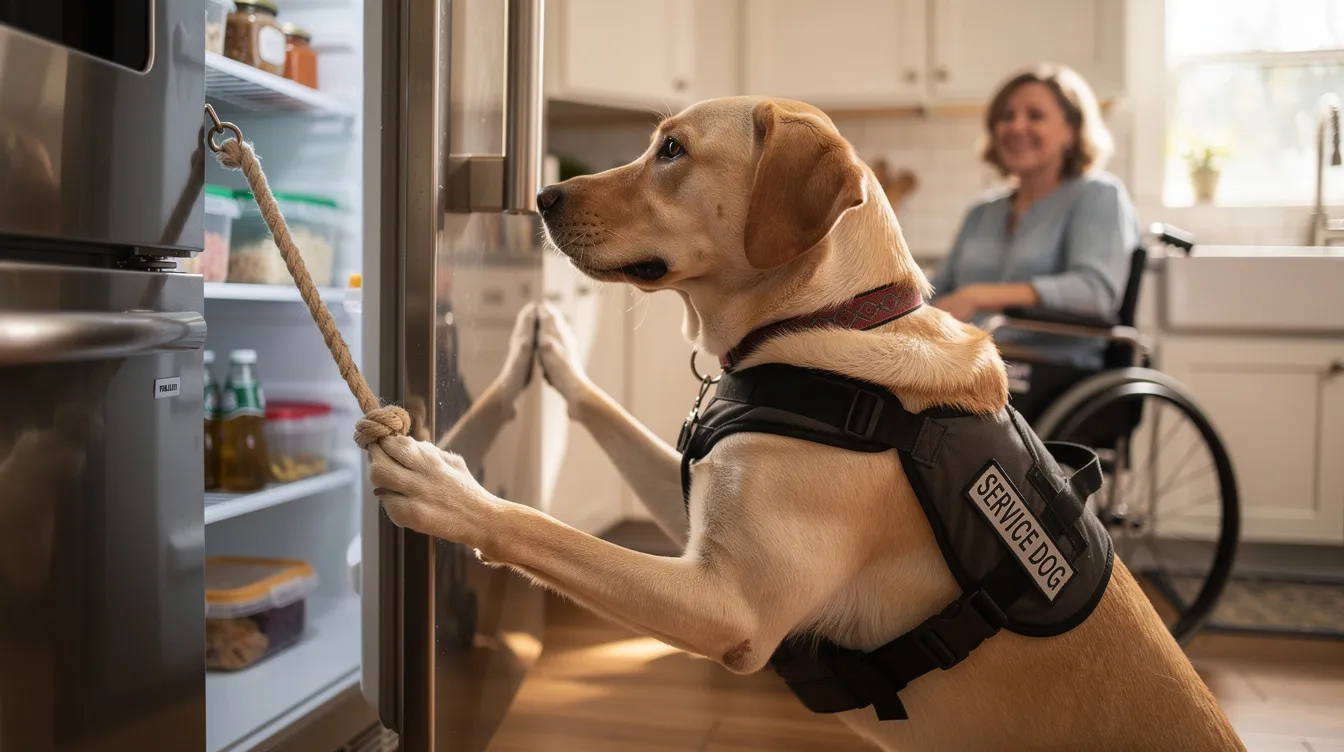
Even when a program doesn’t cover every cost, several funding options can help bridge the gap. Service dogs can cost upwards of $30,000 to train through professional programs, so financial assistance is essential for many people.
Grants and charitable foundations
-
The Patterson Foundation funds organizations providing service animals. Patterson Foundation grants can reach up to $35,000 for puppy raising and up to $10,000 for program support, depending on the organization’s goals and scope.
-
The Service Dog Connection Fund provides financial assistance for service dog training. Approved applicants for the Service Dog Connection Fund must pay a $20 application fee, and applications are reviewed by a fund advisory committee.
-
PetSmart Charities and DAV Charitable Service Fund – these organizations offer grants specifically for disabled veterans, with awards ranging from $1,500 to $15,000.
Crowdfunding and community fundraisers
Hundreds of individuals each year fundraise through platforms like GoFundMe or organize community events to cover costs associated with acquiring, training, and caring for a service dog. Local schools, civic groups, and churches can also be a sign of community support when you share your story.
State assistance programs
Some states offer direct financial support. For example, California’s Assistance Dog Special Allowance provides monthly payments to recipients who have assistance dogs. Check your state’s disability or social services agency for similar resources.
Veterans benefits and VA support
Veterans can receive support for service dogs through VA benefits. The VA offers the Veterinary Health Insurance Benefit (38 C.F.R. §17.148) for veterans whose service dogs come from ADI- or IGDF-accredited organizations. This benefit can cover preventive care, prescriptions, chronic illness treatment, and travel for training, with an average annual veterinary cost per dog of approximately $1,100.
The proposed Service Dogs Assisting Veterans Act would expand this further, with estimates suggesting 1,000 veterans could receive service dogs under a pilot grant program.
What are my legal rights and responsibilities as a handler of service dogs?
Service dogs are protected under the Americans with Disabilities Act, and understanding your rights prevents unnecessary barriers. Here are the key federal protections.
ADA public-access rules
Under 28 C.F.R. §35.136 (Title II) and §36.302(c) (Title III), businesses and public accommodations must allow service animals in all areas open to the public. Staff may ask only two questions when the dog’s purpose is not obvious:
-
Is the dog required because of a disability?
-
What task has the dog been trained to perform?
They cannot require documentation, certification, or a demonstration of tasks. A service dog may only be removed if it is out of control or not housebroken.
HUD housing rules
Under the Fair Housing Act, housing providers must allow service animals as a reasonable accommodation, even in buildings with no-pets policies. They cannot charge pet deposits or fees specifically for service animals. When the disability or need is not obvious, they may request limited documentation, but they cannot demand full medical records.
DOT air travel rules
Under the Air Carrier Access Act (14 C.F.R. Part 382), airlines may require specific forms and veterinary documentation for service animals. Rules differ from the ADA’s simpler framework, so always check current DOT consumer guidance before you fly.
Your responsibilities
Along with these rights come responsibilities. You must keep your dog under control at all times, ensure it is housebroken, and manage its behavior in public spaces. Your ability to handle the dog responsibly is what sustains public trust in the service dog system.
How do I avoid scams and registration sellers?
The ADA does not require any registration, certification, or ID for service dogs. Any organization or website charging you for an official-looking certificate, vest, or registry listing is selling something with no legal standing.
To protect yourself:
-
Never pay for a “service dog registration” or “certification”
-
Verify any training organization through the ADI directory, which helps find reputable service dog providers
-
Be skeptical of programs that guarantee instant placement with no application process
-
A legitimate organization will never tell you that purchasing an ID card makes your dog a service dog
Step-by-step checklist to obtain a free service dog
If you’re ready to begin the process of acquiring a free service dog, here is a practical checklist to keep you on track.
|
Step |
Action |
|---|---|
|
1 |
Research ADI-accredited assistance dog programs that serve your disability type and geographic area |
|
2 |
Prepare medical documentation – gather clinician letters, disability verification, and any records programs request |
|
3 |
Apply to multiple nonprofit providers to expand your chances, since each organization has limited slots |
|
4 |
Apply for grants and fundraising support (Patterson Foundation, Service Dog Connection Fund, state programs) |
|
5 |
Consider self-training with professional oversight if program waitlists are too long for your unique needs |
|
6 |
Plan for veterinary care and ongoing costs – even a free dog requires food, equipment, and annual vet visits |
|
7 |
Arrange public-access training to ensure your dog meets ADA compliance before full placement |

Matching and placement tips
Once accepted into a program, the matching and placement phase is where the impact on your life truly begins.
-
Trial period – request a trial period with the matched dog. This lets both you and the dog adjust and ensures a happy, productive partnership. Not every match works on the first try, and reputable programs will rematch if needed.
-
Handler training – spend time learning public-access etiquette, leash handling, and task reinforcement. This is not easy, but the independence a well-matched service dog provides is a gift that will be deeply appreciated.
-
Ongoing follow-up – join your program’s alumni community for continued support. Many organizations offer check-ins for the life of the dog’s working career, helping you navigate new situations and maintain quality of work together.
Is this content legal advice?
This post provides general information about service dog laws, programs, and funding. It is not legal advice. If you have specific legal questions about your rights, eligibility, or a dispute with a business or housing provider, consult a qualified attorney or contact your regional ADA center.
Frequently Asked Questions
Can I get a service dog for free through a nonprofit?
Yes. Organizations like Canine Companions and Dogs for Better Lives provide fully trained service dogs at no cost to qualified individuals. However, eligibility requirements are strict, and you will need to complete an application, provide medical documentation, and often wait 1 to 3 years for placement.
Do I need a doctor's note to qualify under the ADA?
The ADA does not require medical proof for public access with a service dog. Businesses may only ask the two permitted questions. However, nonprofit programs and housing providers may separately request medical documentation to verify your disability as part of their eligibility process.
Are ID cards required for service dogs?
No. The ADA does not require any ID card, vest, certificate, or registration for a service dog. Any company selling these items is not providing something legally necessary. Read program materials carefully and avoid paid registries.
Will housing providers have to allow my service dog?
Under the Fair Housing Act, housing providers must allow service animals as a reasonable accommodation, even in no-pets housing. They cannot charge pet-specific fees or deposits. When the disability is not obvious, they may request limited supporting documentation.
How long do program waitlists usually take?
Waitlists vary significantly depending on the organization, your location, and the type of service dog needed. Most applicants should prepare for a wait of 12 months to over 3 years. Contact each program directly for their current estimated time to placement, and apply to more than one to improve your timeline.
References
- U.S. Department of Justice, "ADA 2010 Revised Requirements: Service Animals," 28 C.F.R. §35.136 and §36.302(c). https://www.ada.gov/service_animals_2010.htm
- U.S. Department of Transportation, "Service Animals and Air Travel," 14 C.F.R. Part 382 and consumer guidance. https://www.transportation.gov/individuals/aviation-consumer-protection/service-animals-air-travel
- U.S. Department of Housing and Urban Development, "Assistance Animals and Reasonable Accommodations," HUD guidance and FAQs. https://www.hud.gov/program_offices/fair_housing_equal_opp/assistance_animals
- Assistance Dogs International, "Standards and Member Directory," program standards and accredited providers. https://assistancedogsinternational.org/standards/
- California Department of Social Services, Assistance Dog Special Allowance (ADSA) factsheet and application forms. https://www.cdss.ca.gov/inforesources/assistance-dog-special-allowance

Pet Slimmers Editorial Team
The Pet Slimmers editorial team writes practical, evidence-based guidance on companion animal weight management, drawing on the work of the ROYAL CANIN® Weight Management Clinic at the University of Liverpool.
This article is for general information only and is not a substitute for professional veterinary advice. Always consult your veterinary surgeon about the health of your pet.