What Qualifies You for a Service Dog? (ADA Rules, Conditions & Next Steps)
Key Takeaways
- You qualify for a service dog if you have a physical or mental impairment that substantially limits one or more major life activities and a trained dog (or, in rare cases, miniature horses) can perform specific tasks to help with your disability. Criteria for qualifying for a service dog include having a disability and specific training.
- Not all disabilities qualify. Emotional support alone is not enough under the Americans with Disabilities Act. The animal must be task-trained to perform work that alleviates the handler's disability symptoms, not just provide comfort by its presence.
- Both physical and psychiatric disabilities qualify if they meet functional impairment standards, including mobility issues, sensory loss, post traumatic stress disorder, and other conditions, as long as ADA criteria are met and tasks are directly related to the person's disability.
- There is no federal requirement for certification or registration of service dogs in the U.S. No vest, ID card, or online certificate is legally required. However, state and local laws may require general dog licensing and vaccinations for all dogs.
- The rest of this article covers who qualifies, how to document your disability, how to get or train your own service dog, and how laws like the ADA, Fair Housing Act, and Air Carrier Access Act protect you. Note that this article is general information, not legal advice.
You qualify for a service dog if you have a disability that substantially limits one or more major life activities and a dog can be individually trained to perform specific tasks that directly mitigate your disability. Both physical and mental conditions can qualify, but the animal must be task-trained, not just comforting.
This article walks you through who qualifies, which disabilities count, how to get or train a service dog, and which federal laws protect you.
What qualifies you for a service dog under the ADA?
Under the Americans with Disabilities Act, you qualify if two conditions are met: (1) you have a disability that meets the ADA definition, and (2) a dog can be individually trained to perform work or tasks that help with that disability. A service dog must be trained to perform tasks related to a disability. The work or task must alleviate or assist with the individual with a disability’s symptoms.
The ADA’s three key elements are:
-
Substantial limitation. You must have a physical or mental impairment that substantially limits one or more major life activities such as walking, seeing, breathing, sleeping, concentrating, or communicating.
-
Task connection. The dog must be trained to perform specific tasks directly related to your disability, not just general obedience.
-
Handler control. You must be able to care for and control the dog, whether through a leash, harness, or voice commands if your disability prevents physical tethering.
A person with epilepsy whose dog alerts and protects during seizures qualifies. Someone with PTSD whose dog interrupts panic attacks qualifies. A person suffering from impaired vision whose guide dog navigates obstacles qualifies.
Under ADA Title II and Title III, only dogs are recognized as service animals, with miniature horses as a narrowly defined exception subject to facility safety and space considerations. The ADA (including the 2010 DOJ regulations) does not list specific diagnoses. Eligibility is based on how the condition impacts daily life, not on naming a particular disease. Service animals are defined as dogs trained for specific tasks.
What disabilities qualify for a service dog?
Many, but not all disabilities qualify for a service dog. The determining factor is whether the condition substantially limits major life activities like walking, seeing, thinking, concentrating, sleeping, or regulating emotions.
Qualifying conditions generally fall into these categories:
-
Physical and sensory. Mobility impairments from spinal cord injury, multiple sclerosis, muscular dystrophy, severe arthritis, cerebral palsy, or limb loss. Visual impairments requiring guide dogs. Hearing loss requiring hearing dogs.
-
Neurological. Epilepsy and other seizure disorders, neurocognitive disorders, organic brain syndrome, and Parkinson’s disease.
-
Chronic medical. Diabetes (where diabetic alert dogs detect blood sugar changes), cardiac conditions, severe allergies, and other ongoing medical conditions.
-
Psychiatric and mental health. Serious mental disabilities such as traumatic stress disorder ptsd, severe anxiety disorders, bipolar disorder, obsessive-compulsive disorder, and major depressive disorder.
-
Developmental. Autism spectrum disorder and specific learning disabilities that substantially limit daily functioning.
Not all disabilities are visible. Many mental and neurological conditions qualify if they cause substantial limitations and can be mitigated by trained tasks, not just emotional support. A cosmetic disfigurement or mild condition that does not substantially limit functioning would generally not meet the threshold.
A medical or licensed mental health professional typically documents how the condition limits daily activities, even though the ADA itself doesn’t mandate a specific form of documentation in public-access settings.
How do mental disabilities qualify you for a psychiatric service dog?
A psychiatric service dog is a service dog specially trained to assist people whose primary disability is a mental or psychiatric condition. This includes conditions such as post traumatic stress disorder, major depressive disorder, bipolar disorder, OCD, and certain anxiety disorders. Mental illness that rises to the level of a disability under the ADA can qualify.
Mental disabilities can qualify if:
-
A licensed mental health professional diagnoses the condition (a licensed professional must diagnose mental health conditions for service dogs).
-
The condition substantially limits major life activities such as sleeping, concentrating, interacting with others, or self-care.
-
Specific, trainable tasks can mitigate those limitations.
Example tasks for psychiatric service dogs include interrupting self-harm behaviors, helping to provide deep pressure therapy during panic attacks, guiding the handler out of a crowd, waking the handler from nightmares, reminding the handler to take prescribed medications, or performing room checks for PTSD-related hypervigilance. Service dogs can perform crowd control for anxiety attacks.
The critical legal distinction: psychiatric service dogs are considered service animals under the ADA because they are trained to perform disability-related tasks. Emotional support animals provide comfort by presence only and therefore do not qualify as service animals under ADA public-access rules.
Airlines, housing providers, or workplaces may request documentation from a licensed professional when the need is not obvious. However, restaurants and most public accommodations generally cannot demand paperwork under ADA Title II and III. Staff can ask if the dog is a service animal required because of a disability and what task it performs, but staff cannot ask about the handler’s disability.
How do physical disabilities and mobility issues qualify for a service dog?
The ADA defines physical disabilities broadly. The ada definition covers any physiological disorder or condition affecting major body systems, including the neurological, musculoskeletal, cardiovascular, and special sense organs systems. This connects directly to how physical conditions create mobility issues and limit daily function.
Common qualifying physical conditions include:
-
Spinal cord injuries causing paraplegia or quadriplegia
-
Cerebral palsy and muscular dystrophy
-
Limb loss or amputation
-
Severe arthritis and Parkinson’s disease
-
Multiple sclerosis and similar progressive disorders
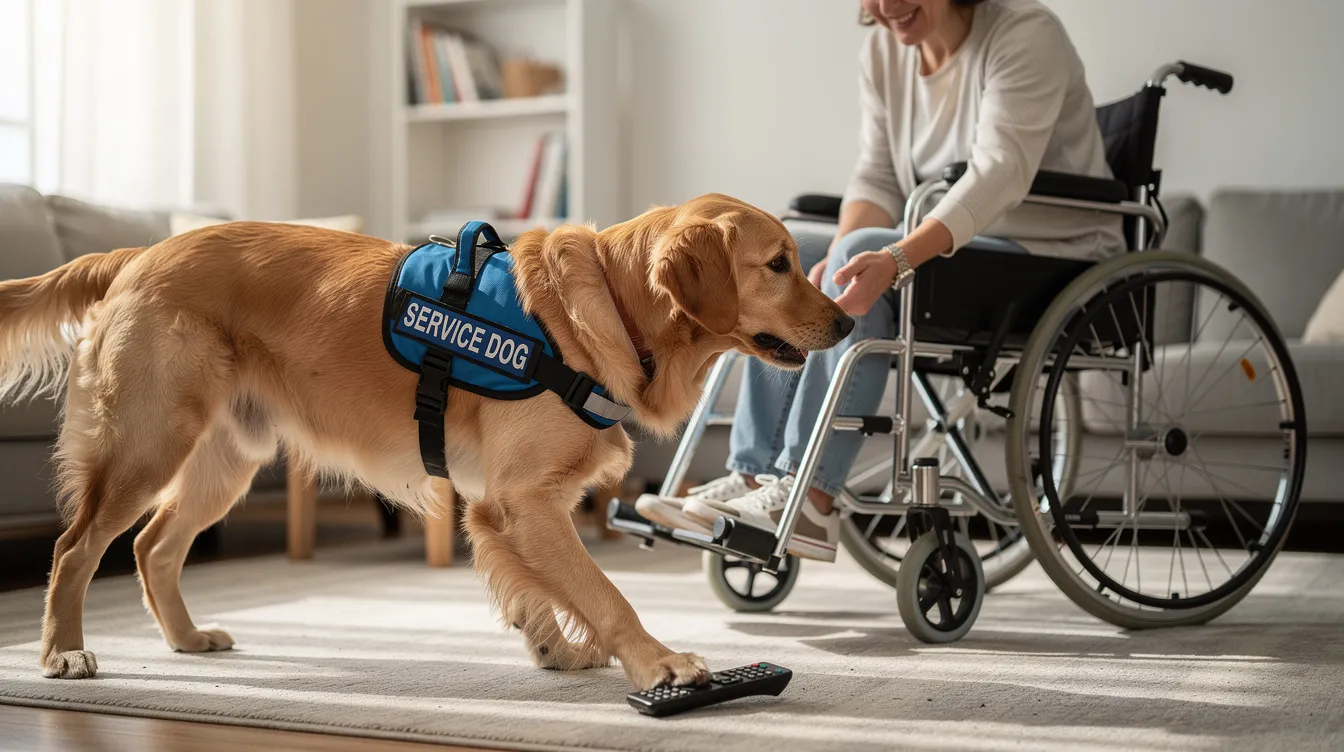
Service dogs assist individuals with physical disabilities like blindness, and service dogs can perform tasks for individuals with mobility impairments. Concrete mobility-related tasks include pulling a wheelchair, providing balance support, retrieving dropped items, opening doors, pressing elevator buttons, turning lights on and off, and helping a handler get up after a fall. Service dogs can retrieve dropped items for their handlers, and they can even help prepare food or retrieve medication from another room.
Guide dogs for blind handlers and hearing dogs for deaf or hard-of-hearing handlers are classic service dogs for physical or sensory impairments. Service dogs can guide people who are blind. They alert people who are deaf to important sounds like doorbells, fire alarms, and approaching vehicles.
If you have a person’s disability related to mobility or physical function, having a treating clinician document how your condition affects major life activities and how task-trained assistance would increase safety or independence is valuable when applying to training programs or requesting accommodations.
What types of service dogs and tasks are recognized?
“Service dog” is an umbrella term covering several task-based roles. The classification depends on the primary disability and core tasks the dog is trained to perform, not on breed or size. No specific breed requirement exists for service dogs, but the dog must have a suitable temperament.
Major types include:
|
Type |
Example Tasks |
|---|---|
|
Guide dogs |
Navigating obstacles, stopping at curbs, guiding around barriers for people with impaired vision |
|
Hearing dogs |
Alerting to doorbells, fire alarms, phone rings, approaching vehicles |
|
Mobility assistance dogs |
Pulling wheelchairs, opening doors, balance support, retrieving items |
|
Psychiatric service dogs |
Interrupting panic or dissociative episodes, deep pressure therapy, room checks |
|
Medical alert dogs |
Diabetic alert dogs detecting blood sugar changes, cardiac alert, allergen detection |
|
Autism support dogs |
Preventing wandering, calming during sensory overload, providing tactile grounding |
Service dogs are trained to perform specific tasks for disabilities. Under the ADA, tasks must be individually trained and directly related to the handler’s disability. General obedience or simply “being calm in public” is not, by itself, a qualifying task. Service dogs assist people with various tasks across different locations.
Miniature horses may, in rare cases, perform similar guiding or mobility tasks where a dog is not suitable. The same task-based standard applies, subject to facility safety and space considerations.
Do emotional support animals or ESAs qualify as service dogs?
Emotional support animals, comfort animals, and therapy animals do not qualify as service dogs under the ADA because they are not individually trained to perform disability-related tasks. Emotional support, therapy, or comfort dogs are not considered service animals under ADA. Emotional support animals do not qualify as service dogs under the ADA.
ESAs can still be important for emotional support and may receive separate protections under the Fair Housing Act for housing accommodations. Some state rules offer limited additional coverage. But support animals and therapy dogs lack broad public-access rights in restaurants, stores, and similar public accommodations.
Here is the key distinction:
-
Service dog = dog trained to perform specific tasks, allowed in most public places under the ADA. Service dogs have legal access to public places under the ADA.
-
Emotional support animal = provides comfort by presence, not granted the same access. Emotional support animals provide comfort but lack specific training. Emotional support animals do not have the same legal protections.
-
Therapy dogs = therapy animals that visit facilities to comfort others but have no personal disability-related access rights.
Misrepresenting an ESA as a service dog can violate state laws, undermine public trust, and create backlash that harms legitimate service dog teams. Many states have penalties for fraudulent representation.
Online “certificates” or “registries” that claim to convert an ESA into a service dog have no legal standing under federal law. They do not change access rights, and the U.S. Department of Justice does not recognize them.
What documentation or proof do you need to qualify for a service dog?
The ADA does not require federal registration, certification, or ID cards for service dogs. No documentation is required for service animals under the ADA in public-access settings. Businesses generally cannot demand paperwork as a condition of entry. The ADA does not require service animals to be certified or professionally trained.
Qualification is based on the handler’s disability and the dog’s training, not on an external registry. Any websites selling “official” ADA service dog papers are not recognized by the U.S. Department of Justice. There is no federal requirement for certification or registration of service dogs in the US.
When a service animal’s role is not obvious, staff at public accommodations may ask only two questions:
-
Is this a service animal required because of a disability?
-
What work or task has the dog been trained to perform?
They cannot require the dog to demonstrate its task, ask about the handler’s diagnosis, or demand to see papers.
Documentation becomes helpful or required in other contexts:
-
Training programs. Most require proof of a qualifying disability from a healthcare provider.
-
Housing. Under the Fair Housing Act, landlords may request a letter from a professional if the disability is not obvious. You may need to provide documentation from a medical professional.
-
Air travel. Under the Air Carrier Access Act, airlines may require DOT forms. Contact the aviation consumer protection division for complaints.
-
Employment. Workplace accommodations under ADA Title I may involve documentation.
Typical documentation includes a letter from a licensed healthcare or mental health professional describing the disability and need for a service animal, plus training records showing the dog can reliably perform needed tasks. Local laws may also require all dogs, including service dogs, to be vaccinated and licensed.
Can you train your own service dog or must it come from a program?
Under federal law, you are allowed to train your own service dog. There is no requirement that the dog come from a specific organization or be professionally trained. The Disabilities Act ada allows self-training.
Two main pathways exist:
Program-trained dogs:
-
High reliability and standardized public-access behavior after extensive training
-
Professional service dog training from accredited organizations
-
Training a service dog can cost upwards of $30,000 through established programs
-
Many nonprofits have waitlists of up to two years for trained dogs
-
Some organizations offer financial assistance or grants
Self-training your own service dog:
-
More control over the process and the ability to use an existing pet if the dog has suitable temperament
-
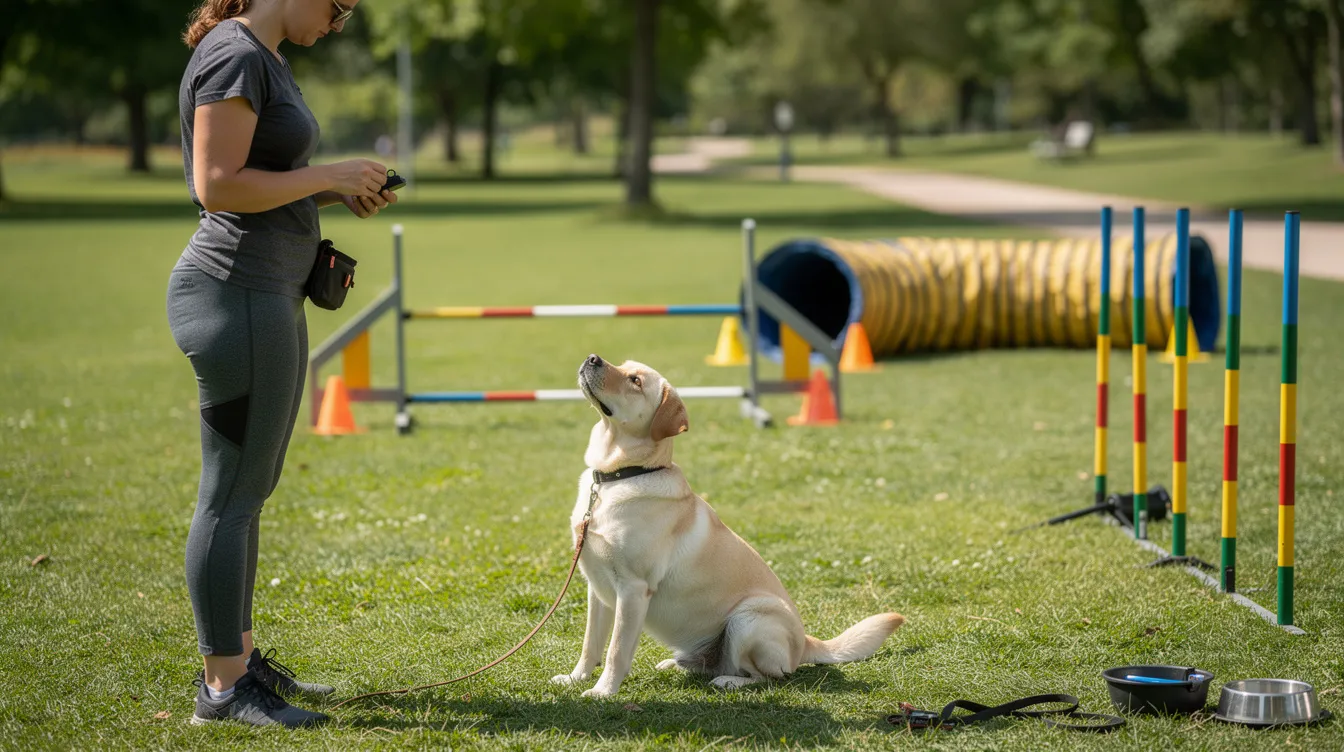
Self-training a service dog typically takes 1 to 2 years of consistent, intensive work
-
Requires dedication to obedience, public access skills, and disability-specific task training
-
Lower direct cost but significant time investment
-
Risk that the dog may wash out if temperament or aptitude is insufficient
Regardless of method, handlers should aim to meet high behavior standards: the dog must be calm, non-aggressive, housebroken, and focused. Organizations like Assistance Dogs International publish widely respected training standards. Be prepared to show training logs or evaluations if a landlord, employer, or airline appropriately requests evidence of task training.
How do you determine if a service dog is right for you (and not another support option)?
A service dog is a major commitment of time, money, and daily care. Before pursuing one, assess whether a dog is the most appropriate accommodation for your disability. People with disabilities have multiple support options, and a service dog is not always the best fit.
Key questions to consider:
-
Would trained tasks actually reduce your disability-related barriers in daily life?
-
Can you physically and financially care for a dog long-term (feeding, grooming, veterinary care)?
-
Could other supports meet your needs, such as assistive devices, human aides, therapy, or an emotional support animal?
-
Would a family member or caregiver’s assistance better address your challenges?
-
Are there allergen concerns (like dog dander sensitivity) for you or people in your environment?
A service dog is especially beneficial when you face unpredictable events like seizures, dangerous falls, or severe panic attacks in public. For more predictable needs, assistive technology or human support may be simpler and equally effective.
Consult with healthcare providers, physical therapists, occupational therapists, or rehabilitation specialists to evaluate whether a service dog is likely to increase your independence and safety.
Consider keeping a short journal of disability-related challenges in daily life. Document which problems a dog trained to perform specific tasks could realistically address. This record also helps when approaching trainers or organizations and when requesting accommodations.
What laws protect people with service dogs (and how do local laws fit in)?
Three main federal laws protect people suffering from disabilities who use service dogs, and each treats assistance animals slightly differently.
Americans with Disabilities Act (ADA) ADA Titles II and III govern access to public places like restaurants, hotels, stores, government buildings, and public transportation. Service animals must be allowed in public areas. Businesses refusing service to or denying access to a person with a disability because of their service dog violate federal law. Only the two permitted questions may be asked when it is not obvious that a dog is a service animal. Public accommodations must allow service animals.
Fair Housing Act (FHA) The fair housing act requires housing providers to make reasonable accommodations for assistance animals, including service dogs and, in some cases, emotional support animals. Landlords may request limited documentation but cannot charge pet fees for disability-related animals.
Air Carrier Access Act (ACAA) The air carrier access act governs air travel. Current DOT regulations allow airlines to require specific forms. Rules for ESAs in air travel have been significantly narrowed in recent years. Check current DOT and airline guidance before traveling, and contact the aviation consumer protection division with complaints.
State and local laws State and local laws can add protections, such as access rights for service dogs in training or penalties for fraudulent misrepresentation, but they cannot reduce ADA rights. Local laws typically still require service dogs to meet general vaccination and licensing requirements. Some states protect additional species or expand definitions beyond federal minimums. Rules vary by state, so consult your state’s specific statutes or an attorney for complex situations.
Disclaimer
This article is for general informational and educational purposes only. It does not constitute legal or medical advice and is not a substitute for consultation with a licensed attorney or healthcare provider.
Service dog laws and local regulations vary by state, municipality, and country. Readers are responsible for checking current rules that apply in their location. Eligibility determinations for service animals in specific contexts such as employment, housing, and air travel often involve individualized assessments by agencies, courts, or organizations, and outcomes can differ case by case.
Nothing in this article guarantees that any individual will qualify for or obtain a service dog.
Frequently Asked Questions
Can I get a service dog just for anxiety?
Yes, if your anxiety disorder substantially limits major life activities such as concentrating, sleeping, or leaving your home, and a dog can be trained to perform specific tasks that mitigate those limitations. Examples include performing crowd control, providing deep pressure therapy during panic attacks, or guiding you to an exit. General comfort alone does not qualify. A person suffering from an anxiety disorder must demonstrate functional impairment and have a dog trained for identifiable tasks.
Can children qualify for a service dog?
Yes. An individual with a disability of any age can qualify. For children, a parent or guardian typically manages the dog while the child benefits from the trained tasks. Autism support dogs that prevent wandering or provide calming pressure are common examples for children. A family member often serves as the primary handler in these cases.
Do service dogs have to be a certain breed or size?
No. The ADA does not require service dogs to be a specific breed or size. Any dog with suitable temperament and the ability to be trained to perform disability-related tasks can serve. Breed-specific legislation in some jurisdictions must still accommodate service dogs unless a direct threat to safety is demonstrated.
Can miniature horses be service animals?
Under the ADA, miniature horses may be permitted as service animals when individually trained for tasks like guiding or mobility support. Facilities must consider the horse's size, weight, whether the handler has control, and whether the animal is housebroken. They are the only non-dog species given any recognition under ADA public-access rules.
What happens if my disability changes over time?
If your disability worsens, improves, or shifts, you may need to retrain your service dog for new tasks or determine that a service dog is no longer the best accommodation. The ADA recognizes that episodic conditions qualify when active, so fluctuating disabilities can still support service dog use as long as the dog performs tasks related to the current limitations.
References
- U.S. Department of Justice, "ADA Requirements: Service Animals" (revised 2010 regulations), ADA.gov/resources/service-animals-2010-requirements.
- U.S. Department of Justice, "Service Animals" guidance page, ADA.gov/topics/service-animals.
- U.S. Department of Justice, "Frequently Asked Questions about Service Animals and the ADA," ADA.gov/resources/service-animals-faqs.
- U.S. Department of Justice, ADA Title III Regulations, 28 C.F.R. Part 36.
- U.S. Department of Transportation, Air Carrier Access Act service animal regulations, 14 C.F.R. § 382.75.
- U.S. Department of Housing and Urban Development, "Assistance Animals" guidance, HUD.gov/helping-americans/assistance-animals.
- ADA National Network (non-government), "What Is a Service Animal?" factsheet, adata.org.
- Assistance Dogs International (non-government), Public Access Standards and provider directory, assistancedogsinternational.org.

Pet Slimmers Editorial Team
The Pet Slimmers editorial team writes practical, evidence-based guidance on companion animal weight management, drawing on the work of the ROYAL CANIN® Weight Management Clinic at the University of Liverpool.
This article is for general information only and is not a substitute for professional veterinary advice. Always consult your veterinary surgeon about the health of your pet.