Service Dog Tasks: Complete List by Disability Category
Key Takeaways
- Under U.S. law, a service dog must be individually trained to perform specific tasks that mitigate the handler's disability. Mere companionship, comfort, or emotional support does not qualify a dog as a service dog.
- Common service dog categories include mobility assistance, guide work, hearing alert, psychiatric service, diabetic alert, seizure response, autism support, and allergen detection. Most service dogs can perform up to fifty tasks across these categories, depending on the handler's needs.
- The ADA does not require certification, registration, vests, or ID cards. Commercial websites selling these items do not create legal status.
- Service dogs facilitate independence and safety for their handlers, but federal rules come from the ADA (Department of Justice). Housing protections under the Fair Housing Act, airline rules under the Air Carrier Access Act, and state statutes may add or modify protections, so handlers should check local regulations.
Service dogs are defined under the Americans with Disabilities Act not by their breed, vest, or registration, but by the specific tasks they are trained to perform for a person with a disability. This article organizes the most common service dog tasks by disability category as a practical reference. Whether you are planning a task list for service dog training, researching your legal rights, or helping a family member understand what these dogs actually do, the breakdown below covers mobility assistance, guide dogs for vision loss, hearing alert, psychiatric service, diabetic alert, seizure response, autism support, and allergen and medical alert categories.
Disclaimer: This article is general information for education and training planning only. It is not legal advice and does not substitute for consultation with a qualified attorney or medical professional.
What counts as a “task” under the ADA?
Under the Americans with Disabilities Act, a “service animal” is a dog individually trained to do work or perform tasks directly related to a person’s disability. The regulatory definitions appear in 28 C.F.R. § 35.104 (Title II, state and local government) and § 36.104 (Title III, public accommodations). Service dogs are trained to perform specific tasks for disabilities; the law applies to any disability that substantially limits one or more major life activities.
What qualifies as a task:
-
Tasks are discrete, repeatable trained behaviors. Examples include retrieving a dropped phone, performing obstacle avoidance around a construction zone, or alerting to a smoke alarm. General traits like being calm, friendly, or well behaved are not tasks.
-
Psychiatric service dog tasks qualify when they are trained responses to symptoms. Deep pressure therapy performed on cue during a dissociative episode is a task. A dog simply sitting next to someone during a panic attack, without any trained response, is not.
-
Under ADA rules, staff in public spaces may ask only two questions: whether the dog is required because of a disability, and what work or dog tasks the animal has been trained to perform. Staff cannot demand documentation, medical records, or ID cards.
-
The ADA does not require registration, certification, or special identification for service dogs. Commercial “service dog registration” websites do not create any legal status or public access rights.
What is NOT a service dog task?
The legal line between a service dog and a pet or emotional support animal comes down to trained tasks. Emotional support animals provide comfort through their presence alone; service dogs perform specific, trained behaviors that mitigate the handler’s disability.
Non-qualifying behaviors include:
-
“Being there for comfort during a panic attack” without a trained response like deep pressure therapy or interruption
-
Reducing loneliness or providing general companionship
-
Acting as a mascot or therapy animal for a group or business
-
Behaving well in public without any disability-related service work
Therapy dogs visiting hospitals or schools and facility dogs working with multiple people do not have ADA public access rights because they are not trained for one specific person’s disability.
Under the Fair Housing Act, emotional support animals can receive housing protections even without tasks, but they still lack ADA public access rights in stores and restaurants.
Misrepresenting a pet as a service dog can violate state law. Colorado Revised Statutes § 18-13-107.7, for example, makes intentional misrepresentation of a service animal a criminal offense. California and Florida have similar statutes with fines or other penalties.
Mobility assistance tasks
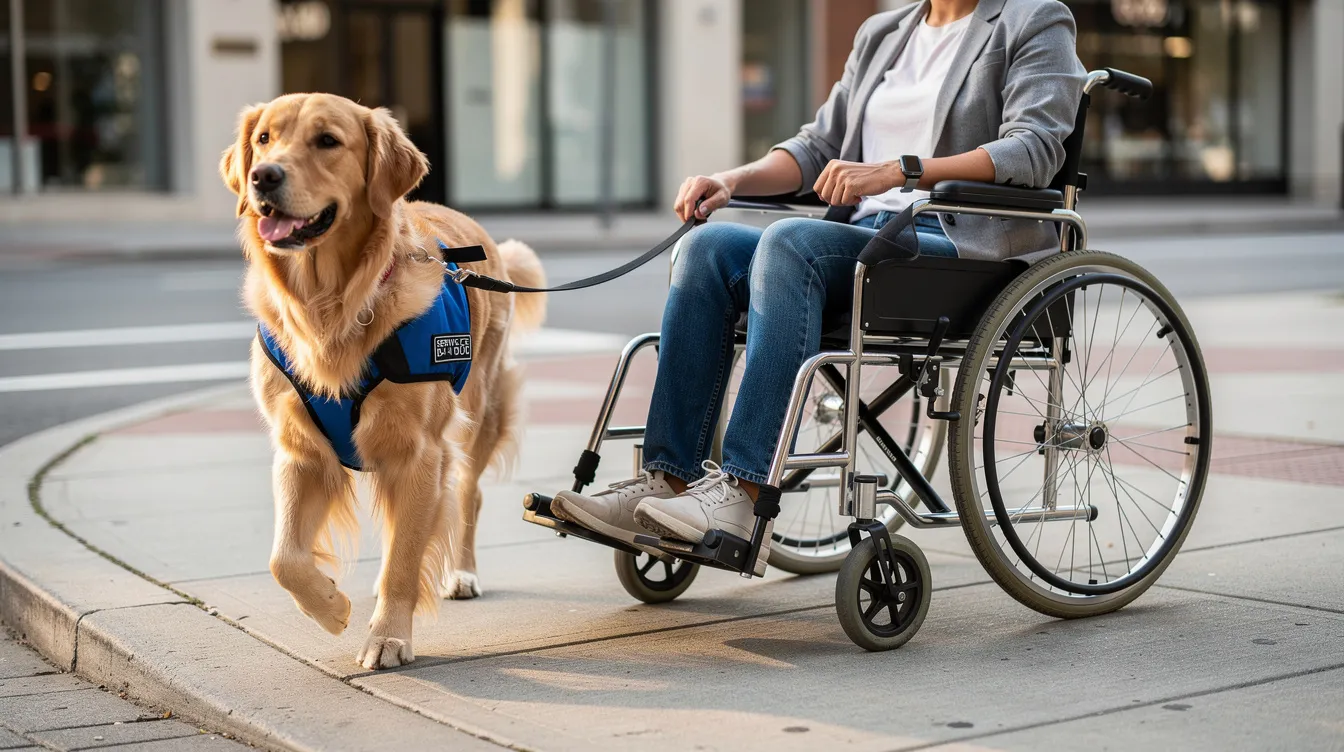
Mobility assistance service dogs support people with physical disabilities such as spinal cord injuries, multiple sclerosis, cerebral palsy, Parkinson’s disease, and severe arthritis. Their service dog work replaces or supplements the handler’s physical strength and balance. According to Assistance Dogs International’s 2022 census, mobility service dogs account for about 48% of all service dog programs.
Retrieval tasks. Service dogs can retrieve dropped items like keys, bank cards, or medications from the floor and place them in the handler’s hand or lap. They also bring dropped objects from across the room, including canes, phones, or other clothing items. Carrying items to and from specific locations is part of daily service work for most dogs in this category.
Balance and physical support. Mobility dogs provide counterbalance during walking, steady the handler during transfers between a wheelchair and bed, and brace safely so the handler can stand. Bracing requires large, physically sound adult dogs with veterinary clearance to protect joints.
Environmental interaction. These dogs are trained to assist with opening and closing doors (including pulling a heavy door via tug ropes), pressing elevator buttons, activating accessibility buttons for automatic doors, and turning light switches. Closing doors behind the handler is a common task paired with opening them.
Harness-based work. Wheelchair pulling over flat surfaces for short distances, helping the handler stand from a chair, and assisting on stairs and ramps fall under specialized training that requires veterinary oversight. Long-term joint health in the dog depends on proper harness fit and workload limits.
How do guide dogs assist with vision impairment?
Guide dogs are among the oldest category of service dogs, with organized schools dating to the 1920s. They are trained for people who are blind or have low vision, and their public access rights are governed by the same ADA rules as all other service dogs.
Obstacle avoidance. Guide dogs perform obstacle avoidance to navigate around objects at ground level, overhead hazards like low branches or awnings, construction zones, and pedestrians in crowded areas. They maintain a straight line of travel even on busy sidewalks.
Elevation changes. They indicate changes in elevation like curbs, steps, stairs, platform edges, and drop-offs. The dog stops and positions the handler safely before each transition, including street crossings.
Intelligent disobedience. If a handler gives a “Forward” command but oncoming traffic, a silent hybrid car, or an unexpected hole lies ahead, the guide dog refuses the command. This trained refusal, known as intelligent disobedience, overrides the handler’s instruction to ensure safety.
Targeting tasks. Guide dogs locate objects and destinations on command: “find the door,” “find the bus stop,” “find the chair,” “find the elevator,” “find the counter.” These help the handler navigate complex environments like airports, malls, or unfamiliar buildings.
Guide dogs are typically trained for four to six months on these specialized guide tasks, following foundational obedience work. The full pipeline from puppy raising through placement often spans longer.
Hearing alert (hearing dog) tasks
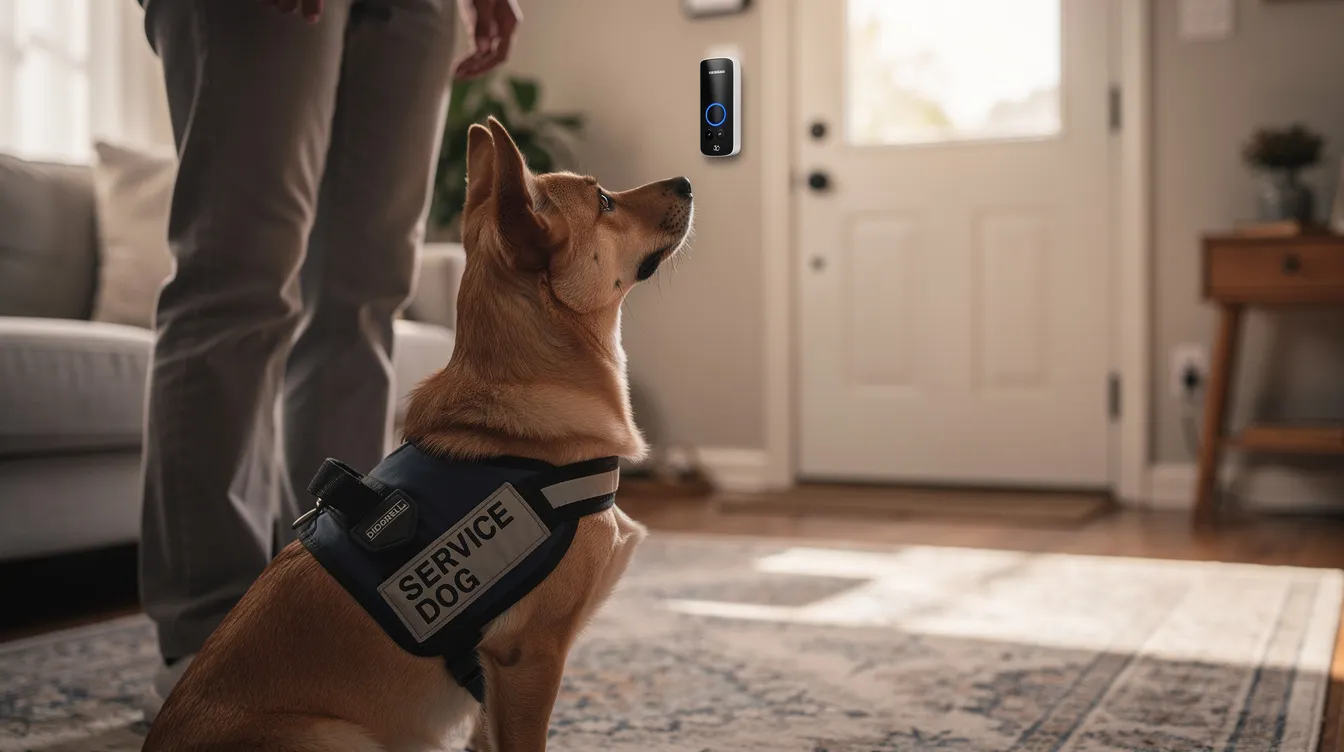
Hearing service dogs assist people who are Deaf or hard of hearing by alerting them to sounds at home, work, and in public spaces. The dog learns to connect each sound with a specific alert behavior, then signals the handler consistently.
Common tasks include:
-
Alerting the handler to doorbells, door knocks, phone calls, name calls, oven timers, alarm clocks, intercom announcements, and baby cries using nudges, pawing, or licking
-
Leading partners to the source of sounds so the handler can respond
-
Emergency alerts to smoke alarms, carbon monoxide detectors, severe-weather sirens, and security alarms, including guiding the handler toward an exit or safe location
-
Waking their partners during nighttime emergencies when alarm clocks or smoke detectors go off
-
Public safety alerts: signaling approaching vehicles or oncoming traffic from behind, bicycles on shared paths, or someone trying to get the handler’s attention at a bus stop, airport, or train station
Some teams train hearing dogs to differentiate between sounds. A kitchen timer alert may involve a paw touch, while a fire alarm triggers the dog to lead the handler to the nearest exit. Consistency and reliability in these alerts are the foundation of effective hearing dog work.
Diabetic alert dog tasks
Diabetic alert dogs are medical alert service dogs trained to detect blood sugar changes through scent for people with Type 1 or insulin-dependent Type 2 diabetes. They complement continuous glucose monitors and blood meters but do not replace them.
Hypoglycemia alerts. Diabetic alert dogs detect blood sugar changes 15 to 30 minutes before symptoms appear or before some devices register the shift. They alert handlers to low blood sugar with trained behaviors like pawing, nudging, or fetching a bringsel (a short tab the dog carries to the handler).
Hyperglycemia alerts. Some dogs distinguish between highs and lows with different signals, such as a nose touch for lows and a paw for highs. Research shows sensitivity for hypoglycemia detection ranges from roughly 33% to 92% depending on the individual dog and environment, with positive predictive values averaging around 70%.
Response tasks. Diabetic alert dogs can retrieve glucose sources like juice boxes or glucose tablets when needed. They can also fetch emergency glucagon kits for their handlers or bring an insulin pen or meter on command.
Night alerts and help-seeking. These dogs can wake a person during low blood sugar episodes at night. If the handler does not respond, the dog is trained to wake or alert a family member or household member in another room, or to activate a medical alert button.
Seizure response and seizure alert tasks
Seizure response dogs perform trained tasks during or after a seizure. Seizure alert dogs appear to warn of an oncoming seizure before it happens. The distinction matters: response tasks are reliably trained, while pre-seizure alerting seems to develop spontaneously in some dogs rather than through formal training protocols.
Response tasks during a seizure:
-
Staying beside the handler to prevent injury
-
Positioning their body as a barrier between the handler and furniture, sharp edges, or shopping carts
-
Activating a pre-programmed emergency button, medical alert button, or alert device
Post-seizure assistance:
-
Fetching a phone, emergency medication, or a designated person
-
Providing deep-pressure contact to help orient the handler after confusion
-
Guiding the handler to a bed, chair, or safe place to rest
-
Alerting caregivers or family members that a seizure has occurred
Pre-seizure alert behavior. A Canadian study found that roughly 59% of seizure dog recipients reported their dog spontaneously developed pre-seizure alert behaviors, such as restlessness or intense focus, sometimes up to several hours before onset. However, research has not established a consistent training protocol for seizure prediction. Trainers should not guarantee that a dog will reliably warn of an oncoming seizure.
Psychiatric service dog tasks
Psychiatric service dogs are trained to assist individuals with mental health conditions such as post-traumatic stress disorder (PTSD), panic disorder, major depression, bipolar disorder, obsessive-compulsive disorder, and other psychiatric disabilities. Their tasks target measurable symptoms of a particular disability, not general emotional support.
Deep pressure therapy and tactile stimulation. The dog applies firm, sustained physical contact across the handler’s lap, chest, or legs on cue or in response to signs of anxiety attacks, dissociation, or flashbacks. Deep pressure therapy is one of the most frequently used psychiatric service tasks, performed an average of roughly five times per day in one study of veterans with PTSD.
Interruption tasks. Psychiatric service dogs interrupt harmful behaviors by nudging, pawing, or bringing a toy. This includes interrupting repetitive behaviors like skin-picking, hair-pulling, or compulsive actions related to OCD, and stopping self-harm behaviors such as scratching or hitting. PTSD service dogs can interrupt self-harm behaviors before injury occurs.
Environmental management. Tasks include helping handlers exit stressful situations by leading them to an exit during panic attacks, creating space in crowded areas by “blocking” (standing in front) or “covering” (standing behind), performing room searches for PTSD-related hypervigilance, and waking the handler from nightmares.
Schedule and medication support. The dog responds to phone alarms by nudging the handler to take medication. PTSD service dogs can remind handlers to follow regular schedules. Wake-up assistance for oversleeping related to depression and retrieving medication containers on cue are also trained tasks.
A randomized trial involving roughly 156 veterans found that after three months with a trained psychiatric service dog, participants showed reduced PTSD severity, depression, and anxiety compared to usual care.

Autism service dog tasks
Autism service dogs work with both children and adults on the autism spectrum. Their task lists often blend safety, sensory regulation, and communication support, tailored to the handler’s specific sensory and social needs. Autism support dogs help maintain safety for individuals on the autism spectrum across home, school, and public settings.
Safety tasks. For children, tethering prevents bolting into traffic or away from caregivers. Service dogs can track and find elopement-prone children with autism who wander from safe areas. They also alert caregivers when exits or doors are opened unexpectedly.
Sensory regulation. Autism service dogs can interrupt repetitive behaviors like hand-flapping or rocking when those behaviors become harmful or disruptive. They provide deep-pressure therapy during sensory overload, leaning or lying across the handler during meltdowns or shutdowns in busy environments like malls or schools. Tactile stimulation through nudging or licking can redirect attention during overstimulation.
Communication support. Service dogs can retrieve communication devices like tablets or speech devices for their handlers. They also carry message cards to adults, teachers, or staff. If the handler becomes overwhelmed, the dog can guide them to a trusted or designated person.
Social bridge and transition support. Some autism service dogs approach others on cue to initiate safe interactions, functioning as a social bridge. Autism service dogs can provide transition support during difficult changes, such as moving between classrooms, environments, or routines. These functions must still be framed as disability-mitigating tasks, not general socialization.
Allergen detection and other medical alert tasks
Allergen detection and medical alert dogs use scent to identify specific medical risks. Medical alert dogs detect physiological changes in their handler’s body condition, covering threats from food allergens to cardiac irregularities.
Allergen detection tasks. Allergy service dogs detect allergens on surfaces and in food. Food screening involves sniffing food items for allergens like peanuts, tree nuts, gluten, or dairy. Surface screening checks for allergen residue in environments such as hotel rooms, school desks, or restaurant tables. The dog gives a trained alert (sit, paw, or nose target) if contamination is found.
Avoidance and retrieval. They lead individuals away from allergens to prevent exposure. If an allergic reaction occurs, EpiPen retrieval is a critical task; the dog fetches the auto-injector from a bag, purse, or designated location.
Cardiac and syncope tasks. Dogs trained for cardiac conditions alert handler to changes associated with irregular heart rate or blood pressure. They brace or stand still to prevent falls during pre-syncope and guide the handler to a safe empty seat or chair.
Other medical alerts. Some dogs respond to migraine or narcolepsy warning signs, waking the handler from sudden sleep episodes. They can remind handlers to take scheduled medications and retrieve specific medical devices when symptoms start.
How is a service dog trained to perform tasks?
Service dog training can be done by professional programs, private trainers, or owner-trainers. In all cases, the dog must reliably perform tasks in real-life public spaces as required by the ADA.
The typical progression:
-
Basic obedience and public access manners. The dog learns to remain calm in stores, restaurants, and transit.
-
Task foundation. Using positive reinforcement, the dog learns each task in a controlled environment. For scent-based work like diabetic alert, the dog is imprinted on samples of the handler’s sweat or saliva during relevant episodes.
-
Generalization. Dog tasks are practiced in varied settings: home, office, grocery store, bus, airport.
-
Maintenance. Ongoing practice keeps reliability high. Performance can degrade without regular reinforcement.
Matching tasks to the handler’s disability is best done in consultation with healthcare providers so that the task list directly mitigates documented limitations. Some programs require 6 to 12 months of structured training; complex task sets for guide work or combined mobility and psychiatric service can take 18 to 24 months.
No federally mandated certification exam exists. Many reputable organizations follow Assistance Dogs International standards for public behavior and task reliability, but the ADA does not require graduation from any particular program.
Legal rights, documentation, and public access
The ADA provides federal public access rights for service dogs in all places open to the public across the United States. The Fair Housing Act covers housing, the Air Carrier Access Act covers air travel, and state laws may add protections or penalties.
Key rules:
-
Staff cannot require proof of certification, medical records, or an ID card. They may ask only whether the dog is a service animal required because of a disability and what tasks it is trained to perform.
-
No federal agency operates a national service dog registry. Buying online “certificates,” vests, or ID cards does not grant legal status.
-
Under the Fair Housing Act, both service dogs and emotional support animals may be allowed in no-pet housing with reasonable accommodation. Housing providers can request limited disability-related documentation from a healthcare professional, unlike the ADA’s public access rules.
-
Service dogs must be under control (leash, harness, or voice control where the handler’s disability prevents leash use), housebroken, and non-aggressive. Businesses may ask a handler to remove a dog that is out of control or poses a direct threat, even if it is a legitimate service dog.
Most service dogs working in public access settings perform multiple tasks tailored to the handler’s disability, and most dogs in active service work build reliability over months or years of practice alongside their handler, who is often their best friend and primary trainer.
Frequently Asked Questions
How many tasks does a dog need to qualify as a service dog?
The ADA does not set a minimum number. A single well-trained, disability-mitigating task can meet the legal standard. In practice, most service dogs perform multiple tasks for safety and practicality. Some experienced teams report their dog can perform up to fifty tasks, though the law does not require any specific count.
Can I train my own service dog at home?
Owner-training is permitted under the ADA as long as the dog is individually trained to perform tasks related to the handler's disability and behaves appropriately in public. For complex specialized training like guide work or mobility assistance, professional guidance reduces risk to both handler and dog. There is no requirement to use a specific program or trainer.
Do service dogs have to wear a vest or special harness?
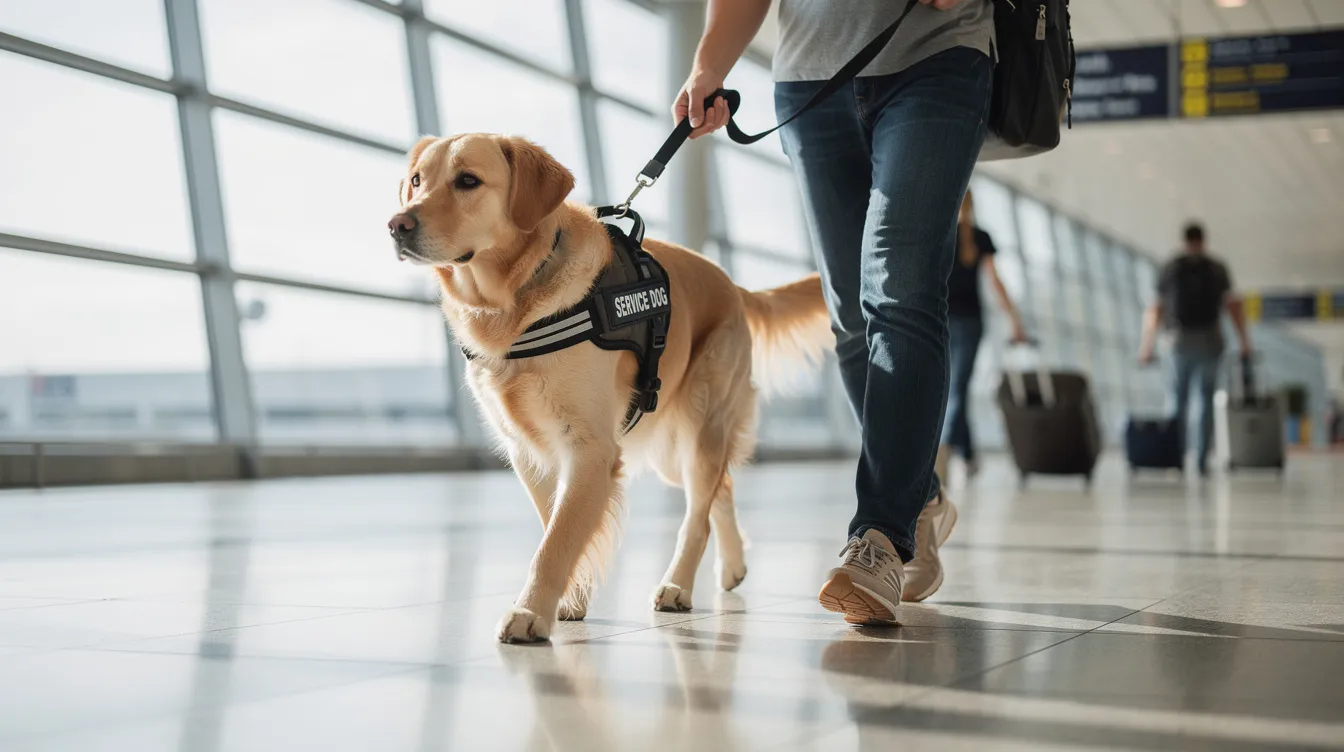
Federal law does not require vests, harness labels, or ID tags. Many handlers use them to signal the dog's working status and reduce confrontations in public spaces, but the presence or absence of gear does not change the dog's legal status under the ADA.
Are psychiatric service dogs treated differently from other service dogs under the law?
Under the ADA, psychiatric service dogs have the same public access rights as any other service dog. The requirement is that they are trained to perform specific psychiatric service tasks like interrupting panic attacks, performing deep pressure therapy on cue, or waking handlers from nightmares. They are legally distinct from emotional support animals, which lack task training and ADA public access rights.
Can a business ask me to explain my diagnosis to prove I need a service dog?
No. Businesses cannot require disclosure of a specific diagnosis, medical records, or documentation. They are limited to two ADA questions: whether the dog is required because of a disability, and what trained tasks it performs. Asking about the nature of the handler's disability beyond these two questions violates federal rules. Assist people you work with by sharing this information so they understand the boundaries.
References
- U.S. Department of Justice, Civil Rights Division. "Nondiscrimination on the Basis of Disability in State and Local Government Services (Title II)," 28 C.F.R. Part 35, particularly § 35.104 and § 35.136.
- U.S. Department of Justice, Civil Rights Division. "Nondiscrimination on the Basis of Disability by Public Accommodations and in Commercial Facilities (Title III)," 28 C.F.R. Part 36, particularly § 36.104 and § 36.302(c).
- ADA.gov. "Service Animals," U.S. Department of Justice technical assistance document on service animal definitions and permissible inquiries.
- U.S. Department of Housing and Urban Development (HUD). "Assessing a Person's Request to Have an Animal as a Reasonable Accommodation Under the Fair Housing Act," Notice FHEO-2020-01.
- U.S. Department of Transportation. "Traveling by Air with Service Animals," final rule under the Air Carrier Access Act, 14 C.F.R. Part 382, Subpart E.
- Assistance Dogs International (ADI). "Minimum Standards and Ethics for Assistance Dog Programs," public behavior and task training benchmarks.
- Colorado Revised Statutes § 18-13-107.7, "Intentional misrepresentation of a service animal."

Pet Slimmers Editorial Team
The Pet Slimmers editorial team writes practical, evidence-based guidance on companion animal weight management, drawing on the work of the ROYAL CANIN® Weight Management Clinic at the University of Liverpool.
This article is for general information only and is not a substitute for professional veterinary advice. Always consult your veterinary surgeon about the health of your pet.