How to Get a Service Dog in the U.S.: Step‑by‑Step Guide
Key Takeaways
- To get a service dog, a person must have a disability that substantially limits major life activities and must identify concrete tasks a trained dog can perform to help. You can apply to a program or train a dog yourself - the Americans with Disabilities Act sets the federal baseline for legitimate service dog teams.
- Under the ADA, only dogs (and in limited cases miniature horses) qualify as service animals. No federal law requires registration, certification, vests, or ID cards. There is no official government certification or registry for service dogs under federal law.
- The application process typically involves medical documentation, interviews, and waitlists of one to three or more years with nonprofits, while self-training generally takes one to two years of structured, consistent work.
- Federal laws apply differently in public places (ADA), housing (Fair Housing Act), air travel (Air Carrier Access Act), and employment (EEOC rules). State laws may add protections, and rules vary on a case by case basis.
- Service dogs are legally distinct from emotional support animals and other animals. Only task-trained assistance dogs have full public access rights under the ADA.
To get a service dog, you must have a qualifying disability, identify specific tasks a dog can perform to mitigate it, and then either apply to a reputable service dog organization or train a dog yourself under federal law. The process involves medical documentation, eligibility screening, and often a significant wait time. This guide walks you through every step, from understanding the law to covering costs and protecting your public access rights.
What Is a Service Dog and How Is It Different from Other Animals?
A service dog is an individually trained dog that performs specific tasks for a person with a disability. This definition comes from ADA Title II and III regulations (28 C.F.R. § 35.104 and § 36.104). Under the ADA, only dogs are legally recognized as service animals – cats, birds, and other animals do not qualify, though miniature horses may be accommodated in some public settings under separate criteria.
The term “assistance dogs” is a broader, program and industry term that includes guide dogs, hearing dogs, mobility assistance dogs, medical alert dogs, and psychiatric service dogs. The ADA uses “service animal” as its legal term, and any dog that meets the definition has the same rights regardless of what a program calls them.
Here is how service dogs differ from other support animals:
-
Service dogs are trained to perform specific tasks directly related to a handler’s disability and are allowed in most public places under the ADA.
-
Emotional support animals provide emotional comfort and companionship but are not task-trained, and animals providing comfort or emotional support do not qualify as service dogs. Emotional support animals do not require special training.
-
Therapy animals visit hospitals, schools, or other facilities under a handler’s control to comfort others but have no general public access rights.
Psychiatric service dogs are treated as service animals under the ADA when they perform trained tasks such as nightmare interruption, guiding a handler out of a crowd during a panic episode, or reminding someone to take medication. Emotional support alone – no matter how genuine – does not count as a task.
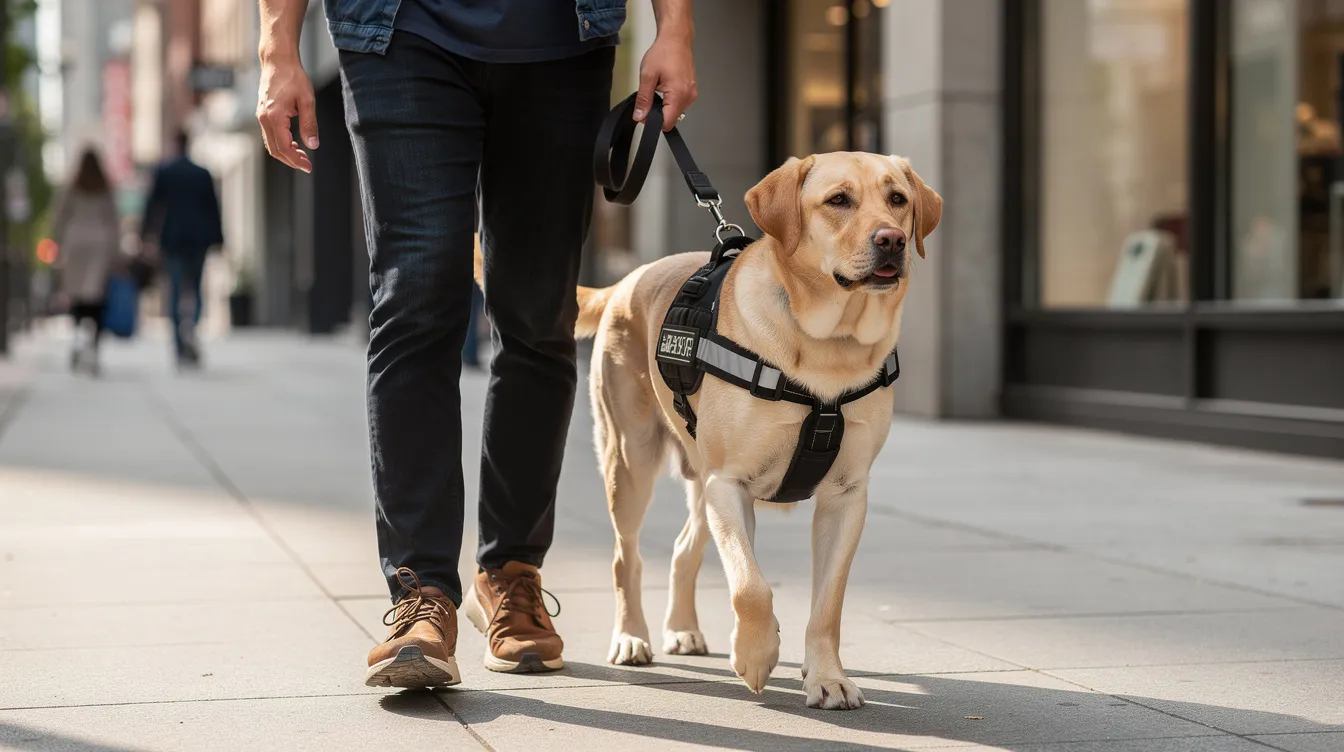
Who Is Eligible to Get a Service Dog?
Eligibility begins with meeting the ADA’s definition of disability: a physical or mental impairment that substantially limits one or more major life activities such as walking, seeing, thinking, or communicating (42 U.S.C. § 12102). A handler must have a disability that substantially limits major life activities, and service dogs assist individuals with documented disabilities.
Common qualifying conditions include:
-
Blindness or low vision
-
Deafness or hearing loss
-
Mobility impairments (balance disorders, paralysis, muscular dystrophy)
-
Seizure disorders and epilepsy
-
Diabetes (requiring glycemic alerts)
-
Autism spectrum disorder and developmental disabilities
-
Post traumatic stress disorder, panic disorder, and major depression
-
Traumatic brain injury and other medical conditions that significantly affect daily life
Qualifying disabilities include physical, psychiatric, or developmental impairments. The critical question is whether a trained dog can perform concrete tasks to mitigate the disability – for example, retrieving items, providing balance support, alerting to dangerous blood sugar levels, or conducting room checks.
Most service dog programs layer additional eligibility requirements on top of the ADA baseline, such as minimum age, stable housing, the ability to physically and financially care for the dog, and willingness to attend team training sessions. A healthcare provider must document the need for a service dog. Talk to your physician, psychologist, or licensed mental health professional about whether an assistance dog is appropriate and what tasks would be clinically useful. No specific “service dog letter” is required by the ADA for public access, but documentation is typically required by programs during the application process.
Can You Realistically Care for a Service Animal?
Getting a service dog is a major commitment that spans 10 to 12 years – the average working life of the animal. Organizations will assess your ability to care for the dog before approving you, and this evaluation is a core part of the process.
Daily responsibilities include:
-
Feeding quality food and providing fresh water
-
Regular exercise and bathroom breaks
-
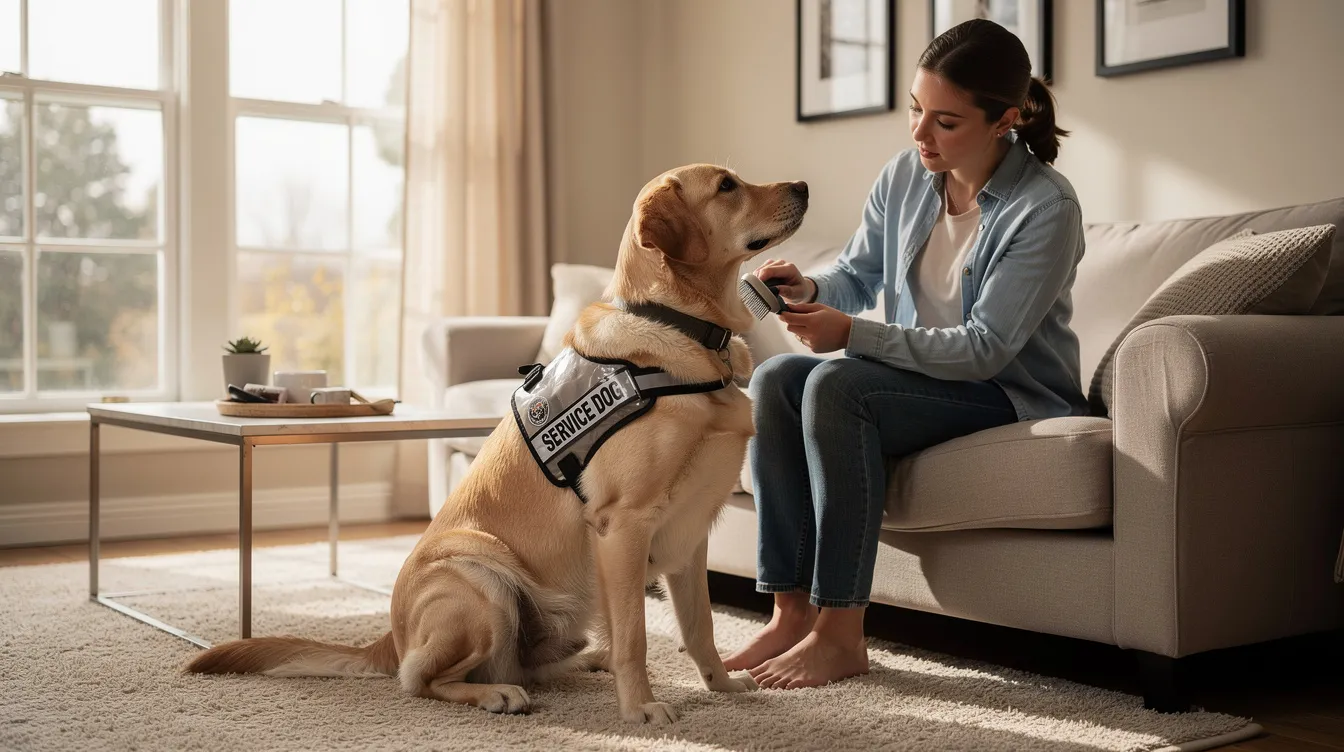
Grooming (brushing, nail trims, bathing)
-
Maintaining training and public access behavior
-
Keeping up with local vaccination and dog licensing laws
Recurring veterinary costs add up fast. Budget for routine veterinary care (vaccines, heartworm and flea/tick prevention, annual checkups), emergency vet bills, equipment like harnesses, leashes, and crates, and pet insurance if desired. Annual maintenance typically runs at least $1,500 to $3,000 per year, with unexpected health issues potentially costing much more.
Consider whether you can physically manage a dog in busy environments like airports, stores, or public transit. If you’re sometimes unable to provide care – for example, during a hospitalization – have a backup plan in place, such as a family member or trusted friend trained to handle the dog.
If the demands of caring for a dog are too high, other support options like personal care attendants, mobility aids, or emotional support animals may be more practical for your well being.
How Do You Decide If a Service Dog Is the Right Type of Support?
Choose a support option based on what you need most: task assistance in daily life, emotional support at home, or therapeutic visits in a clinical setting.
Service dogs perform at least one trained task directly related to the disability and have public access rights under the ADA. Emotional support animals mainly provide emotional comfort and are only protected in specific housing situations under the Fair Housing Act – they do not have the right to accompany you into stores, restaurants, or on airplanes in the same sense.
A psychiatric service dog makes sense when you need help with concrete tasks. For example, a dog trained to detect an oncoming anxiety attack and apply deep pressure therapy, wake you from night terrors, or lead you away from a triggering environment. These are highly trained behaviors, not just companionship.
Situations where a service dog may be appropriate:
-
Frequent falls due to balance impairment requiring mobility assistance
-
Dangerous blood sugar swings that a dog can detect before symptoms hit
-
Severe disorientation during panic episodes that prevents safe navigation
-
Seizure response that requires the dog to alert a family member or activate a device
Situations where other supports might suffice:
-
Mild anxiety that responds well to therapy and medication
-
Occasional loneliness that a pet or emotional support animal can address
-
Short-term adjustment difficulties where other interventions are primary
Document the specific problems you face in daily life and brainstorm with a clinician or trainer what tasks an assistance dog could realistically perform to mitigate them.
What Types of Service Dogs and Assistance Dogs Are There?
“Assistance dogs” is a widely used category that encompasses several specialty roles, each with its own specific training focus and population served.
|
Type |
Who It Serves |
Example Tasks |
|---|---|---|
|
Guide dogs |
People who are blind or have low vision |
Navigating obstacles, stopping at curbs, finding doors |
|
Hearing dogs |
People who are deaf or hard of hearing |
Alerting to doorbells, alarms, a person’s name being called |
|
Mobility assistance dogs |
People with physical disabilities |
Balance support, retrieving dropped items, opening doors |
|
Medical alert/response dogs |
Seizure, diabetes, severe allergy conditions |
Alerting before a seizure, detecting blood sugar changes |
|
Psychiatric service dogs |
PTSD, anxiety disorders, depression |
Room checks, nightmare interruption, grounding during panic |
|
Autism assistance dogs |
Children and adults on the spectrum |
Preventing elopement, providing calming deep pressure, safety tethering |
The ADA treats all of these as service animals as long as they are dogs trained to perform tasks. Program terminology – “assistance dog,” “support dog,” “facility dog” – does not change legal status.
Some nonprofits specialize by population (veterans with PTSD, children with autism, people with multiple sclerosis) or by task type. Before contacting any organization, list the three to five highest-priority tasks you need help with to determine the right match.
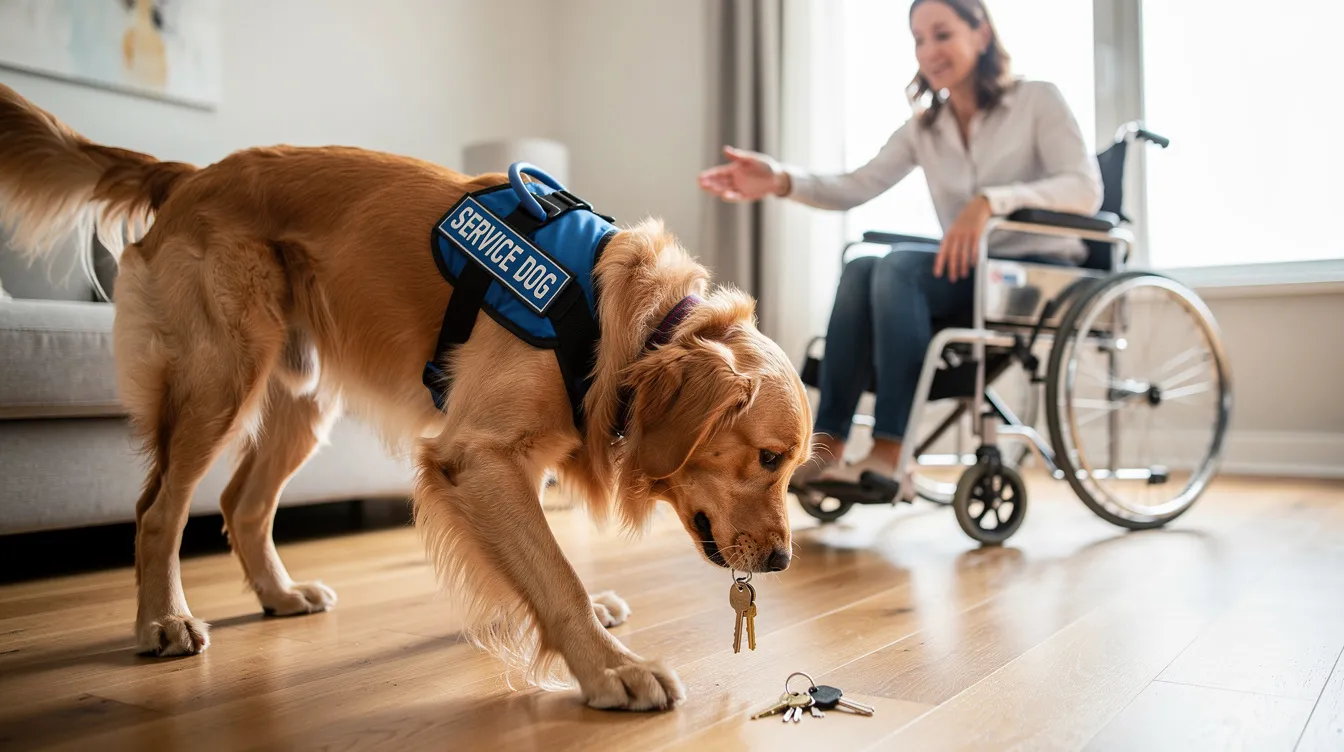
How to Get a Service Dog: Application Process with an Organization
Most people get a service dog by applying to a nonprofit or accredited program. The process for obtaining a service dog involves diagnosis, application, and possibly training, and it can take several months to a few years due to high demand.
Typical application steps include:
-
Submit an application. Most programs use an online or paper form. A $75 application fee is common for service dog programs.
-
Provide medical documentation. Most organizations require medical documentation of disability and a professional assessment that an assistance dog would be beneficial.
-
Interview and assessment. Programs often conduct phone, video, or in-person interviews to evaluate your lifestyle, environment, and ability to handle a dog. Some request videos of you moving around your home or neighborhood.
-
Attend team training. Organizations providing guide dogs or fully trained mobility assistance dogs may require travel to a training campus for one to three weeks. Room, board, and transportation are often covered by the program.
Wait times vary widely. Some veteran-focused programs aim to place service dogs in under 12 months, while many organizations have a waitlist of two to five years for service dogs. Obtaining a service dog can take several months to a few years, so confirm current timelines directly with each program.
A dog in training is not considered a service animal under the ADA, though some state laws apply partial protections during the training period.

What Are Typical Eligibility Requirements for Service Dog Programs?
Each service dog organization sets its own eligibility rules, but most share common criteria built around safety for both client and dog.
Common requirements include:
-
Documented disability meeting program criteria
-
Minimum age (often 14 to 18 for a primary handler, with parent involvement for younger children)
-
Stable housing and a predictable daily routine
-
Ability to participate in training classes and follow handler guidelines
-
Financial responsibility for ongoing food and veterinary costs after placement
Programs typically require that you can safely direct, manage, and physically handle the dog – or have a reliable adult handler. Some programs may not accept applicants with untreated substance use disorders or unstable psychiatric conditions.
Certain guide dog schools require recent orientation and mobility training reports. Other organizations limit admissions to veterans, first responders, or residents of specific regions. Carefully read each organization’s published eligibility requirements before applying, and email admissions coordinators with questions about borderline situations.
Should You Get a Trained Dog or Train Your Own Service Dog?
Under the ADA, individuals may train their own service dogs without using a formal organization. The law does not require use of a program, and it does not require certification.
Program-trained dogs come already prepared for public access and specific tasks. Programs professionally select for temperament and health clearances, provide standardized service dog training, and offer ongoing support after placement. Wait times and strict eligibility are the trade-offs, but many nonprofits place dogs at lower direct cost to the client.
Self-training allows you to use an existing pet or a purpose-bred puppy, giving you more control over methods and bonding. However, self-training a service dog takes one to two years of intensive, consistent work. Service dogs require a minimum of 120 hours of in-home training – and that’s a floor, not a ceiling. The risk that the dog may “wash out” due to temperament or health issues is real: industry estimates suggest roughly half of dogs that start professional training programs never graduate. Service dogs must pass tests to ensure task performance and reliable behavior.
If you’re a first-time handler with complex mobility or medical needs, strongly consider an established program or a hybrid model where you self-train with regular input from a qualified trainer experienced with service animals. Breeds like golden retrievers, Labrador retrievers, and standard poodles are commonly selected for service work due to their temperament and trainability, but other dogs can succeed if they meet the behavioral and physical standards.
How Long Does It Take and How Much Does It Cost to Get a Service Dog?
Time and service dog cost vary dramatically depending on the path you choose.
Timeframes:
-
Nonprofit programs: roughly 12 months to several years from application to placement. Waitlists for service dogs can be two to five years long for high-demand specialties.
-
Self-training: training a service dog generally requires 12 to 24 months of consistent daily work to reach reliable public access and task performance.
Cost breakdown:
|
Path |
Typical Cost to Handler |
Notes |
|---|---|---|
|
Nonprofit placement |
$0 – low cost |
Programs absorb $30,000–$60,000+ per dog through donations |
|
For-profit trainer |
$15,000 – $50,000+ |
Varies by task complexity and breed |
|
$5,000 – $25,000 |
Includes dog purchase, vet care, professional training sessions |
Training a service dog can cost upwards of $30,000 when you factor in professional support. Dogs for Better Lives values each placed assistance dog at approximately $54,000. NEADS spends around $45,000 per dog.
Many nonprofit organizations provide service dogs at no charge to clients, funding placement through donations and grants. However, recipients may be asked to cover routine care after placement. No payment or “registration fee” is required by federal law to qualify a dog as a service animal.
How Can You Pay for a Service Dog? Funding and Financial Aid
Full professional training for a service dog can cost tens of thousands of dollars, even when the client pays nothing directly. Planning ahead financially is essential.
Nonprofit organizations rely on donations, grants, and sponsorships to place dogs at no or low cost. Look for Assistance Dogs International (ADI)–accredited programs, which maintain higher training and ethical standards. Little Angels plans to spend an average of $63,000 per recipient in 2025 and requires recipients to commit to fundraising at least $21,500 for a service dog – a model that blends organizational support with community involvement.
Other funding sources include:
-
Disability-specific charities (diabetes foundations, epilepsy organizations, veterans’ groups)
-
Community fundraising campaigns
-
Employer or union assistance programs
-
Flexible spending accounts (FSAs) or health savings accounts (HSAs) when a doctor documents medical necessity – consult a tax professional for current rules
Prepare a simple budget sheet estimating annual dog-care costs: food, veterinary care, equipment, and grooming. Explore local low-cost clinics or veterinary assistance charities to manage ongoing expenses.
Be cautious of “instant certification” or “guaranteed service dog registration” websites that charge fees but do not provide actual task training or legal status. The ADA does not require service dogs to have any special identification or registration, and these commercial products do not confer extra rights.
What Legal Rights Do Service Dog Handlers Have in Public Places?
Under the ADA, people with disabilities accompanied by service dogs have the right to access most public places – stores, restaurants, hotels, government buildings, and public transit. Service dogs have public access rights under the ADA with very limited exceptions.
Public venues may only ask whether the dog is a service animal and what tasks it performs. These are the only two questions staff may legally ask when it’s not obvious:
-
“Is the dog a service animal required because of a disability?”
-
“What work or task has the dog been trained to perform?”
They cannot ask for documentation, demand a demonstration, or inquire about the nature of the person’s disability. Businesses cannot require service dogs to wear vests or carry identification.
The dog must be under the handler’s control at all times – on a leash, harness, or under voice control if a leash would interfere with tasks. The dog must be housebroken and non-disruptive. A business may ask that a dog be removed if it is out of control and the handler does not take effective action, but must still offer services to the person without the dog.
Businesses cannot charge extra fees, segregate, or treat a handler less favorably. Pet fees and breed restrictions that apply to pets cannot be used to exclude a legitimate service animal. Some states have additional penalties for misrepresenting pets as service animals.

How Do Housing, Air Travel, and Employment Laws Apply?
Although the ADA is the main federal law for public spaces, different laws apply in housing, air travel, and employment, and each has its own definitions.
Housing: The Fair Housing Act (FHA), enforced by HUD, requires many landlords and housing providers to make reasonable accommodations for assistance animals – including service animals and, in some cases, emotional support animals – even in “no pets” buildings and without pet fees. ESAs are covered under the Fair Housing Act. Documentation of disability-related need is typically required.
Air travel: The Air Carrier Access Act (ACAA), enforced by the U.S. Department of Transportation, governs service animals on airplanes. Airlines may require standardized DOT forms attesting to the dog’s training, behavior, and health. Current regulations distinguish service dogs from emotional support animals, which are now usually treated as pets by airlines.
Employment: The Equal Employment Opportunity Commission (EEOC) applies the Disabilities Act to workplaces. Employees can request a service dog as a reasonable accommodation, but employers may evaluate undue hardship or safety concerns. The process often involves interactive dialogue and sometimes medical documentation.
Check up-to-date guidance on ADA.gov, HUD.gov, and DOT.gov before traveling or moving, because agency rules and enforcement guidance can change.
What Are Your Responsibilities as a Service Dog Handler?
With expanded access rights come serious responsibilities. The handler is responsible for the dog’s care and public behavior at all times.
Core care duties:
-
Providing adequate food, water, shelter, exercise, and social interaction
-
Arranging routine and emergency veterinary care
-
Following local vaccination and licensing laws that apply to all dogs
Training responsibilities:
-
Maintaining obedience and task skills through regular practice
-
Preventing nuisance behaviors like barking, lunging, or begging
-
Promptly addressing any signs of stress or burnout with help from a qualified trainer or veterinarian
Handler etiquette in public:
-
Choosing safe and discreet relief areas and cleaning up after the dog
-
Avoiding blocking aisles or exits
-
Educating friends and family not to distract the dog when it is working – service dogs are not pets in that sense when on duty
Plan for the dog’s full working life cycle, including eventual retirement around ages 8 to 10, transition to companion animal status, and the possible need for a successor assistance dog. Communicate these plans with your family and care team early.
Disclaimer
This article is for general informational purposes only. It is based on U.S. federal guidance current as of August 2026 and does not constitute legal, medical, or tax advice. Consult qualified professionals – such as an attorney licensed in your state, a healthcare provider, or a tax professional – for advice on your specific situation. Laws and agency regulations may change, and state and local rules can provide additional rights or obligations beyond what is described here.
Frequently Asked Questions
Do I need to register or certify my service dog with any government agency?
No. Under the ADA, there is no federal registration, certification, or ID requirement for service animals. Businesses cannot demand an ID card or certificate as a condition of entry. Some cities and states offer voluntary registries or tags for convenience, but these do not create legal status and cannot be used to deny access to unregistered service dogs. Commercial "service dog registry" websites are private businesses, not government agencies - their products do not replace proper training or confer extra rights.
Can my current pet dog become a service dog?
Many service dogs start as pets, but only a subset have the health, temperament, and trainability to safely work in public and reliably perform tasks. Evaluate your dog's age (ideally young adult), temperament (calm, non-aggressive, resilient), and medical soundness with both a veterinarian and an experienced service dog trainer. If your pet cannot meet the necessary standards, it's better to keep them as a beloved companion and start with a different dog suited for service work.
At what age can a dog start service dog training, and when can it work in public?
Basic socialization and obedience can begin in puppyhood, around 8 to 10 weeks of age, with a focus on gentle exposure and positive experiences. Most dogs are not behaviorally or physically mature enough for full-time public access work until roughly 18 to 24 months, after extensive training and assessment. Follow local laws on dogs in public spaces and clearly distinguish between early socialization outings and true service work.
Can landlords or hotels charge fees for my service animal?
Under the ADA, hotels and other public accommodations cannot charge extra fees or pet deposits for service dogs, though they may charge for actual damage the dog causes. Under the Fair Housing Act, many housing providers must waive pet deposits and "no pet" rules for assistance animals if disability-related need is documented, but they can still charge for damage. Keep written communication with landlords and provide requested documentation within HUD guidelines to avoid disputes.
What happens if my service dog misbehaves in a public place?
Businesses may lawfully ask that a service animal be removed if it is out of control and the handler does not take effective action, or if the dog is not housebroken. However, they must still allow the person to receive services without the dog. Treat any incident as a training red flag, temporarily reduce public access outings, and work with a qualified trainer to address the behavior. Consistently maintaining excellent behavior is part of the handler's responsibility and protects public trust in service animals.
References
- U.S. Department of Justice, Civil Rights Division. "ADA Requirements: Service Animals." ADA.gov, updated guidance (including 28 C.F.R. §§ 35.104, 36.104, 35.136, 36.302). Accessed via: https://www.ada.gov/resources/service-animals-2010/
- U.S. Department of Justice. "Nondiscrimination on the Basis of Disability in State and Local Government Services; Final Rule." 28 C.F.R. Part 35 (Title II ADA regulations), particularly § 35.104 and § 35.136.
- U.S. Department of Justice. "Nondiscrimination on the Basis of Disability by Public Accommodations and in Commercial Facilities; Final Rule." 28 C.F.R. Part 36 (Title III ADA regulations), particularly § 36.104 and § 36.302.
- U.S. Department of Housing and Urban Development. "Assessing a Person's Request to Have an Animal as a Reasonable Accommodation Under the Fair Housing Act." HUD FHEO‑2020‑01 (Jan. 28, 2020). Available at: https://www.hud.gov/program_offices/fair_housing_equal_opp/assistance_animals
- U.S. Department of Transportation. "Traveling by Air with Service Animals." 14 C.F.R. Part 382 and DOT guidance (as revised December 2020). Available at: https://www.transportation.gov/individuals/aviation-consumer-protection/service-animals
- U.S. Equal Employment Opportunity Commission. "Enforcement Guidance on Reasonable Accommodation and Undue Hardship under the ADA." Available at: https://www.eeoc.gov/laws/guidance/enforcement-guidance-reasonable-accommodation-and-undue-hardship-under-ada
- Assistance Dogs International (ADI). "Standards for Programs and Trainers" and accredited program directory. Available at: https://assistancedogsinternational.org/resources/standards/

Pet Slimmers Editorial Team
The Pet Slimmers editorial team writes practical, evidence-based guidance on companion animal weight management, drawing on the work of the ROYAL CANIN® Weight Management Clinic at the University of Liverpool.
This article is for general information only and is not a substitute for professional veterinary advice. Always consult your veterinary surgeon about the health of your pet.