Service Dogs for Anxiety: A Complete, Legally Accurate Guide
Key Takeaways
- An anxiety service dog is a psychiatric service dog trained to perform specific tasks that directly mitigate a diagnosed anxiety or related psychiatric disability, not simply provide emotional support or comfort.
- Under the ADA (28 C.F.R. §35.104, §36.104), psychiatric service dogs have the same public access rights as service dogs for physical disabilities. Emotional support animals do not share those rights.
- Qualifying requires a psychiatric disability that substantially limits at least one major life activity, plus a dog trained to perform at least one disability-mitigating task.
- No federal U.S. law requires service dog registration, certification, vests, or ID cards. Purchasing such documents does not create legal rights.
- Protections differ across settings (housing, air travel, workplaces) and can vary by state statute.
A service dog for anxiety is a type of psychiatric service dog individually trained to perform concrete tasks that mitigate the effects of an anxiety disorder, such as providing deep pressure therapy during a panic attack or guiding a handler to an exit during sensory overload. Under the Americans with Disabilities Act, these dogs have full public access rights in the United States. This guide covers the legal framework, qualifying conditions, trained tasks, costs, and daily realities of living with an anxiety service dog so you can make informed decisions.
Disclaimer: This article is general information, not legal advice. Laws vary by state and situation. Consult an attorney or official agency for case-specific guidance.
What Is a Service Dog for Anxiety?
A service dog for anxiety is a psychiatric service dog that helps manage anxiety disorders through trained tasks rather than mere companionship. These dogs work with handlers who have conditions such as panic disorder, social anxiety disorder, post traumatic stress disorder, or generalized anxiety disorder. The terms “service dog for anxiety,” “psychiatric service dog,” and “psychiatric service animal” are overlapping under the ADA when the animal is task-trained.
Anxiety service dogs can recognize early signs of a panic attack, provide deep pressure or grounding, lead the handler out of triggering environments, or retrieve medication during a crisis. Service dogs must perform specific tasks related to their owner’s disability. Psychiatric service dogs help manage anxiety symptoms by performing reliable, trained responses rather than providing emotional support through presence alone.
These dogs assist individuals across a range of psychiatric disabilities, including severe anxiety, PTSD, severe depression with anxiety features, and bipolar disorder when anxiety is a prominent symptom. The ADA currently recognizes only dogs (and in limited cases, miniature horses) as service animals under 28 C.F.R. §35.104.

How Do Psychiatric Service Dogs Differ from Emotional Support Animals?
One of the most common sources of confusion is the difference between psychiatric service dogs and emotional support animals. While both can benefit people with mental health conditions, they occupy very different legal categories.
A psychiatric service dog is a dog individually trained to perform specific tasks that directly mitigate a psychiatric condition. Examples include interrupting self-harm behaviors, performing deep pressure therapy during panic, conducting room safety checks for someone with traumatic stress disorder PTSD, or detecting signs of an oncoming anxiety episode.
An emotional support animal, by contrast, is an animal whose presence provides emotional support or comfort but that is not required to have any task training under federal law. Emotional support animals provide comfort but lack task training, which means they do not qualify as service animals under the ADA.
The practical difference is significant: psychiatric service dogs have broad public access rights and can enter places where pets are not allowed, including restaurants, stores, and schools. Emotional support animals do not have public access rights under the ADA. After 2021 Department of Transportation rule changes, airlines no longer recognize ESAs the same way as service dogs for air travel purposes.
ESAs may still have limited housing protections under the Fair Housing Act, but these protections are distinct from ADA rights and can vary by state and landlord policies. Providing emotional support alone, even when genuinely helpful, does not qualify an animal as a service dog in legal terms. Emotional support animals lack the same legal rights as service dogs.
Which Anxiety and Mental Health Conditions Can a Service Dog Help With?
Anxiety service dogs are appropriate when symptoms significantly impair daily life and can be mitigated by trained tasks. U.S. law focuses on functional limitation of major life activities rather than requiring a specific diagnosis label.
Common qualifying mental health conditions include:
-
Panic disorder
-
Generalized anxiety disorder (GAD)
-
Social anxiety disorder
-
Obsessive-compulsive disorder (when anxiety-driven, including repetitive behaviors)
-
Post traumatic stress disorder
-
Severe depression with prominent anxiety
-
Bipolar disorder with severe anxiety phases
The legal standard asks whether symptoms substantially limit activities such as working, concentrating, sleeping, or interacting with others. For example, someone might avoid public transportation entirely due to overwhelming panic, experience frequent anxiety attacks at work that prevent completing daily tasks, or be unable to sleep alone due to hypervigilance and nightmares.
A licensed mental health professional such as a psychiatrist, psychologist, or licensed clinical social worker can help determine whether a psychiatric service dog is clinically appropriate. However, a letter alone does not create ADA rights. What matters is whether the handler has a qualifying psychiatric condition and the dog is trained to perform tasks that mitigate it.
What Tasks Can an Anxiety Service Dog Perform?
Under the ADA, a psychiatric service dog must be trained to perform at least one specific task directly related to the handler’s psychiatric disability, though most dogs learn several. Identifying specific tasks that a service dog would perform is vital for the handler’s benefit, and specific tasks for psychiatric service dogs must be tailored to the handler’s triggers.
Common service dog tasks for anxiety include:
|
Task |
How It Works |
|---|---|
|
Deep pressure therapy |
The dog lies across the handler’s lap or chest during a panic attack, using body weight to provide deep pressure and calming tactile stimulation |
|
Grounding |
Nudging, pawing, or leaning into the handler to interrupt dissociation or hyperventilation through physical contact |
|
Leading to exits |
Guiding the handler to the nearest exit or a quiet space during sensory overload |
|
Interrupting harmful behaviors |
Gently intervening during skin-picking, hair-pulling, or other self harm behaviors to interrupt repetitive behaviors |
|
Nightmare interruption |
Waking the handler from night terrors and, in some cases, turning on a light or performing a safety check |
|
Safety checks |
Entering a room first or scanning the environment to reduce fear, particularly for people with PTSD |
|
Medication reminders |
An anxiety attack reminding the handler to take medication or alerting to medication side effects at the onset of symptoms |
|
Retrieval |
Bringing a phone, water, or medication when the handler is in distress calming a crisis, or fetching emergency phones during crises |
Service dogs can remind handlers to take medication, perform deep pressure therapy during panic attacks, interrupt self-harm behaviors, lead handlers to exits during panic attacks, and fetch emergency phones during crises. They also provide emotional grounding in distressing situations and assist individuals with PTSD by performing safety checks.
These tasks must be trained to be reliable and cued either by the handler’s command or by the dog recognizing specific symptom cues such as elevated heart rate or freezing behavior. Untrained spontaneous behavior does not meet the ADA standard. While task lists can be extensive, the law requires at least one well-trained task.
What Are the Legal Protections for Psychiatric Service Dogs and Their Handlers?
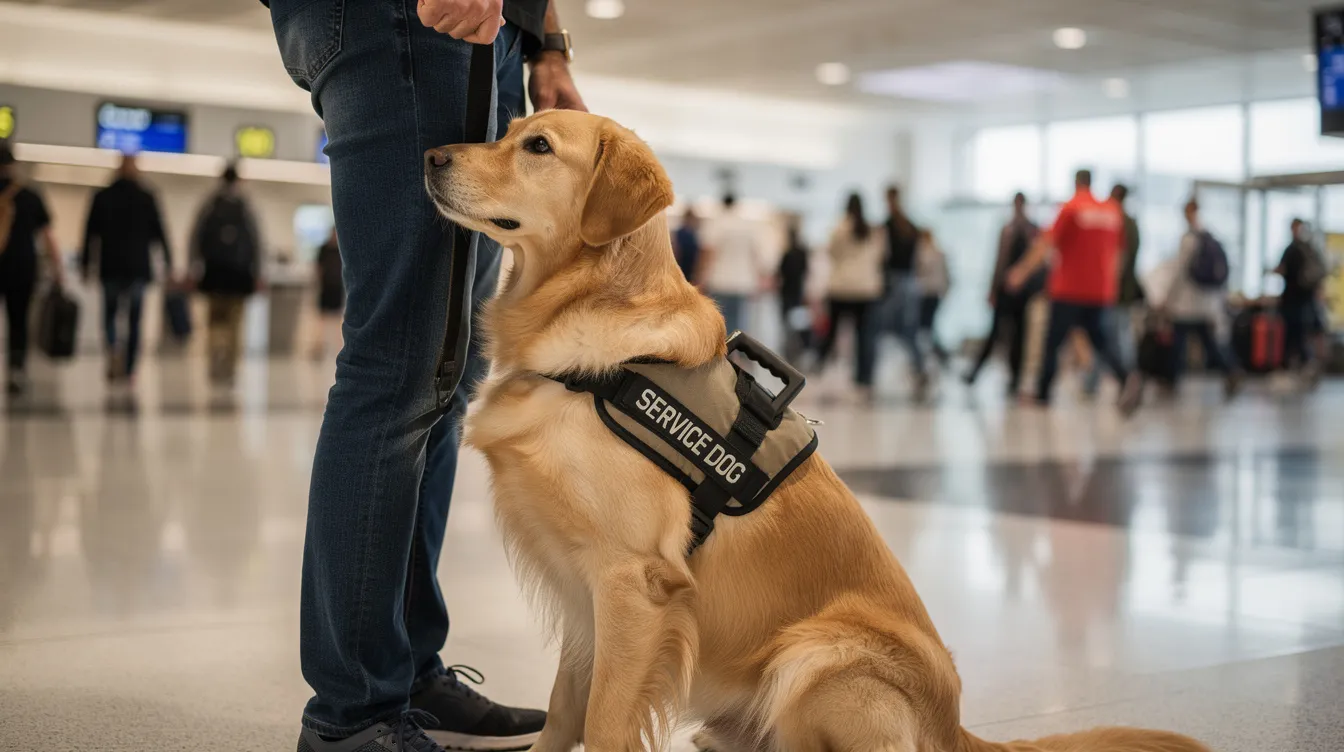
U.S. federal law, primarily the Americans with Disabilities Act, grants legal protections and public access rights to psychiatric service dogs comparable to those for service dogs assisting physical disabilities. Service dogs have legal protections under the ADA and are protected under the ADA regardless of whether the handler’s disability is psychiatric or physical.
ADA public access (Titles II and III):
-
Service animals can accompany handlers in most public places open to the general public, including restaurants, retail stores, hotels, and medical offices, even where pets are not allowed.
-
Staff may only ask two questions: (1) Is the dog a service animal required because of a disability? (2) What work or task has the dog been trained to perform?
-
Staff may not ask about diagnosis, require medical records, or demand a demonstration of tasks.
Housing: Under the Fair Housing Act and HUD guidance, landlords generally must allow psychiatric service dogs in housing with “no pets allowed” policies as a reasonable accommodation, typically without pet fees.
Air travel: Under post-2021 Department of Transportation regulations, airlines treat psychiatric service dogs like other service animals. Airlines may require advance documentation forms, which can vary by carrier.
Workplaces: A service dog may be requested as a reasonable accommodation under employment disability laws, subject to undue hardship analyses.
State laws: Many states impose penalties for misrepresenting a pet dog as a service animal. For example, South Dakota classifies this as a class 2 misdemeanor. Penalties and definitions vary, so check your specific state statutes.
Legal rights extend across these settings, but processes and requirements differ. This section is general information, not legal advice. Consult an attorney or your state’s disability rights office for guidance on your specific situation.
Do You Need Certification, Registration, or an ID Card for a Psychiatric Service Dog?
Under the ADA and related U.S. federal laws, there is no requirement for any official certification, registration, national database, or ID card for a psychiatric service dog. The ADA does not require a service dog to be professionally trained or certified.
Businesses and landlords cannot demand a certificate, license, or registration as a condition of access when the dog meets the service animal criteria. Many online services sell “service dog registration,” certificates, and ID badges, but these documents do not create legal rights and are not recognized by the U.S. Department of Justice.
What matters legally is straightforward:
-
The handler has a qualifying disability
-
The dog is individually trained to perform tasks related to that disability
-
The dog is under control and housebroken in public
Some handlers choose vests or ID tags to reduce confrontations in daily life, but these are optional tools, not legal requirements. No amount of purchased documentation substitutes for an actually trained dog.
How to Qualify for and Obtain a Service Dog for Anxiety
Qualifying for a psychiatric service dog involves both the handler’s psychiatric disability and the dog’s training, not simply a diagnosis or a desire for additional support. Obtaining a psychiatric service dog involves consulting a mental health professional to assess whether task-trained assistance fits within a broader treatment plan.
General qualification criteria:
-
A diagnosed psychiatric condition such as an anxiety disorder, PTSD, or bipolar disorder
-
Symptoms that substantially limit major life activities despite standard treatment
-
A reasonable expectation that specific dog tasks will reduce feelings of panic, hypervigilance, or other disabling symptoms
Typical steps:
-
Discuss symptoms and daily challenges with a licensed mental health professional to determine if a psychiatric service dog is appropriate.
-
Decide whether to train an existing dog (if temperamentally suitable) or apply to an assistance dog organization.
-
Plan for the time and financial commitment. Self-training can cost $500 to $3,000 over 12–18 months. A fully trained program dog from a nonprofit or specialized organization often runs $15,000 to $30,000, with some placements exceeding that. Ongoing costs for veterinary care, food, and gear add several thousand dollars annually.
Although some providers write “psychiatric service dog letters,” these are mainly useful for documenting disability status in housing or employment contexts. They do not replace training or create ADA status by themselves. Service dogs require extensive training, often over 600 hours, to qualify under the ADA.
What Kind of Training Does an Anxiety Service Dog Need?
Psychiatric service dogs require specialized training under the ADA. They must be dependable, calm in public, and responsive to their handler, requiring both general obedience and task-specific skills.
Key training components:
-
Basic obedience training is essential before task training for service dogs. Commands like sit, stay, come, heel, and leave it form the foundation. The dog must maintain good behavior in public environments, ignoring distractions from people and other animals.
-
Public access skills: remaining focused in crowded spaces, restaurants, public transport, and medical settings without destructive behavior.
-
Task training: teaching specific psychiatric service tasks relevant to anxiety, such as deep pressure, grounding nudges, nightmare interruption, or leading to exits.
Training pathways:
-
Owner-training with guidance from professional trainers or structured courses
-
In-person programs with specialized psychiatric service dog trainers through a formal training program
-
Structured handler training courses that guide owners step by step
Training a psychiatric service dog typically takes one to two years. Training a service dog can take over 600 hours of extensive training before the dog reliably performs in real-world settings. Socialization in varied environments from a young age helps the trained dog remain stable and non-reactive. Complex tasks such as reliable deep pressure therapy or responding to subtle anxiety cues often require many months of consistent practice.
Psychiatric service dogs should not be trained as attack or aggression dogs. Their role is to directly assist the handler through calming, alerting, and mitigating psychiatric symptoms, never through intimidation or physical activity directed at others.
What Breeds and Individual Dogs Make Good Anxiety Service Dogs?
The ADA does not restrict service dogs by breed or size. Any breed can be a service dog if it meets temperament requirements. What matters is the individual dog’s behavior, health, and capacity for the work.
Important temperament traits:
-
Calm, stable, and non-reactive in busy environments
-
Highly trainable and motivated to work with a specific person
-
Comfortable with frequent human contact and close physical pressure (essential for tasks like deep pressure therapy)
Temperament and genetic evaluations are crucial for selecting service dogs. Breeds commonly seen in psychiatric service work include Labrador Retrievers, Golden Retrievers, Standard Poodles, and mixes of these. However, mixed breeds can be equally effective when temperament is right.
For deep pressure tasks, medium to large dogs are generally preferred because their body weight provides meaningful pressure. Smaller dogs may excel at alerting, lap-based grounding, and tactile stimulation tasks.
Screen candidates for health issues (hips, elbows, eyes, cardiac conditions) since psychiatric service dogs often work for 8–10 years. A dog with chronic medical conditions cannot provide consistent support over that span, and veterinary care costs will compound.
Daily Life with a Psychiatric Service Dog for Anxiety
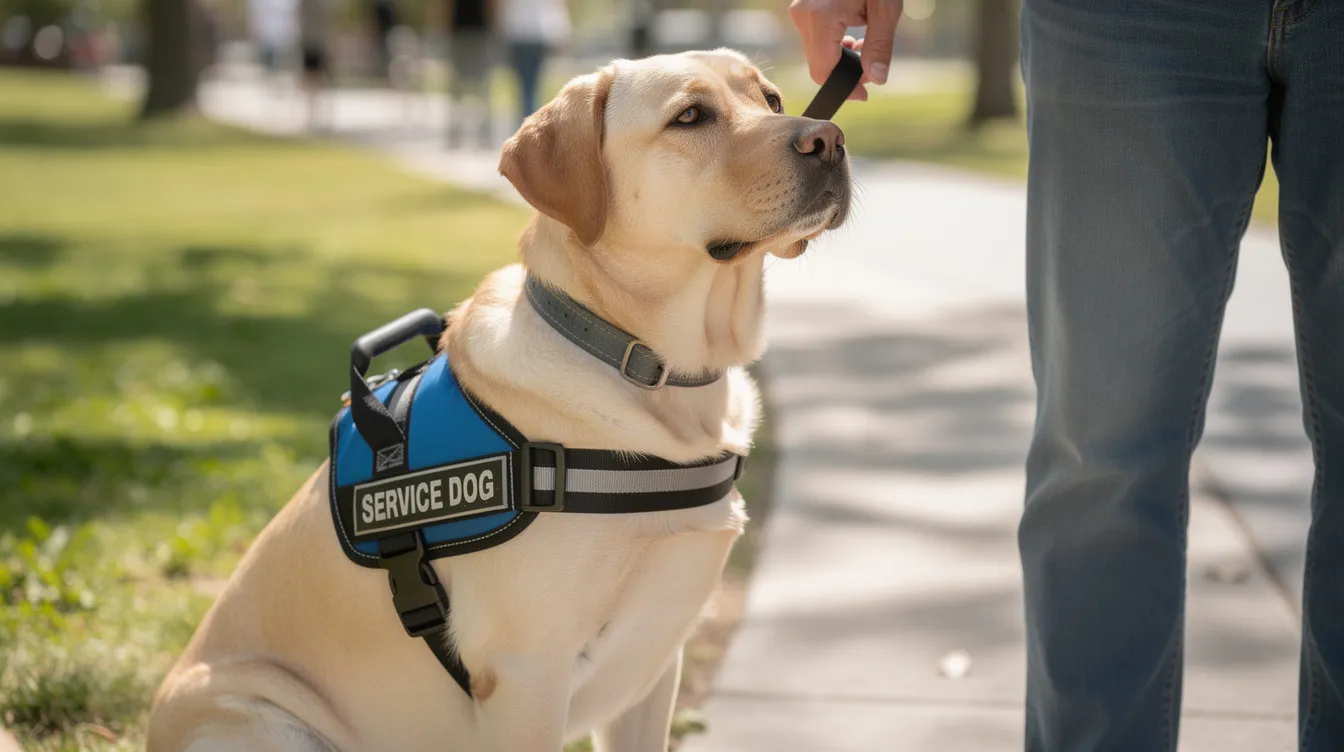
Living with an anxiety service dog reshapes routines at home, in public, and at work or school. The dog is a working animal with its own needs, not a pet dog that happens to accompany you.
Daily responsibilities:
-
Regular physical activity, feeding, grooming, and veterinary care
-
Ongoing practice of trained tasks and public access behavior to prevent the dog’s behavior from slipping
-
Planning access needs in advance, such as discussing the dog with employers or professors
Typical scenarios:
-
Using deep pressure at home when early signs of panic appear
-
The dog acting as a physical barrier in a crowded line, creating space for the handler
-
The dog accompanying the handler to therapy sessions, helping with overall well being and reducing the dread of leaving the house
Practical challenges:
-
Handling public questions and occasional access disputes. The public scrutiny of having a service dog can increase social anxiety, especially early on.
-
Balancing the dog’s need for rest and “off-duty” time with the handler’s symptoms
-
Respecting that the dog is a working animal and should not be frequently distracted by strangers
Many handlers report greater independence, improved ability to travel, and better participation in education or work once the dog is fully integrated into daily life. Guide dogs for the visually impaired have long demonstrated how a well-trained service animal transforms a disabled handler’s independence, and psychiatric service dogs can have a similarly profound impact on well being.
Risks, Limitations, and Ethical Considerations
While psychiatric service dogs can be life-changing, they are not a cure and are not the right choice for everyone.
Realistic limitations:
-
The dog may not be permitted in certain restricted environments (sterile operating rooms, some secure facilities)
-
Illness or injury to the dog can temporarily remove support, leaving the handler without their primary coping tool
-
Training, care, and travel are costly and time-consuming
-
A psychiatric service dog does not eliminate anxiety disorders; it helps reduce feelings of panic and improves functioning
Ethical considerations:
-
Misrepresenting a pet dog or emotional support animal as a service dog undermines public trust and is illegal in many states. This hurts people who genuinely rely on service animals.
-
The dog’s welfare matters: adequate rest, humane training methods, no overwork during long or intense days
-
Service dogs are not alarm clock substitutes or smoke alarm replacements; they assist people with specific, trained responses to psychiatric symptoms
Psychiatric service dogs should be part of a broader treatment plan that includes therapy, medication where appropriate, peer support, and coping skills training. They complement clinical care for medical conditions and psychiatric disabilities but do not replace it.
Frequently Asked Questions
Can I train my own psychiatric service dog for anxiety?
Yes. Under the ADA, owners are allowed to train their own psychiatric service dogs. There is no requirement to use a professional or nonprofit program, provided the dog is well-behaved in public and trained to perform specific disability-mitigating tasks. Many handlers work with professional trainers for guidance while doing the daily training themselves. The dog must still meet the same behavioral and task standards as any other service dog.
Do I need a doctor's letter to bring my anxiety service dog into public places?
No. The ADA does not require handlers to show a letter or medical documentation for entry into public spaces. Staff may only ask the two permitted questions about service animal status and tasks. However, documentation from a licensed mental health professional may be useful in housing or employment contexts where a reasonable accommodation request is being processed.
Are psychiatric service dogs allowed in college classrooms and dorms?
Generally, yes. Colleges and universities in the U.S. are covered by the ADA and must allow psychiatric service dogs in classrooms and most campus facilities. Dorm housing is typically covered by the Fair Housing Act. Students usually need to coordinate with disability services offices, but the school cannot deny access simply because the disability is psychiatric rather than physical.
What happens if my anxiety service dog misbehaves in a store or restaurant?
Under the ADA, businesses can ask a handler to remove a service dog that is out of control, aggressive, or not housebroken, even if it is a legitimate psychiatric service dog. However, the handler must still be allowed to obtain goods or services without the animal. Consistent training and maintenance of the dog's behavior in public is essential.
Can a landlord charge pet rent or a pet deposit for a psychiatric service dog?
Under the Fair Housing Act and HUD guidance, landlords generally may not charge pet fees or pet rent for service animals, including psychiatric service dogs. They can, however, charge for actual damage caused by the animal. Processes and documentation requirements can vary by property and state, so verify local rules. Retrieve dropped items or other property damage responsibilities still fall on the handler.
References
- U.S. Department of Justice, Civil Rights Division. "Frequently Asked Questions about Service Animals and the ADA." ADA.gov, updated 2020.
- U.S. Department of Justice. "Nondiscrimination on the Basis of Disability in State and Local Government Services," 28 C.F.R. Part 35, §35.104 and §35.136.
- U.S. Department of Justice. "Nondiscrimination on the Basis of Disability by Public Accommodations and in Commercial Facilities," 28 C.F.R. Part 36.
- U.S. Department of Transportation. "Traveling by Air with Service Animals," 14 C.F.R. Part 382, final rule effective January 11, 2021.
- U.S. Department of Housing and Urban Development. "Assessing a Person's Request to Have an Animal as a Reasonable Accommodation Under the Fair Housing Act," HUD FHEO Notice 2020-01.
- Assistance Dogs International. "Standards for Assistance Dog Programs," current edition.
- American Psychiatric Association. Diagnostic and Statistical Manual of Mental Disorders, 5th ed., text revision (DSM-5-TR), 2022.

Pet Slimmers Editorial Team
The Pet Slimmers editorial team writes practical, evidence-based guidance on companion animal weight management, drawing on the work of the ROYAL CANIN® Weight Management Clinic at the University of Liverpool.
This article is for general information only and is not a substitute for professional veterinary advice. Always consult your veterinary surgeon about the health of your pet.