How to Weigh Your Pet at Home (Vet-Guided 2025 Guide)
Medically reviewed by Dr. Alex German, BVSc PhD CertSAM DipECVIM-CA — Reader in Small Animal Medicine, University of Liverpool
Key Takeaways
- Most pet owners can weigh their pet at home by using a bathroom scale, baby scale, or dedicated pet scale placed on a hard, level floor. Consistency matters more than perfection: use the same scale, the same surface, and roughly the same time of day each session.
- Both weight and body condition should be tracked together. A number on the scale tells you how much your pet weighs, but body condition scoring tells you whether that weight is healthy for their frame.
- Dogs should ideally lose 1% to 2% of body weight weekly when on a veterinary-supervised program. Safe weight loss is gradual, and any changes to diet or exercise should be discussed with your veterinarian first.
- Excess body fat can reduce lifespan and quality of life. Home weighing helps catch early trends, but it supports rather than replaces regular veterinary checkups, especially for pets on a weight loss plan, senior pets, or those managing chronic disease.
Regularly weighing your dog or cat at home is one of the simplest ways to monitor their health between veterinary visits. A consistent home weighing routine helps you detect gradual weight changes, supports any active weight loss plan, and gives your veterinary healthcare team real data to guide decisions about diet and exercise.
Why does your pet’s weight matter so much?
More than half of dogs and cats in the United States are estimated to be overweight or obese, according to clinical survey data from the Association for Pet Obesity Prevention. Maintaining a healthy weight is central to your pet’s health, mobility, and long-term well being.
Here is what the research consistently shows:
-
Excess weight can lead to serious health issues in pets, including osteoarthritis, joint injuries, diabetes mellitus, respiratory disease, and reduced mobility. Excess weight can also lead to cardiovascular diseases in pets and contributes to high blood pressure.
-
Obesity increases the risk of diabetes and arthritis in pets, and overweight pets face higher risks during anesthesia procedures. Even a modest amount of extra weight, such as 2 to 4 pounds (1 to 2 kilograms) above ideal weight in a 20-pound dog, can significantly raise disease risk and increase load on joints.
-
Obese dogs are less energetic and playful than healthy-weight dogs, and research links excess weight to a shorter lifespan across many dogs and cats alike.
Weight is only part of the picture. Body condition (the amount of body fat) and muscle condition are equally important, but regular weighing is the easiest place for most dog owners to start. Tracking your dog’s weight or your cat’s weight at home gives you early detection of weight gain or weight loss, and leads to better-informed conversations with your veterinary team about what comes next.
How can you tell if your pet is at a healthy weight?
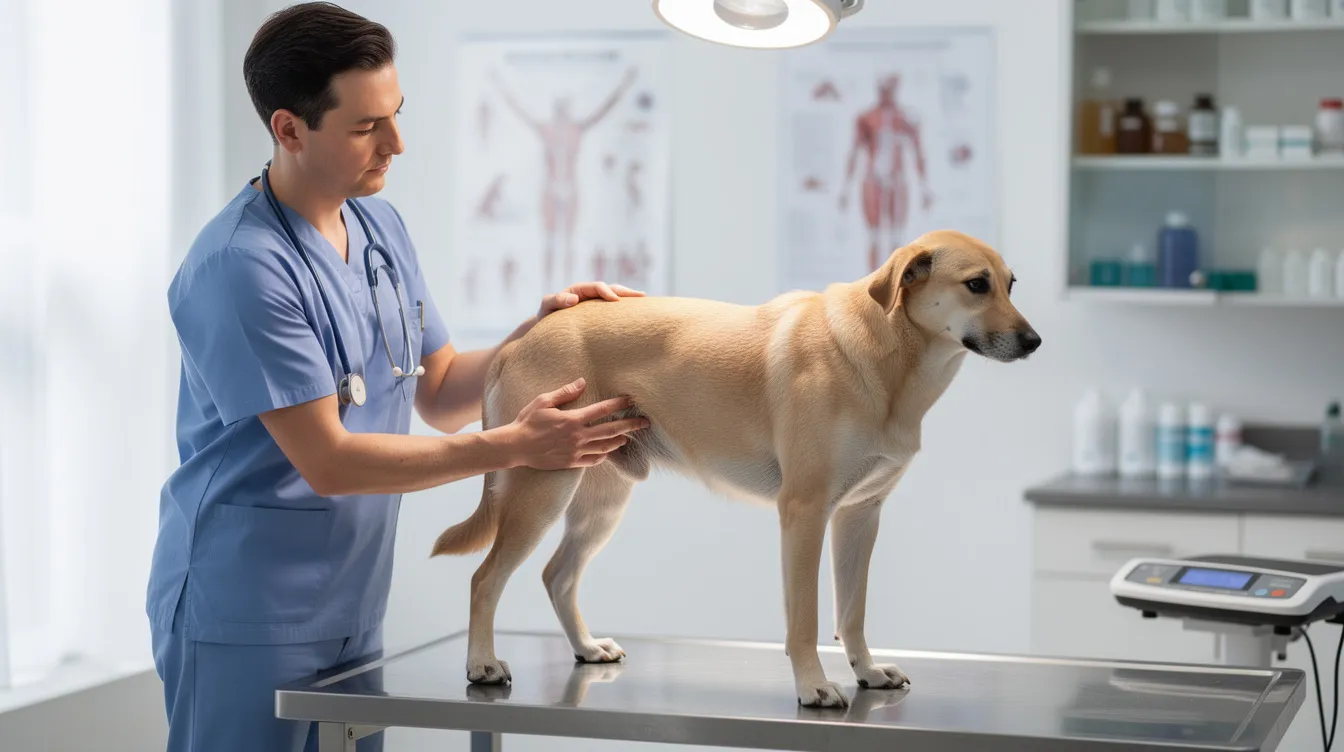
A scale shows you numbers. Body condition scoring shows you how much body fat is present. Veterinarians commonly use a 1 to 9 scale, where a Body Condition Score of 4 to 5 indicates a healthy weight. Body Condition Score ranges from 1 to 9 for pets, with scores below 4 suggesting underweight and scores above 5 suggesting increasing adiposity.
Body Condition Scoring uses visual and tactile checks to assess a pet’s weight. Here is what to look for:
-
Healthy body condition (BCS 4–5/9): Ribs are easily felt but not visible from a distance. There is a visible waist when viewed from above and a clear abdominal “tuck” from the side.
-
Overweight to obese (BCS 6–9/9): Ribs are hard to feel under a layer of fat. The waist disappears, and the abdomen appears rounded or sagging. A pet’s body condition at these scores signals that the dog may need to lose weight or the cat may require dietary adjustments.
Veterinarians can assess your pet’s body condition and weight during routine visits. Ask your veterinarian to demonstrate body condition scoring in person so you can learn to do it at home. Record both body weight in pounds (with kilograms in brackets on first use) and BCS at each visit to track the pet’s progress over time.
Keep in mind that breed charts and “average” weights are only rough guides. An individual dog’s weight or cat’s weight must always be interpreted alongside body condition, muscle condition, the dog’s age, and medical history. Your veterinarian can provide personalized guidance on what your pet’s unique ideal weight should be.
What equipment do you need to weigh your pet at home?
Most households already have what they need. You can use a digital household scale and a stable container to weigh a pet of almost any size. Accuracy improves when the scale is on a stable surface and the pet is calm.
-
Bathroom scales work well for medium and large adult dogs. Choose a digital bathroom scale that reads to at least 0.2 lb (0.1 kg). Place the scale on a hard, level floor for accurate measurements: tile, vinyl, or hardwood, never carpet. Using household items can help estimate a pet’s weight without a pet scale when a dedicated option is not available.
-
Baby scales or small animal scales are better for cats, toy breeds, and pets under about 10 to 15 lb (4.5 to 7 kg). Finer graduations (often to 0.05 lb) allow earlier detection of small but important changes, which is especially valuable for overweight pets on a weight loss plan.
-
Dedicated pet scales can be purchased online. Many feature non-slip platforms and low side rails that help anxious pets stay still. These are useful for multi-pet households or for pets on closely monitored weight management programs.
Whatever scale you use, check it periodically by weighing a known object such as a 10 lb dumbbell. If your readings suddenly shift, confirm the current weight on a veterinary clinic scale. Also consider using a kitchen scale for accurate pet food measurements when you weigh food portions at home.
How to weigh your dog at home (step-by-step)
The safest way to weigh your dog depends on their size and temperament. Keeping the experience calm and positive is more important than perfect stillness.
-
Set up. Place the scale on a flat, non-slip surface against a wall if possible. Have low-calorie treats ready to reward calm behavior. Clicker training or a simple verbal marker can help shape the behavior of stepping onto the platform.
-
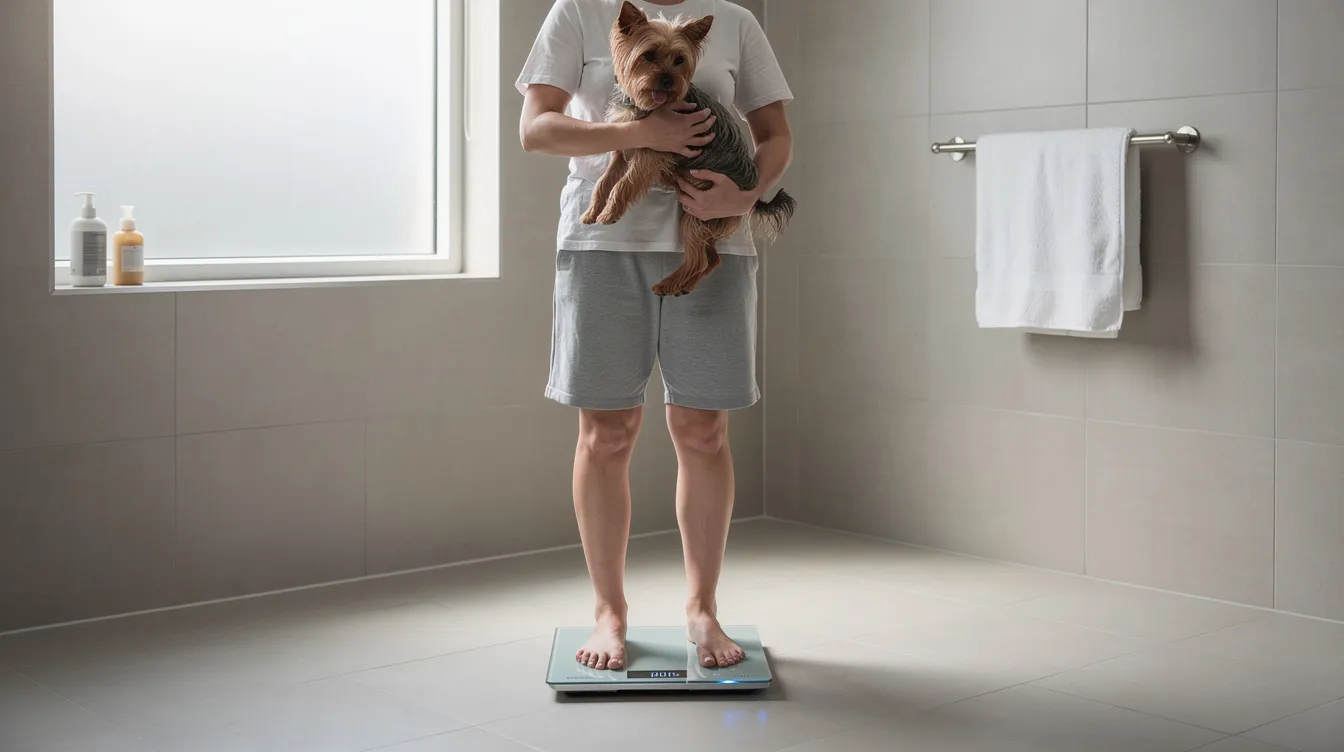
Hold-and-subtract method (small to medium dogs). The Hold-and-Subtract Method is effective for weighing dogs and cats. Weigh yourself alone, then weigh yourself while holding your dog, and subtract the two values. For a small pet, use a regular bathroom scale if it can be picked up safely.
-
Stand-on-the-scale method (larger dogs). Lure the dog with a treat to stand with all four paws on the center of the scale. Wait for the reading to stabilize, then mark and reward. Some dogs need to step on with front paws first, then be gently encouraged to bring hind paws up.
-
Laundry basket method (small dogs and puppies). The Laundry Basket Method is best for small dogs, puppies, or rabbits. Weigh the basket empty, then place the pet inside and weigh again, subtracting the basket weight.
Safety cautions: Never lift very heavy dogs, dogs with reduced mobility, or dogs with breathing difficulties. For these pets, a floor-level pet scale or a visit to the veterinary clinic is a safer option.
Write the weight down immediately alongside the date and any notes (e.g., “before breakfast,” “after evening walk”). If your dog is wriggly, repeat the measurement 2 to 3 times and average the results.
How to weigh your cat at home (without a meltdown)
Many cats dislike unfamiliar surfaces. Creating a calm, predictable routine helps, especially for cats on a weight loss plan or with chronic conditions such as diabetes.
-
Baby scale or small digital scale: Place a non-slip mat or thin towel on the platform. Tare the scale with the towel in place, then gently set the cat on top and allow them to settle before reading.
-
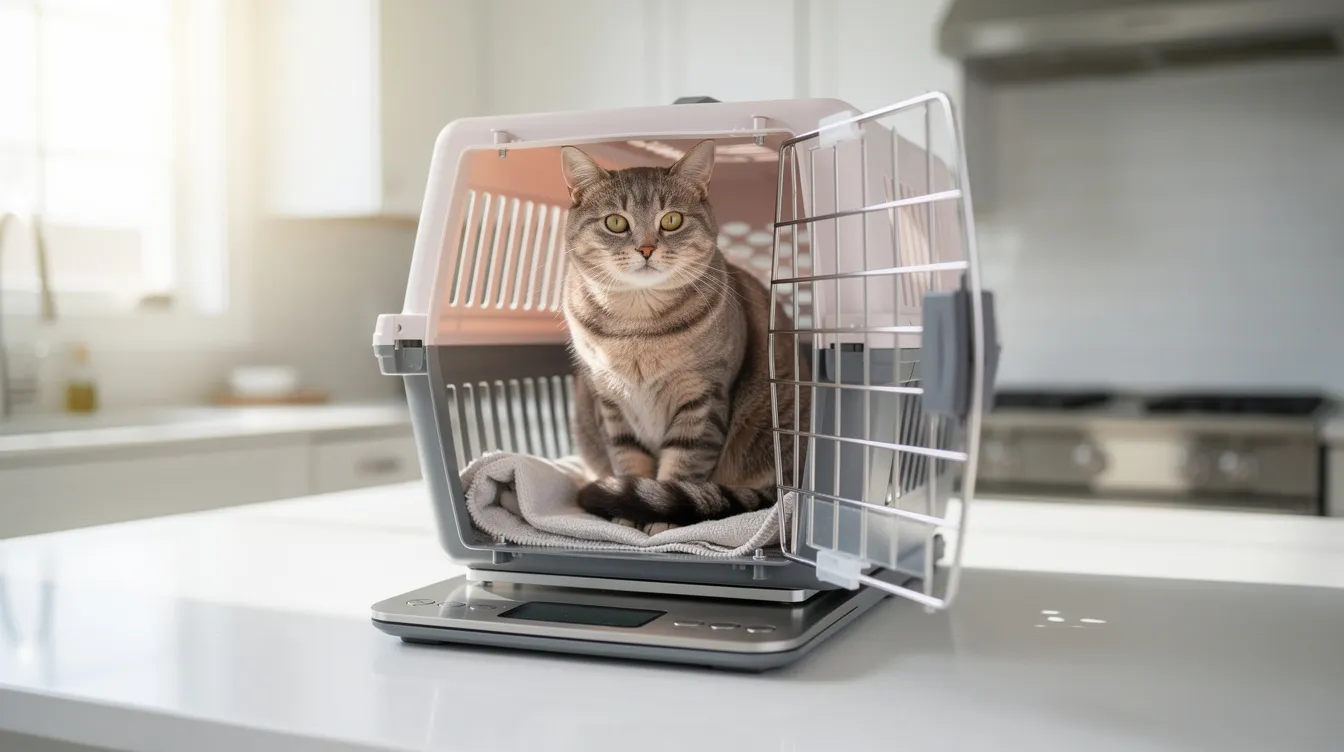
Carrier method: The Carrier Method is suitable for anxious cats or small pets. Weigh the empty carrier first, then weigh the cat inside the carrier, and subtract. This approach is often less stressful for fearful cats.
-
Encourage cooperation. Use treats, gentle petting, or a favorite toy. Some cats do best if weighed just before mealtime when they are food-motivated.
-
Never force a frightened cat onto a scale. If weighing at home is consistently stressful, talk to your veterinary team about desensitization techniques or schedule a nurse or technician visit for a calm, low-pressure weigh-in at the clinic.
How often should you weigh your pet?
Optimal weighing frequency depends on life stage, health status, and whether the pet is trying to lose weight, maintain, or gain weight.
|
Situation |
Recommended frequency |
|---|---|
|
Healthy adult pet at stable weight |
Every 3–6 months at home, plus every veterinary visit |
|
Puppies and kittens (first 6 months) |
Every 2–4 weeks |
|
Pet on a weight loss program |
Every 1–2 weeks |
|
Senior pet or pet with chronic disease |
As directed by your veterinarian |
Pets should be weighed regularly to monitor weight loss progress, and regular veterinary check-ups help monitor progress alongside at-home tracking. For puppies and kittens, growth curves and ideal weight trajectories should be interpreted with the veterinary team to determine whether development is on track.
Pets with chronic conditions like heart disease, kidney disease, or diabetes may need more frequent weighing to detect fluid retention or unintended weight loss promptly.
How does home weighing fit into a safe weight loss plan?
Home weighing is one piece of a comprehensive, veterinary-supervised program that also includes a tailored diet, portion control, exercise, and monitoring of body condition and muscle condition.
-
Your veterinary team will help define the pet’s ideal weight, estimate starting calorie intake, and design a realistic timeline. Dogs should lose 1% to 2% of body weight weekly. Veterinary-guided weight loss plans target 3% to 5% weight loss monthly to protect lean muscle mass.
-
Weight-loss foods are formulated for calorie restriction and specific nutrients, ensuring pets eat fewer calories without missing essential nutrition. When transitioning to a new food, a gradual diet transition can take about one week, using a slower transition if the pet resists.
-
Treats should account for no more than 10% of a dog’s daily calorie intake. Keeping a food diary that logs the food amount, calorie content, and any uneaten food helps the veterinary team fine-tune the plan.
-
Pet owners can use home weights between clinic visits to track their pet’s progress, log trends, and share data with the veterinary team for adjustments in food portions or exercise.
Weigh your dog or cat at the same time of day, under similar conditions (e.g., before breakfast, after toileting), to minimize normal daily fluctuations. Never make large, sudden calorie cuts or intense exercise changes on your own based on a single home weight. Always consult your veterinarian before adjusting diet or the pet’s activity level. Offer fresh water at all times, and remember that a dog begs for more calories out of habit, not hunger.
How to keep your pet calm and safe on the scale
Creating a low-stress weighing routine improves accuracy and helps many pets feel more comfortable during both home and clinic weigh-ins.
-
Gradual desensitization: Leave the scale out all the time. Reward the pet for calmly approaching it, then for placing paws on it, and finally for standing or sitting fully on the platform.
-
Positive reinforcement: Use low-calorie treats, praise, and calm body language. Dog owners should avoid scolding or pulling dogs onto the scale. Instead, use lured steps and reward each small success.
-
Safety tips: Supervise at all times. Prevent pets from jumping off high surfaces. Avoid lifting heavy pets if you have back problems or if the pet has mobility issues. Stop the session if the pet becomes highly distressed.
-
For pets with severe anxiety, pain, or behavioral concerns, your veterinary team can suggest individualized strategies or schedule technician visits for calm weigh-ins at the clinic.
How should you record and interpret your pet’s progress?
Treat weight tracking like any other health metric. A notebook, spreadsheet, or pet health app all work.
-
Record the date, weight, and type of scale used to track pet weight over time. Include body condition score if known, and any relevant notes such as diet changes, illness, increased exercise, or routine changes.
-
Small day-to-day fluctuations are normal, driven by hydration and bowel or bladder contents. Trends over several weeks are far more informative when judging whether a pet is on track to lose weight, gaining, or maintaining.
-
A healthy weight loss pattern looks like a gentle downward slope at around 1 to 2% of body weight per week, confirmed at both home and clinic visits, with the pet remaining bright, active, and interested in pet food.
-
Contact your veterinarian promptly if you see rapid weight loss outside the plan, sudden weight gain, or changes in appetite or behavior. These can signal underlying medical conditions, health issues, or disease that needs evaluation. Rapid weight loss in particular can cause dangerous metabolic problems and warrants a veterinary assessment.
When should you stop home weighing and call your veterinarian?
Home monitoring is valuable, but certain signs always require veterinary input rather than more weighing at home.
-
Red flags: Rapid weight loss outside a planned weight loss program, weight loss in an older pet without a weight loss goal, increased drinking or urination, vomiting, diarrhea, coughing, breathing changes, or marked lethargy.
-
Sudden weight gain accompanied by abdominal swelling, difficulty breathing, or exercise intolerance can indicate fluid buildup or other serious problems that need same-day evaluation. Such changes affect overall health and your dog’s health or cat’s health significantly.
-
If a pet on a weight loss plan is not losing weight after 3 to 4 weeks of consistent feeding and activity, the veterinary team should review the plan, food portions, and weighing method to identify barriers or needed changes.
The Royal Canin Weight Management Clinic, as a veterinary referral clinic, works in partnership with primary-care veterinarians to manage more complex obesity cases, including obese pets with concurrent medical conditions. Your own veterinarian can determine whether a referral is appropriate, and whether risk factors in your pet’s life warrant specialist input.
Frequently Asked Questions
How accurate does my home scale need to be to track my pet's weight?
For most dogs and cats, a digital scale that is consistent within about 0.2 to 0.5 lb (0.1 to 0.25 kg) is sufficient to monitor trends, provided you use the same scale every time on a hard floor. Clinic scales are used to confirm key milestones or concerning changes. Consistency matters more than absolute precision.
Can I use a smart scale or fitness scale to weigh my dog or cat?
Many smart bathroom scales work well for recording a stable weight reading when someone holds the pet. However, body-fat percentage or impedance readings on these scales are designed for humans and should be ignored for pets. Log only the weight number and share it with your veterinarian.
Is it safe to weigh my pet after meals or walks?
The most consistent results come from weighing at roughly the same time and conditions, for example before breakfast and after toileting. Occasional post-meal or post-walk weights are not harmful, but expect slight variation. Large short-term swings in weight should always be discussed with the veterinary team.
How soon will I see results if my dog needs to lose weight?
Under veterinary guidance, many dog owners begin to see measurable changes on the scale within 2 to 4 weeks. At a safe rate of 1 to 2% body weight loss per week, a 50-pound dog might lose 0.5 to 1 pound weekly. Comfort and mobility improvements often appear even before large numeric changes, and many dogs regain energy and playfulness early in the process.
Do indoor-only cats really need regular weight checks?
Indoor cats are at a higher risk for gradual weight gain because their daily activity level tends to be lower. Home weighing every 4 to 8 weeks helps identify early changes and allows the veterinary team to adjust food portions or enrichment before obesity develops, protecting the cat's long-term health.
References
- WSAVA Global Nutrition Committee. WSAVA Global Nutrition Guidelines. Journal of Small Animal Practice . 2011;52(7):385–396.
- Association for Pet Obesity Prevention. Clinical surveys and position statements on pet obesity and weight management. Updated 2022.
- Laflamme DP. Development and validation of a body condition score system for dogs and cats. Journal of the American Veterinary Medical Association . 1997;210(5):695–699.
- German AJ. Weight management in obese pets: the tailoring concept and how it can improve results. Acta Veterinaria Scandinavica . 2016;58(Suppl 1):57.
- German AJ, Holden SL, Moxham GL, et al. Obesity, its associated disorders and the role of inflammatory adipokines in companion animals. Journal of Veterinary Internal Medicine . 2009;23(3):535–544.
- German AJ, Holden SL, Bissot T, et al. A high protein, high fiber diet improves weight loss in obese dogs. Journal of Nutrition . 2010;140(10):1943–1950.
- Brooks D, Churchill J, Fein K, et al. 2014 AAHA Weight Management Guidelines for Dogs and Cats. Journal of the American Animal Hospital Association . 2014;50(1):1–11.
- German AJ, Morgan LE. How often do veterinarians assess the bodyweight and body condition of dogs? Journal of Nutrition . 2008;138(9):1923S–1929S.
- Freeman LM, Becvarova I, Cave NJ, et al. WSAVA Nutritional Assessment Guidelines. Journal of Small Animal Practice . 2011;52(7):385–396.

Georgia Woods
RVN — ROYAL CANIN® Weight Management Clinic Nurse
Georgia Woods trained as a Veterinary Nurse in 2001 and qualified in 2004, going on to run nurse-led obesity clinics and work in emergency and critical care. She completed the ROYAL CANIN® Pet Health Councillor course, and since 2015 has been the ROYAL CANIN® Weight Management Clinic Nurse at the University of Liverpool Small Animal Teaching Hospital, where she works exclusively with obese pets.
This article is for general information only and is not a substitute for professional veterinary advice. Always consult your veterinary surgeon about the health of your pet.