How Much Should I Feed My Dog to Lose Weight? (Vet-Led Guide)
Medically reviewed by Dr. Alex German, BVSc PhD CertSAM DipECVIM-CA — Reader in Small Animal Medicine, University of Liverpool
Key Takeaways
- Most dogs need a 25% to 30% reduction in daily portions to lose weight safely. A veterinarian calculates the specific daily calories your dog needs based on their target weight, not the feeding chart on the bag.
- Safe weight loss means losing about 1 to 2% of body weight per week. For a 50-pound dog, that works out to roughly 0.5 to 1 pound per week.
- A therapeutic weight loss dog food (around 300 calories per cup), accurate gram-scale measurements, and strict treat control (no more than 10% of daily calories) form the foundation of any effective weight loss plan.
- Regular weigh-ins every 2 to 4 weeks, combined with body condition scoring, let you and your vet adjust the feeding amount as your dog's weight changes.
- Work with your veterinarian before making changes. Dogs with health conditions like diabetes, heart disease, or hypothyroidism need customized plans.
Most overweight dogs need 20% to 30% fewer daily calories than they currently eat, with weight loss supervised by a veterinarian at a safe rate of about 1 to 2% of body weight per week. The exact feeding amount depends on several factors: your dog’s current weight, target weight, body condition score, age, reproductive status, activity level, and any medical conditions. This guide, written by the ROYAL CANIN Weight Management Clinic at the University of Liverpool, walks through each step for a US audience using pounds (with kilograms in brackets on first mention). Always consult your own veterinarian before changing your dog’s diet or exercise routine.
How much should I feed my dog to lose weight?
Most dogs need a calculated daily calorie target and carefully measured portions to lose 1 to 2% of body weight per week, under veterinary supervision. The answer to “how much should I feed my dog” is never a single number that works for every dog; it is a number your vet determines for your specific dog and then revisits regularly.
As a rough illustration, an otherwise healthy 66-pound (30 kg) dog might be started around 700 to 850 kcal per day for weight loss. Do not copy this number. Your vet will set a target weight for your dog, calculate daily calories using a standard formula, and then convert that calorie target into a specific gram or cup amount of the chosen dog food, split across 2 to 3 meals per day.
Feeding charts printed on dog food bags are designed for maintenance, not weight loss. Following the bag directions for an overweight dog will keep them overweight. Free feeding (leaving food down all day) removes any ability to control how much food your dog actually eats and is rarely appropriate during a weight loss program.
Treats, dental chews, and table scraps all count toward daily calories. Even small extras add up. The feeding amount must be re-checked every 2 to 4 weeks as your dog’s weight changes, and food portions need to be adjusted based on actual weight loss progress.
Why does my dog’s weight matter before I decide how much to feed?
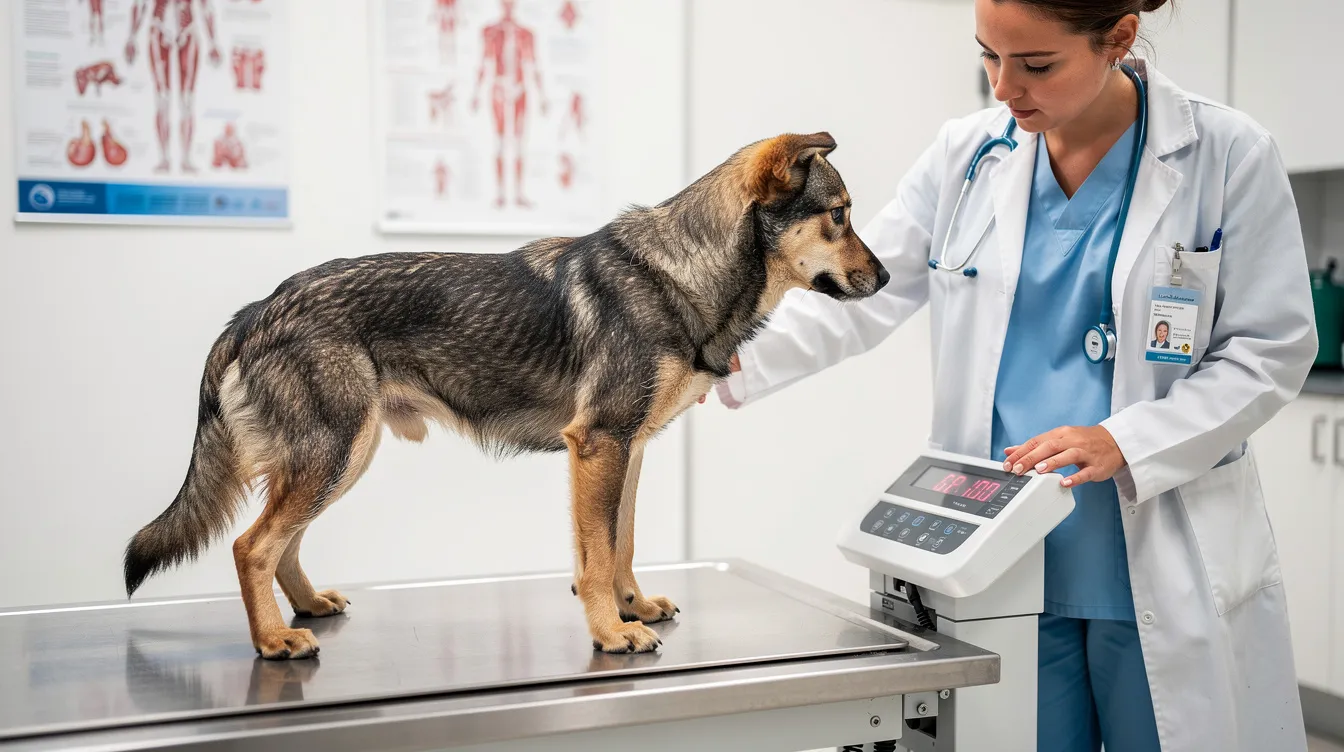
Safe weight loss starts with knowing two numbers: how much your dog weighs now and what their ideal weight should be. Without these, any feeding amount is a guess.
Small dogs can be weighed at home using a bathroom scale (weigh yourself holding the dog, then subtract your weight). For larger dogs, clinic scales are more precise. Weigh at the same time of day and under similar conditions each time.
Veterinarians use a 1-to-9 body condition score (BCS) system, where 4 to 5 out of 9 is ideal. Each BCS point above ideal corresponds to roughly 5% additional body fat, so a dog scoring 7 out of 9 carries approximately 10 to 15% excess body fat relative to their ideal weight. Veterinarians can assess your dog’s body condition score during a routine visit and confirm whether weight loss is needed.
Practical body condition signs you can check at home:
-
Ribs: you should feel them with light pressure through a thin fat covering.
-
Waist: look down from above; a dog at healthy weight has a visible waist behind the ribs.
-
Abdomen: from the side, the belly should tuck up rather than hang level or sag.
Excess fat over the ribs, loss of visible waist, and a pendulous belly all indicate excess weight. Your vet also evaluates muscle condition score, which helps avoid over-restricting calories in senior dogs or dogs with low muscle mass. Obesity affects nearly every major organ and body system; it increases the risk of diabetes and heart disease, worsens arthritis by increasing stress on joints, and can lead to complications during anesthesia. Overweight dogs have a shorter life expectancy than ideal-weight dogs.
How do vets calculate my dog’s daily calories for weight loss?
Vets use standardized formulas and clinical judgment to estimate how many calories your dog needs for weight loss. This is not guesswork.
The core formula is the resting energy requirement (RER):
RER (kcal/day) = 70 x (ideal weight in kg)^0.75
Energy needs are estimated using a dog’s target weight, not their current weight. For weight loss, many dogs start between 0.8 and 1.0 times the RER of their target weight, then are adjusted up or down based on weekly weight changes, hunger levels, and health status. Caloric intake should be reduced by 20% to 25% compared to what the dog eats for maintenance.
|
Factor |
How it affects calorie target |
|---|---|
|
Neutered vs. intact |
Neutered dogs need fewer calories |
|
Dog’s breed |
Some breeds (Labradors, Beagles) are obesity-prone |
|
Dog’s age |
Senior dogs often have lower energy needs |
|
Activity level |
Sedentary lifestyles require fewer calories |
|
Medications |
Steroids and some drugs increase appetite or slow metabolism |
Online dog calorie calculators can provide a rough starting point, but published data show these estimates can be off by up to 50% from what an individual dog actually requires. They must not replace veterinary advice. Veterinarians help create individualized weight loss plans that account for all of these other factors.
How do I turn daily calories into the right amount of dog food?
A calorie target only becomes useful once you convert it into grams or cups of a specific dog food. Food labels should provide kcal per cup or can for calorie calculations; if the label does not list this, contact the manufacturer.
Here is a worked example:
|
Step |
Detail |
|---|---|
|
Daily calorie target |
850 kcal/day (set by vet for this dog) |
|
Diet calorie density |
300 kcal per cup |
|
Cups per day |
850 / 300 = 2.8 cups |
|
Meals per day |
2 |
|
Cups per meal |
~1.4 cups |
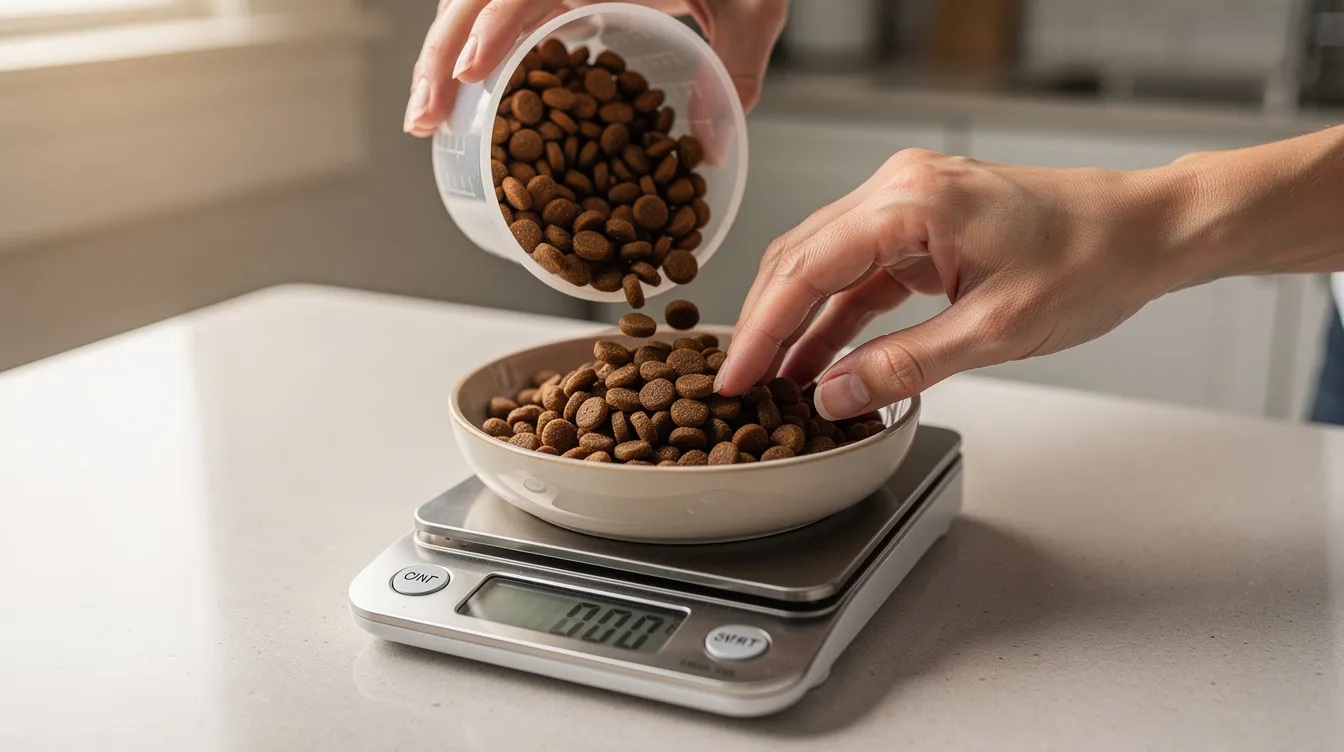
Using a digital kitchen scale leads to greater portion accuracy than measuring cups. Cup measurements vary by how firmly you pack the scoop; a “heaping” cup can add 10 to 20% more calories than a level cup. For small dogs, where the total daily amount may be less than one cup, that overfill can cancel out the entire calorie deficit. A digital scale removes this error.
If you combine kibble and wet food, add the calories from each and adjust portions so the total still matches the daily calorie target. Consistency matters: measure every meal, every day.
What type of dog food is best to help my dog lose weight?
Standard maintenance dog food and therapeutic weight loss diets are different products designed for different purposes. Feeding a maintenance food in very small amounts to cut calories risks nutritional deficiencies because the dog may not get enough of the other nutrients it needs.
Therapeutic weight reduction diets are formulated so that dogs receive balanced nutrition even at reduced portion sizes. Key features include:
-
Lower energy density (weight loss dog food should contain around 300 calories per cup, compared to 350 to 500+ for standard kibble)
-
Higher protein content (above 25% of dry matter) to preserve muscle mass during calorie restriction
-
Higher fiber (12% or more of dry matter) to promote satiety and improve stool quality
-
Lower fat (below 10% of dry matter)
Weight reduction dog food helps maintain metabolic function and encourages fat loss over lean tissue loss. Veterinary diets for weight loss often have lower calories and higher fiber, which allows dogs to eat a relatively normal volume while staying within their daily calories. This reduces begging and scavenging behaviors, supporting owner compliance.
Home-prepared or unbalanced restrictive diets can lead to nutritional deficiencies and are not recommended without a board-certified veterinary nutritionist. When transitioning to a new diet, introduce it gradually over 5 to 7 days to minimize digestive upset. Dogs with health conditions like kidney disease or pancreatitis need diets selected or approved by their veterinary team, because not every weight loss formulation is appropriate for every dog.
How many times a day should my dog eat while losing weight?
Total daily calories matter most. Meal frequency is a secondary tool that can help manage hunger and behavior.
Most adult dogs do well on 2 meals per day. Some dogs benefit from 3 smaller meals, which can reduce the gap between feedings and lessen begging. Feeding at consistent times helps regulate appetite and makes it easier for owners to track how much food the dog actually eats.
Free feeding (leaving food available all day) makes calorie control impossible for most dogs and should be avoided during weight loss. If your household currently free-feeds, transition to timed meals over 1 to 2 weeks.
Puzzle feeders and slow bowls make each meal last longer and provide mental enrichment. For diabetic dogs, dogs on certain medications, or puppies, meal timing must be coordinated with their treatment schedule. Your vet will advise on the best feeding times for these cases.
Can my dog eat treats and still lose weight?
Treats do not have to disappear entirely, but they must be counted. Treats should make up no more than 10% of a dog’s daily caloric intake; the remaining 90% or more comes from balanced dog food.
For a dog eating 800 kcal per day, that means no more than 80 kcal from treats. Many commercial treats contain 20 to 40 kcal per piece, so 2 to 4 treats per day may be the limit.
Low-calorie alternatives that work well:
-
A few pieces of the dog’s own kibble set aside from their meal
-
Small pieces of raw carrot, green beans, or apple (no seeds)
-
Tiny cubes of cooked, unseasoned lean meat
Table scraps, cheese, fatty meats, and large commercial biscuits are calorie-dense. A single large dog biscuit can contain 100+ kcal, enough to cancel a full day’s calorie deficit. Use a gram scale or measuring spoon for treats, and record them. Non-food rewards (a short game, a training session, verbal praise) work just as well for reinforcement without adding extra calories.
How fast should my dog lose weight, and how do I monitor progress?
Dogs can safely lose 1 to 2% of their weight weekly, or roughly 3 to 5% per month. A 50-pound dog can safely lose about 0.5 to 1 pound per week. Faster loss risks muscle mass depletion; slower loss may indicate the plan needs recalibrating.
Weigh your dog at least every two weeks on the same scale, at a similar time of day. Keep a written or digital log of each weigh-in alongside notes on appetite, energy, and coat condition.
At recheck visits (typically every 2 to 4 weeks), your vet evaluates:
-
Body weight
-
Body condition score
-
Muscle condition score
-
Coat quality and energy levels
-
Overall health and stool quality
If progress is too slow (under 1% per week despite good compliance), the vet may reduce daily calories by about 10% or recommend more calories burned through exercise. If progress is too fast (over 2% per week), the vet increases calories to protect lean tissue. Weight loss plans should be adjusted based on progress at every recheck. Regular veterinary check-ups monitor weight loss progress and catch problems early.

How does exercise fit in with how much I feed my dog?
Diet changes drive weight loss. Exercise is a valuable but secondary tool that must be matched to the individual dog’s ability and health status.
Low-impact options include controlled leash walks, gentle hill work, and swimming. Swimming is especially useful for dogs with arthritis or those carrying a high body condition score, because it reduces joint stress while burning more calories than walking on flat ground.
Avoid large, sudden increases in activity. A dog that has been sedentary should not start with 60-minute runs. Increase duration and intensity gradually over several weeks to prevent soft tissue injuries.
Exercise preserves muscle mass during calorie restriction, which helps maintain a healthier metabolism and supports overall health. Dogs with heart disease, respiratory problems, or orthopedic conditions need exercise plans approved by their vet before starting.
Common mistakes when trying to help a dog lose weight
Small daily extras erase calorie deficits faster than most owners expect. A single tablespoon of peanut butter (about 95 kcal) can represent 10 to 12% of a small dog’s entire daily allowance.
Common pitfalls:
-
Guessing portions instead of using a digital scale for accurate food measurement
-
Using a standard maintenance dog food at tiny amounts, leading to hunger and nutritional gaps
-
Multiple family members giving unrecorded treats or table scraps
-
Stopping weigh-ins once the dog “looks about right”
-
Free feeding or mixing multiple dog foods without counting combined calories
-
Not updating the plan as the dog’s weight changes
Practical fixes:
-
Assign one person in the household to handle all feeding
-
Post a written feeding chart on the fridge listing how much dog food per meal and how many treats per day
-
Pre-weigh meals into bags or containers at the start of the week
-
Fill a small treat jar each morning with the day’s entire allowance; when it is empty, treats are done
If weight loss stalls despite good compliance, medical conditions like hypothyroidism, Cushing’s syndrome, or medication effects may be responsible. Consult your vet to determine your dog’s ideal weight and rule out underlying health problems before making further calorie cuts.
When should I see a specialist weight management clinic?
Some dogs need more intensive support than a standard clinic visit provides. A referral to a specialist clinic may help when:
-
The dog has severe obesity (BCS 8 to 9 out of 9)
-
Multiple concurrent diseases complicate diet choices
-
Previous weight loss attempts have failed despite apparent compliance
-
Complex medication plans affect appetite, metabolism, or nutritional needs
Specialist services, like those offered at the ROYAL CANIN Weight Management Clinic at the University of Liverpool, provide detailed body composition assessment (including techniques such as DEXA scanning), tailored feeding plans, and close follow-up with precise body condition and muscle scoring.
Even if a referral clinic is not available locally, your primary veterinarian can implement many of the same principles. The core approach remains the same: set a target weight, calculate daily calories, choose an appropriate diet, measure portions, monitor progress, and adjust. Long-term success depends on maintaining new feeding and activity habits after the target weight is reached. Gradual weight gain recurs frequently after weight loss programs end if owners revert to old habits.
Start by booking a weight check with your veterinarian. Bring a list of everything your dog eats in a typical day, including treats, chews, and any table scraps. That single appointment is the first step toward helping your dog lose weight and improving their quality of life.
Frequently Asked Questions
How do I know if my dog is truly overweight or just "stocky"?
Breed labels like "stocky" can be misleading. The best guide is your dog's body condition: you should be able to feel ribs easily with light pressure, and you should see a visible waist when looking down from above. Ask your vet to demonstrate body condition scoring in person. A dog can be large-framed and still carry excess weight; the BCS system accounts for breed variation.
Should I change how much I feed if my dog is already a senior?
Many senior dogs benefit from weight loss because extra weight worsens arthritis and other age-related diseases, but calorie cuts must be gradual and supervised. Vets may select diets with higher protein density and joint-support nutrients to protect muscle mass in older dogs. A dog's age, breed, and current health all influence how aggressively calories are reduced.
Is it safe to let my dog get a bit hungry during weight loss?
Mild increased interest in food is normal on a calorie-restricted plan. Obvious distress, constant pacing, or food stealing suggest the plan needs adjusting. Strategies like splitting meals into 3 smaller meals, choosing a high-fiber weight loss diet, and using puzzle feeders can reduce hunger. Talk to your vet before making major changes to the feeding amount or diet.
Can my dog lose weight using their current dog food if I just feed less?
Some mildly overweight dogs can lose weight on their existing balanced dog food with a modest calorie reduction of 20 to 25%. The risk is that very small portions leave the dog hungry and may not deliver enough of the other nutrients it needs. A therapeutic weight loss diet allows larger, more satisfying portions with fewer calories per cup. Discuss with your vet whether switching diets would better serve your dog's nutritional needs and overall health.
What if my dog has another disease, like diabetes or heart disease?
Many medical conditions make weight loss more important because excess weight places a dog at higher risk of complications. At the same time, these conditions narrow the choice of suitable dog food and safe exercise levels. Diabetic dogs, for example, need meal timing coordinated with insulin injections. In these cases, a customized plan from your veterinary team, and sometimes a referral to a weight management clinic, is essential before changing how much or what you feed.
References
- Brooks D, Churchill J, Fein K, et al. 2014 AAHA Weight Management Guidelines for Dogs and Cats. Journal of the American Animal Hospital Association . 2014;50(1):1-11.
- AAHA. 2021 AAHA Nutrition and Weight Management Guidelines for Dogs and Cats. American Animal Hospital Association, 2021.
- Laflamme D. Development and validation of a body condition score system for dogs. Canine Practice . 1997;22(4):10-15.
- German AJ. Weight management in obese pets: the tailoring concept and how it can improve results. Acta Veterinaria Scandinavica . 2016;58(Suppl 1):57.
- German AJ, Holden SL, Morris PJ, Biourge V. Long-term follow-up after weight management in obese dogs: the role of diet in preventing regain. Journal of Veterinary Internal Medicine . 2012;26(4):899-904.
- Roudebush P, Schoenherr WD, Delaney SJ. An evidence-based review of canine and feline obesity with recommendations for management. Journal of the American Veterinary Medical Association . 2008;232(11):1631-1640.
- Association for Pet Obesity Prevention (APOP). Pet Obesity Prevalence Surveys and Clinical Recommendations. 2023.
- World Small Animal Veterinary Association (WSAVA). Global Nutrition Committee Guidelines. 2011.
- Flanagan J, Bissot T, Hours MA, et al. Success of a weight loss plan for overweight dogs: The results of an international weight loss study. PLoS ONE . 2017;12(9):e0184199.
- Salas-Mani A, Jeusette I, Castillo I, et al. Systematic review and meta-analysis of nutrient composition of weight loss diets in dogs. Animals . 2025;15(2):159.

Georgia Woods
RVN — ROYAL CANIN® Weight Management Clinic Nurse
Georgia Woods trained as a Veterinary Nurse in 2001 and qualified in 2004, going on to run nurse-led obesity clinics and work in emergency and critical care. She completed the ROYAL CANIN® Pet Health Councillor course, and since 2015 has been the ROYAL CANIN® Weight Management Clinic Nurse at the University of Liverpool Small Animal Teaching Hospital, where she works exclusively with obese pets.
This article is for general information only and is not a substitute for professional veterinary advice. Always consult your veterinary surgeon about the health of your pet.