How to Help Your Dog Lose Weight Safely: A Veterinary-Led Guide
Medically reviewed by Dr. Alex German, BVSc PhD CertSAM DipECVIM-CA — Reader in Small Animal Medicine, University of Liverpool
Key Takeaways
- A healthy weight loss rate for most dogs is about 1% to 2% of body weight per week. For a 50 lb (23 kg) dog, that means roughly 0.5 to 1 lb per week. Any weight loss plan should begin with a veterinary exam to rule out medical conditions and set a safe daily calorie goal.
- Ideal body condition matters more than a number on the scale. Use a body condition scoring chart and hands-on checks - feeling the ribs, looking for a waist from above, and checking for a tummy tuck from the side - to judge whether your dog is overweight before starting a plan.
- A structured food diary, precise portion control using a digital kitchen scale, and limiting treats to no more than 10% of daily calories are the core tools to help a dog lose weight while protecting the dog's health and avoiding nutrient deficiencies. Strict portion control accounts for 60% to 70% of weight loss results.
- Daily exercise should start gradually and be tailored to the individual dog's age, breed, fitness level, and any joint or heart issues. Your veterinary team should set safe starting points and clear the dog for activity.
- Work closely with your own veterinarian or a referral weight management clinic, such as the ROYAL CANIN Weight Management Clinic at the University of Liverpool, for a customized, medically supervised weight loss program - especially if your dog is severely obese or has other health problems.
Most dogs can lose weight safely with a veterinary-supervised plan that combines calorie control, a carefully measured diet, and appropriate daily exercise. The process does not need to be complicated, but it does need to be consistent and guided by your veterinary healthcare team. This guide walks you through every step, from recognizing excess weight to maintaining a healthy body condition for life.
What is a healthy weight for my dog?
There is no single “correct” number on the scale. A dog’s weight depends on body condition, breed, frame size, the dog’s age, and muscle mass rather than breed-average charts alone. Two dogs of the same breed can have very different ideal weights.
Body condition scoring on the widely used 1–9 scale is the standard veterinary tool. A score of 4 to 5 out of 9 is considered ideal body condition in most dogs. Each point above ideal roughly represents about 10% extra body fat.
You can do basic checks at home:
-
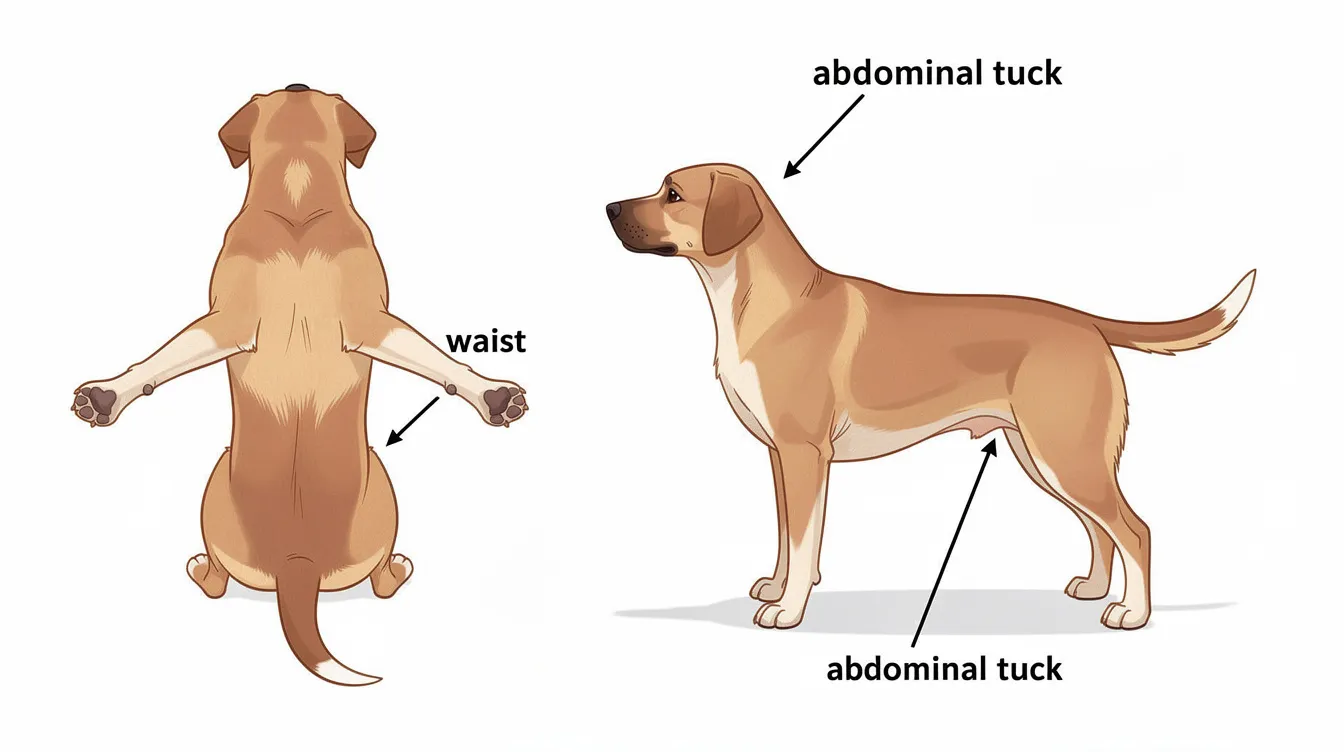
Ribs: Easy to feel under a thin layer of fat, but not visually prominent.
-
Waist: Visible when viewed from above (an hourglass shape).
-
Tummy tuck: A gentle upward slope of the abdomen when viewed from the side.
If your dog is barrel-shaped or has a sagging belly, the dog is likely overweight.
Consider this comparison: a Labrador at ideal body condition may weigh 60 lb (27 kg), while another similar-height Labrador with a heavier frame may be perfectly healthy at 70 lb (32 kg). This illustrates why body condition beats generic charts.
Ask your veterinary team to record both weight in pounds (with kilograms in brackets on first mention) and body condition score at every visit. This builds a history and helps set a realistic target weight.
How can I tell if my dog is overweight?
Weight gain is usually gradual, and owners who see their dog every day often miss it entirely. Early recognition makes a dog’s weight loss easier, safer, and more likely to succeed.
Try a simple at-home “shape check” routine:
-
From above: Look for a defined waist between the ribs and hips.
-
From the side: Check for an abdominal tuck – the belly should not hang level with or below the chest.
-
Hands-on: Gently run your hands over the ribs and along the spine. You should feel bone under a light fat cover, not thick padding.
Common signs that a dog is overweight or obese include no visible waist, ribs that are hard to feel, a fat pad over the tail base, a waddling gait, reluctance to exercise, panting on mild walks, or difficulty jumping into the car.
It is also worth understanding muscle condition score alongside body condition. Some older or chronically ill dogs may look thin in muscle but still carry excess fat – a state called sarcopenic obesity. These dogs require individualized plans.
If you are unsure whether your dog carries extra weight, bring them to the clinic for an objective weigh-in and professional body condition assessment rather than relying solely on breed weight ranges or photos of other dogs.
Why does my dog’s weight matter for health and lifespan?
Even a few extra pounds can increase the risk of painful and serious diseases. Maintaining an ideal body condition has been linked to a meaningfully longer life and better quality of life in dogs.
In a landmark long-term study, Labrador Retrievers kept at lean body condition lived a median of approximately 1.8 years longer than their littermates allowed to become overweight – roughly 13 years versus 11.2 years. The lean dogs also had delayed onset of chronic diseases.
Key health problems associated with excess weight include:
-
Osteoarthritis and joint pain, including cruciate ligament tears that can affect a dog’s joints
-
Obese dogs are at higher risk for diabetes and insulin resistance
-
Excess weight increases the risk of heart disease in dogs
-
Obesity can cause respiratory issues in dogs
-
Certain cancers, skin fold infections, and worsened mobility
-
Overweight dogs have shorter life expectancies than healthy-weight dogs
Fat tissue is metabolically active. It releases inflammatory substances and hormones – such as leptin, TNF-α, and resistin – that worsen arthritis, insulin resistance, and cardiovascular strain.
Keeping your dog’s weight in the ideal range supports easier anesthesia, safer surgery, improved breathing, and more comfortable daily movement. Weight management is a central part of a dog’s health at every life stage.
What causes a dog to become overweight?
Most dogs gain weight when calories eaten over time exceed calories burned, but several factors beyond too much food influence this balance.
Lifestyle causes:
-
Free-choice feeding of energy-dense dog food
-
Frequent table scraps and high-calorie commercial treats
-
Large portion sizes or inaccurate measuring
-
Reduced daily exercise due to busy schedules or limited mobility
Life-stage and hormonal factors:
-
Age-related slowing of metabolism
-
Neutering (spay/neuter), which can reduce calorie needs by 20–30%
-
Breed predispositions – Labradors, Beagles, and certain retrievers are especially prone to weight gain
Medical conditions:
-
Cushing’s disease (hyperadrenocorticism)
-
Chronic pain limiting activity
-
Some medications, such as certain steroids
These must be ruled out by a veterinarian before attributing all excess weight to feeding alone.
Many dogs are also excellent at “training” their owners. When a dog begs for food, uses eye contact, or barks, and the behavior is rewarded with a snack, it becomes a learned behavior. Dogs can beg for food due to these learned behaviors, and the extra calories can add up to hundreds per day without anyone realizing it.
How do I safely start a weight loss plan for my dog?
Any structured plan to help a dog to lose weight should start with a veterinary appointment – not a homemade crash diet. This protects the dog’s health and rules out underlying medical issues.
At the initial visit, expect:
-
A full history covering the dog’s diet, feeding management, and activity level
-
A physical exam with weight, body condition score, and muscle condition assessment
-
Screening bloodwork or urine tests where indicated (thyroid function, organ health, metabolic panel)
Consult your veterinarian to set an ideal target weight and daily calorie goal. The veterinary team will estimate the dog’s target weight and calculate a safe daily calorie allowance designed to produce around 1% to 2% of body weight loss per week, consistent with published guidelines.
The ROYAL CANIN Weight Management Clinic and similar referral services work collaboratively with primary veterinarians, designing individualized weight loss programs and providing follow-up support for complex or severe obesity cases.
Do not simply halve the dog’s current food or suddenly ramp up intense exercise. This can lead to hunger, nutrient deficiencies, or injury. A gradual weight loss plan allows for nutrient balance and protects lean muscle mass. Follow the veterinarian’s step-by-step diet plan instead.
How should I choose the best dog food for weight loss?
Not all “light” or “weight management” labels mean a food is suitable for therapeutic weight loss. Veterinary weight-loss diets are formulated for calorie restriction, meaning they reduce calories while maintaining essential nutrients at appropriate levels even when the dog eats less.
Features of a clinical weight-loss diet typically include:
|
Nutrient |
Target |
|---|---|
|
Protein |
>25% of dry matter (preserves lean muscle) |
|
Dietary fiber |
>12% (increases satiety) |
|
Fat |
<10% (reduces energy density) |
|
Carbohydrates |
Moderated (<40% in effective formulations) |
High protein, low carbohydrate diets aid in dog weight loss by promoting fat loss while preserving muscle mass. Weight reduction dog food contains fewer calories and essential nutrients balanced for restricted feeding.
Over-the-counter “diet” dog foods are formulated for adult maintenance and may not safely support significant calorie restriction. They can fall short on protein or micronutrients when portions are reduced, unlike veterinary therapeutic diets.
Some veterinary diets also include nutrients such as L-carnitine, omega-3 fatty acids (EPA/DHA), or specific fiber blends studied for their effects on fat metabolism and satiety.
Ask your veterinarian which specific diet type – dry, wet, or mixed – fits your dog’s medical needs and household routine. Avoid switching the dog’s food frequently once a plan has been set; if you do introduce new food, use a slower transition over 7–10 days to maintain stool quality and acceptance.
How much and how often should I feed my dog to lose weight?
For a dog to lose weight, total daily calories must be slightly lower than what the body burns – but still high enough to support normal activity. Most weight-loss protocols feed 60% to 80% of maintenance energy requirements, depending on how much weight the dog needs to lose.
Your veterinary team will calculate how many calories your dog needs daily, then convert this into a specific gram or cup food amount for the chosen dog’s food.
Measure accurately. Use a digital kitchen scale for accurate food measurement in grams, since studies show that scoop measurements and even a standard measuring cup are often inaccurate and can lead to unintentional overfeeding. Weigh food at every meal.
Feeding schedule recommendations:
-
Divide the daily ration into two or three smaller meals to reduce begging and stabilize hunger. Feeding smaller, more frequent meals can reduce begging behavior effectively.
-
Stop free-feeding by restricting food availability to set meal times. Remove uneaten food after 15–20 minutes.
-
Avoid self-feeders to prevent overeating and begging behavior.
-
Leftover food should be discarded rather than left in the bowl for grazing.
Safe dog’s weight loss usually occurs at about 1% to 2% of body weight per week. Your vet will adjust calories up or down at follow-up visits if the dog loses weight faster or slower than this range. Veterinary weight-loss plans target 3% to 5% weight loss monthly as a reliable benchmark.
How do treats, table scraps, and a food diary fit into my dog’s weight loss?
Small extras can easily sabotage a dog lose weight plan. Treats and table scraps are often calorie-dense and rarely counted toward the daily allowance – yet they can represent a surprising number of more calories.
Keep a food diary. For at least 5–7 days before and during the program, record every bite: dog’s meals, human food shared, medication hidden in food, chews, and training treats. This reveals hidden calories that often explain why a dog’s weight loss has stalled.
Treat rules:
-
Limit all treats to 10% or less of your dog’s total daily caloric intake
-
Substitute high-calorie snacks with low-calorie vegetables like green beans or carrots – these are dog-safe, low-calorie treats that most dogs enjoy
-
Avoid fatty meats, cheese, bread, and sugary commercial treats
-
Offering low-calorie treats can satisfy begging without overfeeding
Managing begging without more food:
-
Replacing food rewards with attention – play, grooming, or a short walk – helps manage begging behavior
-
Feed the dog before the family’s own meals so the dog feel less tempted
-
Use puzzle feeders or slow feeders to slow down fast eaters and provide mental stimulation instead of extra snacks
All family members, visitors, and pet sitters need to follow the same rules. “Secret snacks” from well-meaning household members can quickly undo carefully measured progress. If you have more than one dog in the home, ensure leaving food unattended does not allow the dieting dog access to the other dogs’ meals.
What type of daily exercise is safe for a dog losing weight?
Diet change alone can produce weight loss, but adding appropriate daily exercise helps protect muscle mass, strengthens a dog’s joints, and improves overall health. Increasing physical activity contributes to 30% to 40% of weight loss results, while the remainder comes from dietary management.
Your veterinary team should clear the dog for exercise first – especially if the dog is severely obese, older, brachycephalic (short-nosed), or has diagnosed heart, lung, or joint disease.
A gradual exercise plan:
-
Start gradually with 10–15 minutes at a comfortable dog’s pace, once or twice daily
-
Increase daily walks gradually, by 10% each week if appropriate for the dog
-
Aim for a daily, brisk 30-minute walk as a mid-term goal
-
Walking for weight loss differs from walking for pleasure – maintain a pace that keeps the dog engaged and breathing moderately hard
-
Ideally, dogs need at least two heart-pumping 20-minute sessions daily once fitness allows
Low-impact activity options:
-
Engage in low-impact games such as swimming or gentle fetch, especially for dogs with joint issues
-
Leash walks on soft surfaces, gentle hill walking, indoor scent work
-
Avoid repetitive high-impact jumping or sharp turns, particularly in large or overweight dogs
Monitor your dog for signs of overexertion during physical activity – limping, excessive panting, reluctance to continue, or slow recovery. How much exercise is safe depends entirely on the individual dog. Exercise alone rarely causes a dog to lose weight if calories are not controlled. Never force excessive activity or continue if the dog is struggling; contact your veterinarian for plan adjustments.
How do I monitor my dog’s progress and adjust the plan?
Structured monitoring ensures that your dog loses weight at a safe, steady rate and allows early adjustments when progress slows or health issues appear.
Weigh-in schedule:
-
Reassess your dog within one week of starting a diet to confirm the plan is tolerable
-
Weigh your dog at least every other week during weight loss – same scale, similar time of day, no heavy harness
-
Track your dog’s weight and body condition regularly in a simple log
What the veterinary team evaluates:
-
Body weight trend against target
-
Body condition score and muscle condition score changes
-
Whether to increase or reduce daily calories, or adjust exercise goals
-
Safe weight loss for dogs is typically between 1% to 3% of body weight per week, with 1% to 2% being the most commonly recommended range
Practical tips for owners:
-
Take progress photos from the side and above once a month
-
Measure waist circumference with a soft tape for objective data
-
Keep an ongoing food and activity diary to spot patterns that stall progress
-
Monitor progress consistently and share findings with your vet
Most dogs will experience occasional plateaus. Avoid frustration, continue consistent feeding and exercise, and consult your veterinary clinic or referral weight management service for support rather than abandoning the plan. How much weight a dog ultimately needs to lose varies, but patience and consistency matter more than speed.
How do we maintain my dog’s new healthy weight long term?
Maintenance is a distinct phase after goal weight is reached. Without a deliberate plan, many dogs gradually regain lost weight over months to years – research shows this is one of the most common challenges in canine weight management.
Your veterinary team will slowly increase daily calorie intake from the weight-loss level to a maintenance level while monitoring that the dog’s weight stays stable and body condition remains ideal. This transition should happen over several weeks, not overnight.
Some dogs can remain on their weight-loss formula at a slightly higher food amount. Others may switch to a balanced diet maintenance food with careful portion control and continued monitoring. The choice depends on the individual dog and the vet’s recommendation.
Maintaining the habits that got you here:
-
Continue measured dog’s meals with a kitchen scale
-
Keep treats within a defined calorie budget
-
Maintain regular daily exercise appropriate to the dog’s life stage
-
Schedule periodic weigh-ins every 1–3 months at home or at the clinic
-
Ensure fresh water is always available
Treat weight checks and body condition assessments as part of routine preventive care – just like vaccinations and dental checks – to preserve your dog’s health and help them stay healthy and mobile as they age.
When should I seek extra veterinary or specialist help?
Close veterinary involvement is essential throughout any weight loss program. Additional help is especially important if the dog is very obese, has other health problems, or is not responding as expected to a well-followed plan.
Contact your veterinarian promptly if you notice signs such as:
-
No measurable weight loss after 4–6 weeks on a consistently followed plan
-
Weight loss faster than 2% of body weight per week
-
New signs such as lethargy, vomiting, diarrhea, increased thirst, or obvious pain with exercise
Dogs with complex medical conditions – severe osteoarthritis, diabetes mellitus, endocrine disease, or prior orthopedic surgery – may benefit from referral to a dedicated weight management clinic such as the ROYAL CANIN Weight Management Clinic at the University of Liverpool, or a local specialist service.
Ask your vet about adjunctive support: prescription pain control, physiotherapy, hydrotherapy, or behavior support can all help when mobility limits or food-seeking behaviors interfere with the program. If your dog’s diet needs a special diet or more exercise modifications, these professionals can help.
Never introduce medications, supplements, or drastic diet changes – including very low-calorie or home-cooked plans – without veterinary oversight. These can compromise the dog’s health or interact with existing treatments.
Frequently Asked Questions
How long will it take for my dog to reach a healthy weight?
The timeline depends on how much extra weight the dog carries at the start, underlying health, and how consistently the plan is followed. Following veterinary guidelines, a typical goal is 1% to 2% of body weight loss per week. For a moderately overweight mid-size dog, this might mean 4 to 6 months of steady progress. Severely obese dogs may need longer. Work with your veterinarian to set realistic milestones and view weight management as an ongoing lifestyle change for your dog's life, not a short-term fix.
Can I help my dog lose weight using homemade or raw diets?
While some owners prefer home-prepared diets, formulating a balanced, calorie-controlled recipe that supports safe weight loss is complex. It should always involve a board-certified veterinary nutritionist. Concerns include nutrient deficiencies, calcium–phosphorus imbalance, and foodborne illness with raw diets. Most published weight-loss research in dogs uses commercial, veterinary-formulated foods. Discuss options in detail with your veterinary team before making changes on your own during a weight-loss program.
Is it safe for senior dogs or dogs with arthritis to lose weight?
In many cases, careful weight loss is one of the most effective ways to reduce arthritis pain and improve mobility in older dogs. Plans for senior or arthritic dogs must be individualized: calorie adjustments should still target about 1% to 2% body weight loss per week, but the exercise plan may focus on low-impact activities combined with pain management and physiotherapy. Never assume a dog is "too old" to benefit - ask your veterinarian to design a gentle, supervised program tailored to your dog's joints and stamina.
What if my other pets steal food from my dieting dog (or vice versa)?
If you have more than one dog or other pets, controlling all food sources is critical. Practical strategies include feeding pets in separate rooms, picking up bowls after mealtimes, using microchip-activated feeders, and supervising access to children's dropped food. Even small daily extras can stop a weight loss plan from working, especially for small breeds. Discuss feeding logistics with your veterinary team to ensure every pet in the household maintains a healthy body condition.
Can I use activity trackers or smart feeders to help manage my dog's weight?
Canine activity monitors and smart feeders can be useful tools for some families, helping track daily steps, walking time, and exact food portions. However, they are not a substitute for veterinary guidance. Share data from these devices with your veterinary team so changes in activity or appetite can be interpreted alongside weight, body condition, and overall health. The basics - accurate food measurement, a consistent routine, and regular check-ins - remain the foundation of success, with technology acting as an optional extra layer of support.
References
- Laflamme DP. Development and validation of a body condition score system for dogs. Canine Practice . 1997;22(4):10–15.
- German AJ. Obesity in companion animals: what is happening and what can be done? J Vet Intern Med . 2006;20(2):194–206.
- Kealy RD, Lawler DF, Ballam JM, et al. Effects of diet restriction on life span and age-related changes in dogs. J Am Vet Med Assoc . 2002;220(9):1315–1320.
- Freeman LM, Becvarova I, Cave NJ, et al. WSAVA Global Nutrition Committee guidelines. J Small Anim Pract . 2011;52(7):385–396.
- Association for Pet Obesity Prevention. U.S. pet obesity prevalence survey results. Accessed via APOP.
- German AJ, Holden SL, Morris PJ, Biourge V. Long-term follow-up after weight management in obese dogs: frequency of weight regain and risk factors. J Vet Intern Med . 2012;26(1):89–98.
- Lund EM, Armstrong PJ, Kirk CA, Klausner JS. Prevalence and risk factors for obesity in adult dogs from private US veterinary practices. Intern J Appl Res Vet Med . 2006;4(2):177–186.
- American Animal Hospital Association (AAHA). AAHA Weight Management Guidelines for Dogs and Cats. J Am Anim Hosp Assoc . 2014;50(1):1–11.
- German AJ, Titcomb JM, Holden SL, Queau Y, Morris PJ, Biourge V. Cohort study of the success of controlled weight loss programs for obese dogs. J Vet Intern Med . 2015;29(6):1547–1555.
- Courcier EA, Thomson RM, Mellor DJ, Yam PS. An epidemiological study of environmental factors associated with canine obesity. J Small Anim Pract . 2010;51(7):362–367.

Georgia Woods
RVN — ROYAL CANIN® Weight Management Clinic Nurse
Georgia Woods trained as a Veterinary Nurse in 2001 and qualified in 2004, going on to run nurse-led obesity clinics and work in emergency and critical care. She completed the ROYAL CANIN® Pet Health Councillor course, and since 2015 has been the ROYAL CANIN® Weight Management Clinic Nurse at the University of Liverpool Small Animal Teaching Hospital, where she works exclusively with obese pets.
This article is for general information only and is not a substitute for professional veterinary advice. Always consult your veterinary surgeon about the health of your pet.