Health Risks of Obesity in Cats
Medically reviewed by Dr. Alex German, BVSc PhD CertSAM DipECVIM-CA — Reader in Small Animal Medicine, University of Liverpool
Key Takeaways
- Cats are considered overweight at roughly 10–20% above their ideal body weight and obese above 20%. Most indoor cats in the United States are above their ideal weight, and many owners do not realize it. Obesity occurs in up to 63% of cats in developed countries, making it one of the most common preventable medical conditions in felines.
- Obesity increases the risk of diabetes mellitus, osteoarthritis, urinary disease, breathing difficulty, skin problems, and decreased life expectancy. A 15 lb (6.8 kg) indoor cat carrying extra weight may struggle to groom properly, avoid jumping, and show early signs of joint stiffness.
- Safe weight loss should usually be around 1–2% of the cat's body weight per week and must always be planned with a veterinarian to avoid complications like hepatic lipidosis.
- This article is written by the ROYAL CANIN Weight Management Clinic team at the University of Liverpool Small Animal Teaching Hospital, drawing on clinical experience treating overweight cats and dogs.
Even a small amount of excess weight raises your cat’s risk of serious disease and can shorten its life. The good news is that gradual, veterinarian-supervised weight loss can reverse or improve many of these problems. This article covers what obesity means for cats, the health conditions it causes, and practical steps you can take to help your cat reach and maintain a healthy weight.
What does “overweight” or “obese” mean for a cat’s weight?
A cat is considered overweight when it weighs 10–20% more than its ideal weight. A cat is obese if it weighs over 20% above ideal weight. For many adult domestic cats, ideal body weight falls somewhere between 7 and 11 lb (3–5 kg), though this varies considerably by breed, frame, sex, and age. A lean Siamese and a large-framed Maine Coon have very different targets.
Veterinarians do not rely on the scale alone. They use a body condition scoring system-most commonly a 9-point scale-where a score of 5 out of 9 is considered ideal. On a 1–5 scale, obese cats have a body condition score of 5. These systems evaluate fat distribution patterns: fat pads over the ribs and along the spine, and a pendulous belly pouch all signal excessive weight.
Here is what you can observe at home across two categories of body condition:
-
Ideal weight: You should feel your cat’s ribs easily under a thin layer of fat. A visible waistline indicates a healthy body condition when viewed from above, and a healthy cat should have a noticeable abdominal tuck when viewed from the side.
-
Overweight to obese: Ribs are difficult to feel. No waist is visible from above. The belly hangs low and may swing when the cat walks. Grooming is reduced, especially on the lower back and hind legs.
Only a veterinary team can accurately determine a cat’s ideal body weight and body condition. If you suspect your cat is carrying a few pounds too many, schedule a weigh-in and body condition score assessment before attempting any diet change.
Why is obesity so common in indoor cats?
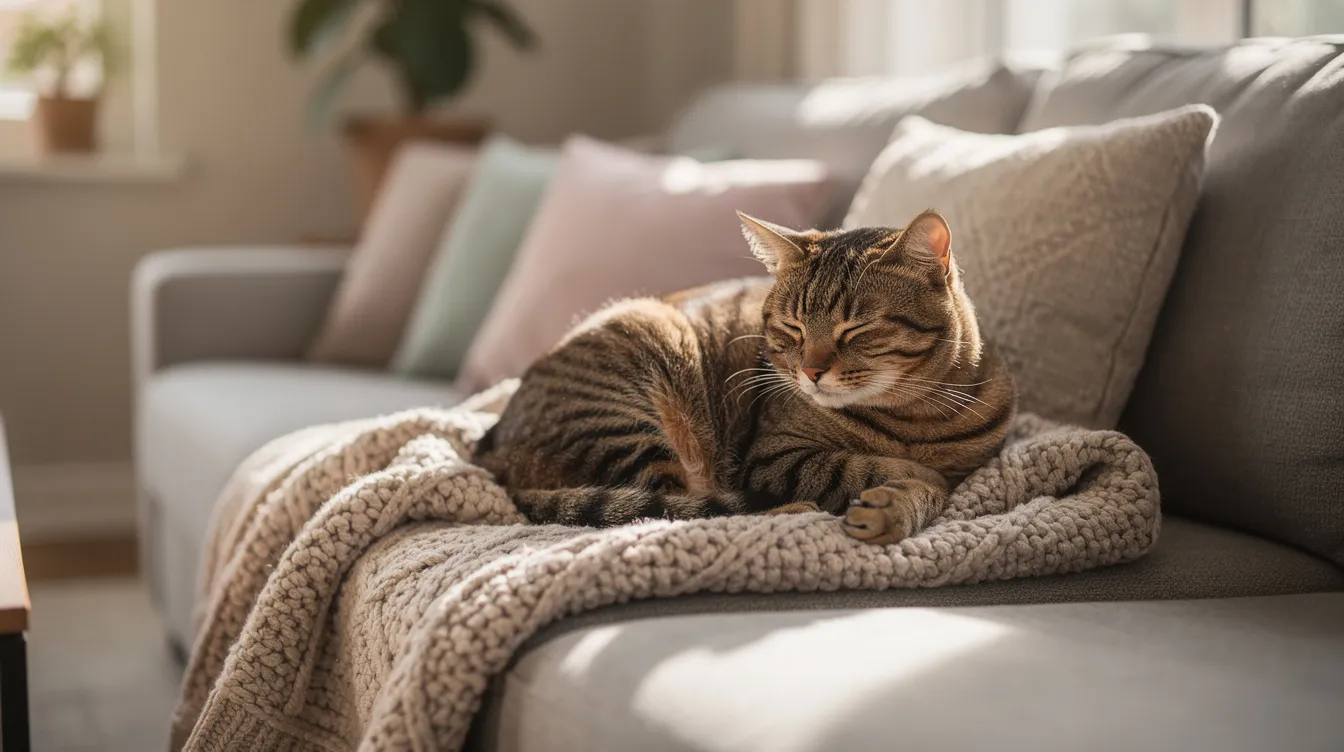
Most US pet cats are indoor cats, and that indoor lifestyle is a major risk factor for weight gain. Indoor cats are more likely to be obese due to inactivity-fewer opportunities to climb, chase, and explore mean lower overall energy expenditure and more excess energy stored as fat.
Neutering compounds the issue. Neutered cats have a 20% lower metabolic rate than unneutered cats, yet appetite often increases after the procedure. When feeding is not adjusted, weight gain typically follows within one to three months.
Modern feeding practices play a large role as well. Free feeding from a bowl of energy-dense dry food, combined with excessive treats from multiple family members, leads to chronic overconsumption. Feeding dry food promotes weight gain more than canned food, and even 10–20 extra calories per day-roughly the equivalent of a single treat-adds up over weeks and months. Excessive treats can quickly increase a cat’s calorie intake beyond what its body needs.
Key risk factors for cat obesity include:
-
Middle age (approximately 5–12 years)
-
Neutered status
-
Male sex (in some studies)
-
Low spontaneous physical activity
-
Free feeding with energy-dense food
These are risk factors, not guarantees. Recognizing them early allows owners and their veterinarian to adjust diet and activity before obesity develops or worsens.
What are the major health risks of obesity in cats?
Obesity is not harmless “extra padding.” It is a chronic, inflammatory disease that affects nearly every organ system and is associated with decreased life expectancy. Research shows that obese cats have a 2.8-fold increase in mortality risk compared with lean cats.
Common health risks associated with feline obesity include diabetes, osteoarthritis, and heart disease. But the list extends further:
|
Body System |
Condition |
|---|---|
|
Endocrine |
Diabetes mellitus |
|
Musculoskeletal |
Osteoarthritis, joint stress |
|
Urinary |
Lower urinary tract disease, bladder stones |
|
Respiratory/Cardiovascular |
Breathing difficulty, cardiovascular strain |
|
Liver |
Hepatic lipidosis (during rapid weight loss) |
|
Skin and coat |
Dermatitis, matting, poor grooming |
Fat tissue is not inert storage. It acts as an active endocrine organ, releasing inflammatory signals and hormones that drive insulin resistance and chronic low-grade inflammation. Chronic low-grade inflammation associated with excess adipose tissue compromises the immune system and damages organs over time.
The impact on quality of life is significant. Overweight cats struggle to jump onto furniture, show less interest in play, cannot groom their lower body, and tire quickly during normal daily activities. While weight loss cannot cure every condition, even modest reduction in body weight improves comfort, mobility, and overall health.
How does obesity increase the risk of diabetes mellitus?
Obesity is one of the strongest modifiable risk factors for feline type 2–like diabetes mellitus, especially those cats who are indoor, middle-aged, and neutered. Overweight cats are significantly more prone to developing type 2 diabetes-studies suggest obese cats face a 2–4 times higher risk than cats at normal weight.
Excess body fat alters how the body responds to insulin. Fat cells release substances that reduce insulin sensitivity in muscle and other tissues. The pancreas must produce more and more insulin to keep blood sugar under control. Over time, this demand outpaces capacity, and diabetes mellitus develops. This pattern closely mirrors human type 2 diabetes, and obesity can lead to diabetes mellitus in cats through this same mechanism of insulin resistance.
Early warning signs in overweight cats include:
-
Increased thirst
-
Frequent urination
-
Weight loss despite a good appetite
-
Lethargy or decreased activity
Any of these signs warrant an urgent veterinary exam. Achieving and maintaining ideal body condition can reduce the risk of developing diabetes. For some newly diagnosed cats, veterinarian-supervised weight loss can contribute to diabetic remission-a meaningful reversal that improves a cat’s life dramatically.
Any diet change for a diabetic or high-risk cat must be planned closely with a veterinarian, as calorie changes and weight loss can affect insulin dosing.
How does excessive weight affect a cat’s joints and mobility?
Extra pounds worsen or accelerate the onset of osteoarthritis. Overweight and obese cats place extra mechanical load on their hips, knees, elbows, and spine, and obese cats face a higher risk of joint stress and arthritis. Studies indicate that obese cats are nearly five times more likely to show lameness than lean cats.
Typical signs of joint discomfort in an obese cat include:
-
Reluctance to jump onto beds or counters
-
Hesitation using stairs
-
Stiffness after resting
-
Decreased willingness to play
-
Changes in litter box use (avoiding high-sided boxes)
Beyond simple “wear and tear,” inflammation from fat tissue worsens joint disease at a biochemical level. Adipose-derived inflammatory cytokines degrade cartilage and promote synovial inflammation, even in joints that are not bearing extra weight.
Gradual, controlled weight loss has been shown to improve mobility and activity scores in overweight pets with arthritis. As cats approach their ideal weight, many become more playful and interactive. Pain relief and any exercise plan for an obese cat should always be discussed with a veterinarian, especially in senior cats or those with suspected orthopedic problems.

How does obesity impact a cat’s heart, breathing, and circulation?
While primary heart disease in cats is often related to conditions other than obesity, excess fat can still impair breathing and cardiovascular function. Carrying excess fat restricts the chest cavity and raises the workload on the heart and lungs. Obesity increases the risk of cardiovascular disease in cats, particularly when existing conditions are present.
Fat accumulation in the chest and abdominal area reduces lung expansion. Obese cats may show faster resting breathing rates, reduced tolerance of heat, and panting or open-mouth breathing with mild exertion. As fat accumulates around internal organs, blood volume increases, placing additional strain on the heart.
Owners should watch for these warning signs:
-
Increased resting respiratory rate
-
Noisy or labored breathing
-
Exercise intolerance or reluctance to move
-
Panting after minimal activity
Any cat with breathing difficulty should be treated as an emergency. Where weight loss is appropriate, it should always be pursued in partnership with a veterinarian to avoid over-exertion and ensure safe pacing.
What other health problems are linked to obesity in cats?
Obesity is linked with several additional health problems beyond diabetes and joint disease, many of which reduce a cat’s comfort and ability to enjoy daily life.
-
Hepatic lipidosis: Obese cats are at risk for hepatic lipidosis, a liver disease triggered by rapid or unplanned weight loss. When an overweight cat stops eating or loses weight too quickly, fat mobilizes to the liver faster than it can be processed, potentially causing liver failure.
-
Urinary tract disease: Obesity increases risks of bladder obstruction and urinary-tract problems. Overweight cats are statistically more prone to bladder stones and lower urinary tract infections, partly due to sedentary habits, reduced water intake, and more concentrated urine.
-
Skin problems: Obese cats often cannot reach their lower back, tail base, and perineal area to groom. This leads to greasy coat, dandruff, hair matting, and dermatitis. Studies show roughly 2.3 times higher risk of non-allergic skin disease in obese animals.
-
Anesthesia and surgery: Excessive weight increases mortality risk under sedation and complicates drug dosing, imaging, and wound healing.
-
Reduced quality of life: Difficulty jumping, limited play, and decreased stamina during normal activities all diminish a cat’s daily enjoyment.
Body condition also affects how accurately some health conditions can be examined or imaged, potentially complicating veterinary care. Keeping a cat close to ideal weight reduces both the chance and severity of these secondary issues and can lower long-term veterinary costs.
How can I tell if my cat’s body condition is healthy at home?
Many owners underestimate their cat’s weight. Learning to assess your cat’s body condition at home is a practical first step, and the best at-home method to assess a cat’s weight is a body-condition check.
Here is a simple hands-on guide:
-
Feel the ribs: Run your fingertips along your cat’s sides. At a healthy weight, ribs feel like the back of your hand-covered by a thin layer but easy to count. If they feel more like your knuckles with no covering, the cat may be underweight. If you cannot feel ribs at all, or they feel like your palm pressed flat, the cat is likely overweight.
-
Look from above: You should see a gentle inward curve behind the ribs forming a waist. If the body is barrel-shaped with no waist, extra weight is present.
-
Look from the side: Check for an abdominal tuck-the belly should slope slightly upward toward the hind legs. A belly that hangs low or swings side to side suggests excess weight.
If ribs are difficult to feel, the waist is lost from above, and the back appears broad and flat, your cat is likely above ideal weight. Book a veterinary appointment for a proper body condition score and weigh-in.
Home assessment is a screening tool only. Any concerns about a cat’s weight or body condition must be discussed with a veterinarian before adjusting food or exercise.
How do vets assess and monitor an overweight cat?
Veterinarians combine measured body weight, body condition score, and muscle condition score to create a full picture of a cat’s weight-related health. This goes well beyond what a bathroom scale can tell you.
A typical veterinary assessment includes:
-
Weighing the cat on a calibrated scale
-
Palpating ribs, spine, and abdomen for fat pads
-
Assigning a BCS on a 1–9 or 1–5 scale
-
Evaluating muscle condition, coat quality, and overall body condition
Vets may also recommend blood and urine tests to screen for obesity-related diseases such as diabetes mellitus, liver changes, and other metabolic issues before designing a weight loss plan.
From the BCS and current weight, the vet estimates ideal weight and calculates daily calorie targets designed to produce a safe weight-loss rate of roughly 1–2% of body weight per week. For a 15 lb cat, that translates to about 0.15–0.3 lb per week.
Monthly weigh-ins are crucial for tracking weight loss progress. Follow-up visits-often every two to four weeks-allow the veterinary team to adjust the diet plan and ensure the cat is losing fat without losing excessive muscle mass.
How can I help my indoor cat lose weight safely?
Never start a drastic diet or fast a cat. Sudden food restriction can trigger liver disease. All weight-loss plans must be created in consultation with a veterinarian. Weight loss in cats should be gradual and guided by a veterinarian, and a gradual weight loss may take up to a year for obese cats.
Diet and feeding
-
To manage a cat’s weight, measure food rather than free-feeding. Use a kitchen scale for precision-scoops and cups are unreliable.
-
Discuss veterinary therapeutic weight-management diets with your vet. These formulas deliver higher protein and controlled calories so that calorie-restricted diets help maintain lean muscle mass during weight loss.
-
Small, frequent meals can help weight control in cats and improve satiety throughout the day.
-
Obese cats should consume no more than 10% of daily calories from treats. Where possible, use a portion of the daily food allowance as treats instead of adding extras.
-
Canned food tends to be lower in energy density than dry food and can help with portion control.
Activity and enrichment
-
Interactive play can increase energy expenditure for overweight cats. Short sessions with wand toys, balls, or laser pointers two to three times daily are a good starting point.
-
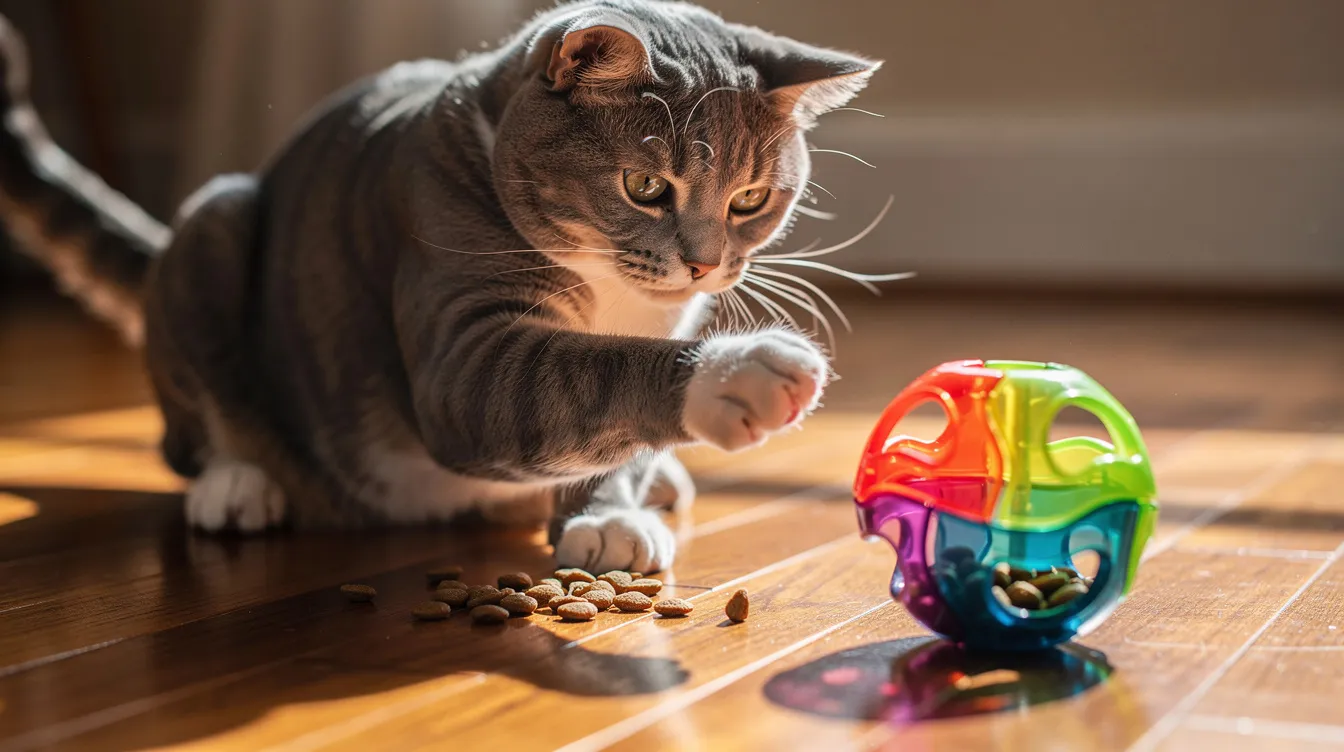
Feeding toys can encourage exercise during mealtime. Puzzle feeders and food-dispensing balls turn eating into physical activity.
-
Climbing structures, window perches, and hiding food around the home tap into natural hunting behavior.
Monitoring
-
Weigh your cat every two to four weeks at the vet clinic or on a reliable home scale.
-
A typical safe weight-loss rate is about 1–2% of current body weight per week. If weight loss stalls or exceeds this range, contact your vet for adjustment.
Can maintaining an ideal weight really extend my cat’s life?
Overweight status is associated with reduced longevity and increased mortality risk in companion animals, including both cats and dogs. Maintaining ideal body condition is linked to healthier, often longer lives. While large randomized lifespan studies in cats are fewer than in dogs, the metabolic evidence is consistent and compelling.
Overweight cats are more likely to develop chronic diseases-diabetes mellitus, mobility-limiting joint disease, and other diseases-that shorten life span and are more difficult and costly to manage once established. Maintaining lean body condition from early adulthood reduces the risk or delays the onset of several age-related health conditions.
It is never too late to see benefits. Even older cats typically experience better comfort, mobility, and energy levels when they move toward ideal weight under veterinary supervision. The treatment of obesity through safe, gradual weight management belongs alongside preventive dental care and vaccination as a lifelong part of caring for your cat’s life, in partnership with your veterinary team.
Weight management is not about perfection-it is about consistent, informed choices that protect your cat’s health for years to come. Talk to your veterinarian about scheduling a body condition assessment at your cat’s next visit.
Frequently Asked Questions
How fast should my cat lose weight?
In most cases, a safe weight-loss rate is about 1–2% of the cat's body weight per week. For example, a 10 lb (4.5 kg) cat should lose roughly 0.1–0.2 lb per week. Faster loss puts the cat at risk for hepatic lipidosis, a potentially fatal form of liver disease. The exact target rate and calorie allowance must be set and regularly checked by a veterinarian, as age, current health, and concurrent diseases all influence the plan.
Is a small "belly pouch" always a sign my cat is overweight?
Not necessarily. Many healthy cats have a natural abdominal fat pad called the primordial pouch. In an overweight cat, however, this area is larger and often swings noticeably from side to side during walking. Focus on overall body condition-rib feel, waistline, and back profile-rather than the belly pouch alone. Ask your vet to demonstrate a body condition score during your next visit.
Can I just reduce my cat's current food by half to help them lose weight?
Simply cutting a regular diet in half can lead to nutrient deficiencies and may still not achieve an appropriate calorie level. More importantly, sudden or severe food restriction can trigger hepatic lipidosis in overweight cats. Professional veterinary guidance and, often, a therapeutic weight-management diet are the safest approach to meaningful, sustained weight loss.
Do older cats still need to lose weight, or is it safer to leave them a bit heavy?
Most senior cats still benefit from achieving a healthier body condition, especially those with joint discomfort or elevated diabetes risk. However, decisions about weight loss in older cats must be individualized and made with the veterinarian, who can balance risks and benefits and set a slower, gentler weight-loss pace if appropriate. Preserving muscle mass is particularly important in aging cats.
Should I switch to a "light" or "indoor" cat food on my own?
Over-the-counter "light" or "indoor" formulas vary widely in calorie density and may not provide the controlled nutrition needed for safe, predictable weight loss in an obese cat. Discuss any diet change with a veterinarian, who can help select an appropriate product, calculate the correct portion, and monitor progress so that your cat's nutritional needs are fully met during weight reduction. Veterinary medicine offers purpose-formulated therapeutic diets that are more reliable for significant weight management.
References
- Association for Pet Obesity Prevention. 2022 State of U.S. Pet Obesity Report. APOP; 2022.
- German AJ. Obesity in companion animals. Journal of Small Animal Practice. 2006;47(11):660–665.
- German AJ, Holden SL, Moxham GL, et al. A simple, reliable tool for owners to assess the body condition of their dog or cat. Journal of Nutrition. 2006;136(7 Suppl):2031S–2033S.
- Lund EM, Armstrong PJ, Kirk CA, Klausner JS. Prevalence and risk factors for obesity in adult cats from private US veterinary practices. International Journal of Applied Research in Veterinary Medicine. 2005;3(2):88–96.
- Scarlett JM, Donoghue S. Associations between body condition and disease in cats. Journal of the American Veterinary Medical Association. 1998;212(11):1725–1731.
- AAHA. 2021 AAHA Nutrition and Weight Management Guidelines for Dogs and Cats. Journal of the American Animal Hospital Association. 2021;57(3):153–178.
- WSAVA Global Nutrition Committee. WSAVA Global Nutrition Guidelines. Journal of Small Animal Practice. 2011;52(7):385–396.
- Verbrugghe A, Hesta M. Cats and carbohydrates: the carnivore fantasy? Veterinary Sciences. 2017;4(4):55.
- University of Liverpool, ROYAL CANIN Weight Management Clinic. Clinical outcomes of controlled weight loss in obese cats. Data on file; University of Liverpool Small Animal Teaching Hospital.
- Flanagan J, Bissot T, Hours MA, et al. Success of a weight loss plan for overweight dogs: the results of an international weight loss study. PLoS One. 2017;12(9):e0184199.

Georgia Woods
RVN — ROYAL CANIN® Weight Management Clinic Nurse
Georgia Woods trained as a Veterinary Nurse in 2001 and qualified in 2004, going on to run nurse-led obesity clinics and work in emergency and critical care. She completed the ROYAL CANIN® Pet Health Councillor course, and since 2015 has been the ROYAL CANIN® Weight Management Clinic Nurse at the University of Liverpool Small Animal Teaching Hospital, where she works exclusively with obese pets.
This article is for general information only and is not a substitute for professional veterinary advice. Always consult your veterinary surgeon about the health of your pet.