How Much Should I Feed My Cat to Lose Weight?
Medically reviewed by Dr. Alex German, BVSc PhD CertSAM DipECVIM-CA — Reader in Small Animal Medicine, University of Liverpool
Key Takeaways
- A typical indoor neutered 10-pound (4.5 kg) cat often needs around 180–200 calories per day for weight loss, but exact amounts depend on body condition, current and ideal weight, age, and health status. Do not copy this example without veterinary guidance.
- Assessing body condition score, choosing an appropriate veterinary weight-loss cat food, and accurately measuring every meal (including treats) matter more than simply knowing how much food by volume.
- Safe weight loss combines controlled calories with more exercise and regular weigh-ins every 1–2 weeks, ideally at a clinic or using the same home scale, with adjustments made only every couple of weeks.
- Most veterinarians calculate weight loss based on feeding approximately 80% of the calories required for the cat's ideal weight.
- This article is written by the ROYAL CANIN Weight Management Clinic at the University of Liverpool. Owners should always work with their own veterinary team before changing their cat's diet or exercise plan.
Most overweight cats lose weight safely when fed roughly 70–80% of the calories needed to maintain their ideal weight – not their current weight. This must be calculated and monitored by a veterinarian because restricting calories too aggressively in cats can trigger hepatic lipidosis, a potentially fatal liver condition. Food should be carefully weighed on a gram scale, and weight loss should proceed at about 1–2% of body weight per week.
What is a healthy weight for my cat?
Many spayed or neutered mixed-breed adult cats fall between 8–12 lb (3.6–5.4 kg) for a healthy weight, but some breeds are naturally smaller (like the Siamese) or larger (like the Maine Coon). There is no single number that defines a “healthy” cat.
Your veterinarian distinguishes between a general “healthy weight” range and your cat’s ideal weight – the specific target they set for your individual pet based on frame size, age, breed, and health status. This target weight is the foundation of any weight management plan.
The standard tool for evaluating body condition is the 9-point body condition score system. A cat’s ideal body condition score is 5 on a 9-point scale, which indicates visible waist, palpable ribs, and a small abdominal fat pad. A BCS of 6/9 or higher indicates an overweight cat, while 8/9 or above signals obesity. Each point above ideal BCS corresponds to roughly 7–10% excess body weight.
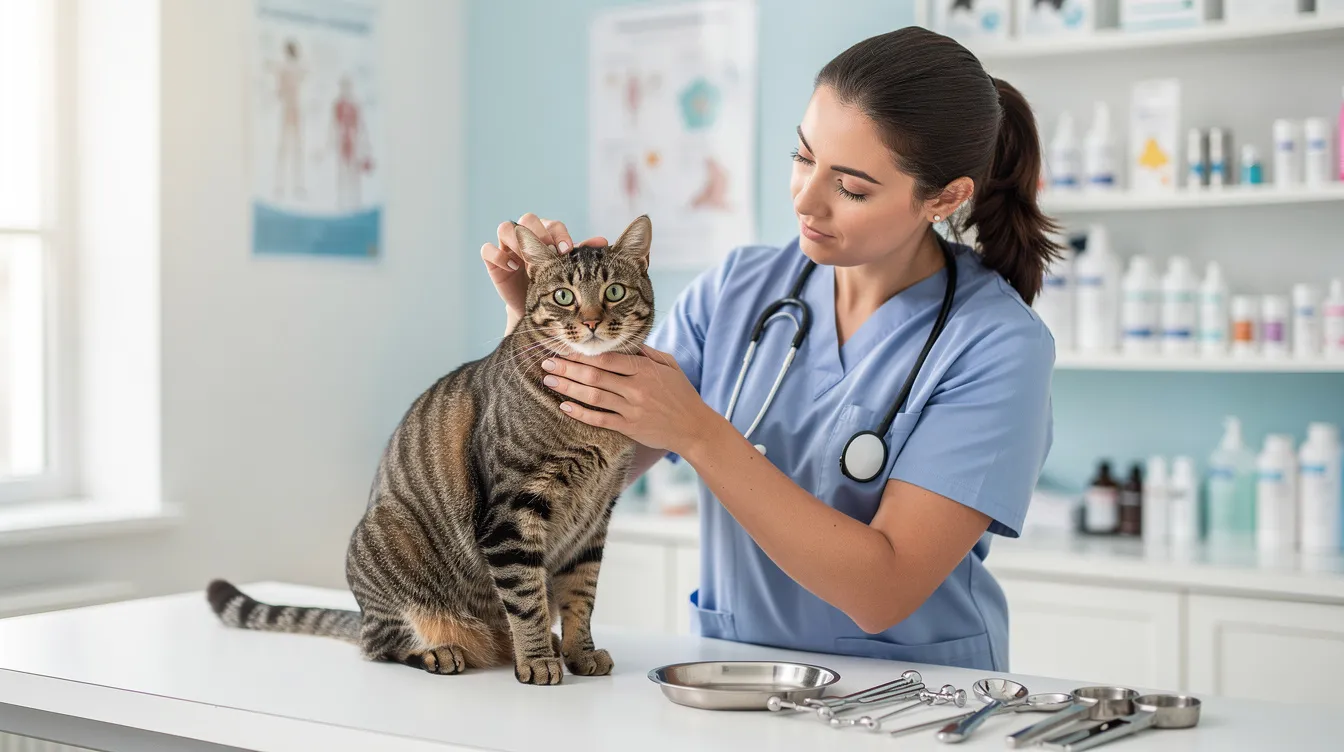
Because fur length and body shape can be misleading, only a hands-on assessment by your veterinarian can reliably define your cat’s ideal weight and ideal BCS.
How do I know if my cat is overweight or obese?
Over 50% of cats in the U.S. are overweight or obese, according to surveys by veterinary obesity organizations. Obese cats are at higher risk for diabetes and arthritis, and obesity can lead to decreased life expectancy. Obese cats also often experience respiratory and heart diseases. Early recognition of excess weight improves outcomes significantly.
Here are signs you can check at home:
-
Rib check: You should be able to feel your cat’s ribs with light pressure. If you need to press firmly, there is likely excess fat covering them.
-
Waist view from above: A cat at ideal body condition has a visible waist behind the ribs. If the body looks rectangular or rounded from above, your cat may be carrying excess weight.
-
Abdominal tuck: Viewed from the side, a healthy cat has a slight upward tuck behind the ribcage. A hanging belly or prominent fat pad suggests the cat is overweight.
-
Grooming difficulty: Cats that cannot reach certain parts of their body to groom may have too much fat restricting their flexibility.
There is an important distinction between overweight cats (slightly above ideal body condition, often BCS 6–7/9) and obese cats (BCS 8–9/9), who may already show decreased activity, reluctance to jump, reduced play, or trouble using the litter box. These behavioral signs warrant a veterinary exam.
How many calories should my cat eat to lose weight?
Safe feline weight loss usually involves feeding about 70–80% of the calories needed to maintain the cat’s ideal weight, not its current weight. To help a cat lose weight effectively, you must feed them based on their target ideal weight. A specific daily calorie target must be calculated based on the cat’s target weight rather than their cat’s current weight.
Here is how veterinary teams typically estimate weight-loss calories:
-
Determine ideal weight. Your veterinarian sets a target weight based on the cat’s frame and body condition.
-
Calculate resting energy requirement (RER). A common formula is RER = 30 × (ideal body weight in kg) + 70.
-
Apply the weight-loss factor. Multiply RER by approximately 0.8 to get the daily calorie allowance for weight loss.
Worked example (illustration only): A neutered indoor cat weighing 10 lb (4.5 kg) with a target weight of 8.8 lb (4.0 kg) would have an RER of about 190 kcal/day (30 × 4.0 + 70). At 80% of RER, the weight-loss allowance would be roughly 150–160 kcal per day. As a general rule, you can feed your cat 20 calories per pound to maintain weight, and for weight loss, feed 40 fewer calories per day. A 10-pound cat needs about 200 calories daily at maintenance, so weight loss diets typically aim for fewer calories than that.
Do not guess how many calories your cat needs or rely on online calculators without veterinary input – particularly for obese cats or those with diabetes, kidney disease, or arthritis. Cats should lose 1% to 2% of their body weight weekly, and your veterinarian will adjust calories if weight loss is too fast or too slow.
How much food is that in cups, cans, or pouches?
How much food you serve depends entirely on the energy density of your specific cat food, which varies widely between products. Always check the label.
Typical calorie ranges:
|
Food Type |
Calories per Serving |
Typical Serving |
|---|---|---|
|
Dry food |
300–450 kcal per cup |
1 measuring cup |
|
Wet food (canned food) |
70–100 kcal per can |
3 oz (85 g) can |
Canned or wet food often contains fewer calories per volume and helps cats feel full faster than dry kibble, making it a useful tool during weight loss.
Example: If your veterinarian prescribes 150 kcal per day and you use a dry food with 350 kcal per cup, you would feed approximately 0.43 cups – just under half a cup. If using wet food at 90 kcal per 3 oz can, you would need about 1⅔ cans per day.
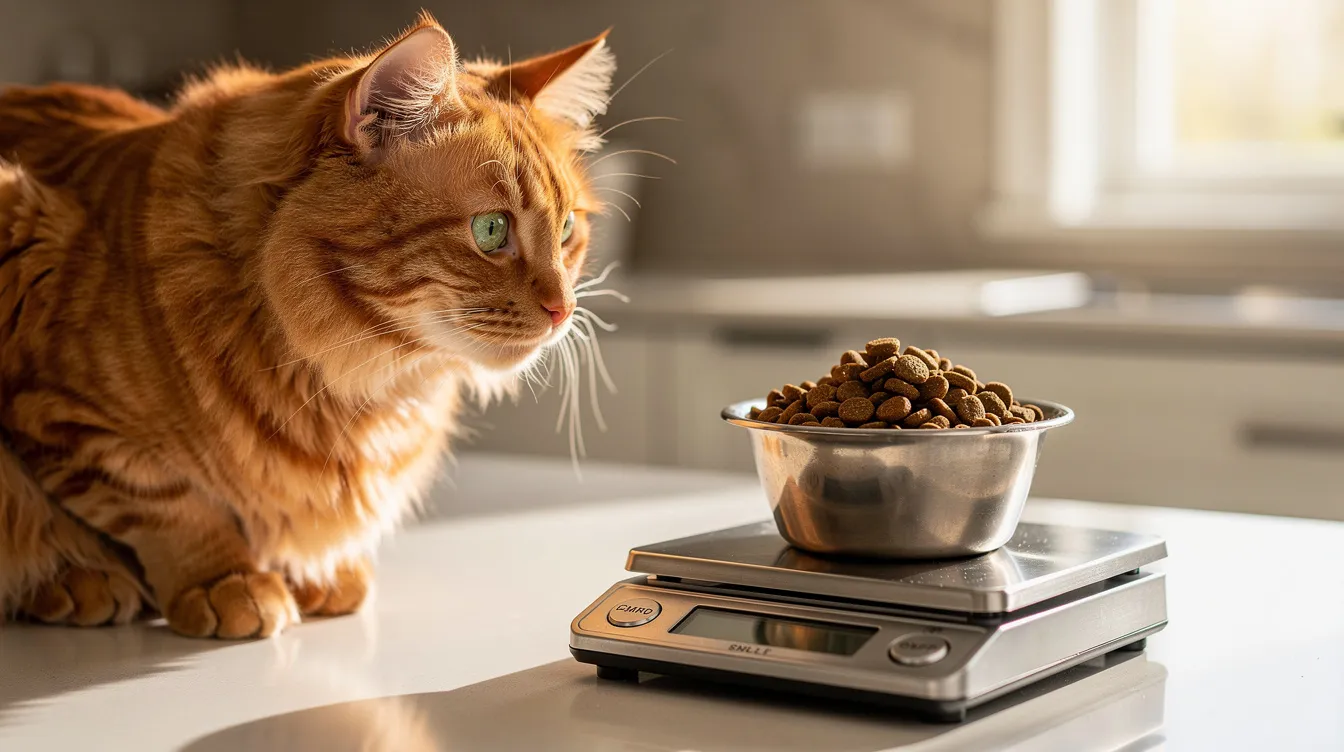
Use a kitchen gram scale for accurate food measurement rather than relying on scoops or visual estimates. Even a small overfill of 5–10% can stall weight loss entirely. To combine dry and wet cat food in a mixed-feeding plan, allocate a portion of the daily calorie budget to each and confirm the split with your veterinary team.
What should I look for in a weight-loss cat food?
There is an important difference between veterinary therapeutic weight-loss diets and over-the-counter “weight management” or “light” cat food. Only therapeutic diets are formulated for sustained calorie restriction without risking nutrient deficiencies. Substantial calorie restriction may require a therapeutic weight-loss food to avoid nutrient deficiencies.
Key features of an effective weight-loss diet:
-
Reduced calorie density so the cat can eat a satisfying volume without excess energy intake
-
High-quality protein to preserve lean muscle during weight loss
-
Controlled fat to limit calorie-dense macronutrients
-
Adjusted fiber levels to support satiety – weight management foods are low in calories and high in fiber
-
Balanced essential nutrients including vitamins and minerals formulated for restricted feeding
-
L-carnitine – weight management foods often contain L-carnitine to aid fat burning and support fat metabolism
Simply feeding less of a standard maintenance diet risks nutrient deficiencies and increases hunger. Weight control foods help maintain lean muscle during weight loss while meeting the cat’s nutritional needs at a reduced calorie intake.
Your veterinary team will recommend a specific therapeutic diet based on the cat’s weight, age, concurrent diseases, and dietary preferences (dry, wet, or mixed), and will adjust if your cat does not accept the new food.
How do I start a safe weight-loss plan for my cat?
Weight-loss programs for cats must be medically supervised because rapid weight loss, especially in obese cats, can lead to hepatic lipidosis – a serious, potentially life-threatening liver condition. Weight loss should be gradual, ideally 1–2% of body weight weekly.
Here is what to expect when enrolling your cat in a structured weight loss program:
-
Full veterinary examination – including body condition and muscle condition scoring
-
Health screening – bloodwork to check for diabetes, thyroid disease, kidney function, and other health issues
-
Diet review – your veterinarian will assess current food, portion sizes, treats, and any table scraps using a food diary
-
Goal weight set – the veterinary team establishes a clear target weight and calculates a starting daily calorie allowance
-
Food selection – a specific therapeutic diet is chosen and the precise quantity calculated, including any treats
-
Schedule established – structured meals on a consistent schedule replace free-feeding
All family members must follow the plan. Even small unplanned extras – a few kibbles here, a table scrap there – can derail progress entirely.
How should I monitor my cat’s weight loss at home?
Monitoring is just as important as deciding how much food to feed. Monitor progress by weighing the cat weekly or bi-weekly to track weight changes. Cats should be weighed every other week during weight loss, using the same scale under similar conditions and at the same time of day.
Options for weighing include your veterinary clinic’s scales (most accurate), a baby or pet scale at home, or a human scale using subtraction (weigh yourself, then weigh yourself holding your cat, and subtract).
Target a weekly weight change of roughly 1–2% of body weight. If your cat’s weight is dropping faster or slower than expected, your veterinarian should reassess calorie intake and health status.
Beyond the scale, track body condition changes – monitor your cat’s body condition by feeling their ribs, observing their waistline, and checking the abdominal tuck. Note activity levels, playfulness, and grooming in a simple log to share with your veterinary team.
Follow the “two-week rule”: avoid changing food amounts more often than every two weeks unless advised by a veterinarian, to allow time to see the true effect of any adjustment.
How can I help my cat get more exercise?
More exercise alone rarely causes meaningful weight loss in cats, but combined with controlled feeding it helps burn extra calories, preserve lean muscle, and improve overall wellness. Cats naturally engage in short bursts of activity, not long sessions – so plan several brief play periods each day rather than one marathon.
Practical ideas to try:
-
Wand and feather toys – interactive play boosts your cat’s natural hunting instincts and encourages chasing, pouncing, and leaping
-
Laser pointers – laser pointers can effectively encourage cats to exercise; always end the session with a tangible toy so the cat gets a “catch”
-
Food puzzles – food puzzles stimulate mental activity and encourage movement, turning meals into an enrichment activity
-
Stairclimbing – stairclimbing increases your cat’s activity level significantly; try placing food or toys on different floors
-
Cat trees and climbing shelves – vertical space encourages climbing and jumping
For older or arthritic cats, low-impact activities and environmental changes (like easier litter box access and ramps) are important. Discuss any new exercise plan with your veterinarian, and never force activity or cause stress.

How do treats and begging affect my cat’s weight loss?
Treats count toward the daily calorie allowance and can easily derail weight loss if not carefully controlled. Treats should never exceed 10% of a cat’s total daily caloric intake, with at least 90% supplied by the main weight-loss cat food.
Low-calorie treat options include:
-
Setting aside a small portion of the cat’s daily kibble ration to use as treats throughout the day
-
Choosing specifically labeled low-calorie cat treats with calorie counts verified on the packaging
-
Offering tiny pieces of cooked lean protein (such as plain chicken), counted into the daily budget
To reduce begging, feed meals on a consistent schedule, use puzzle feeders for mental enrichment, and offer play or grooming sessions instead of food. Ignore begging rather than rewarding it – even occasional concessions teach the cat that persistence works.
In multi-cat homes, separate feeding stations or microchip-controlled feeders may be needed to stop an overweight cat from stealing other cats’ food and consuming more calories than planned.
When should I call my veterinarian during my cat’s weight-loss program?
Close communication with your veterinary team is essential throughout the weight-loss process. Veterinary supervision keeps the plan both safe and effective. Veterinary care should be sought promptly in the following situations:
-
Your cat eats significantly less than prescribed or stops eating for more than 24 hours (risk of hepatic lipidosis)
-
Vomiting, diarrhea, or signs of GI upset that persist beyond a single episode
-
Extreme lethargy or sudden behavioral changes
-
Very rapid weight loss beyond the agreed 1–2% per week rate
Scheduled rechecks every 2–4 weeks allow the veterinarian to reassess body condition, adjust food amounts, and screen for emerging health problems. If your cat’s weight has not changed after 3–4 weeks on the plan, hidden calories, inaccurate measurements, or an underlying medical issue may be the cause.
Never drastically cut food below the veterinarian’s recommendation without professional guidance. This is especially critical in obese cats, where severe restriction can be life-threatening.
What happens after my cat reaches a healthy weight?
Once your cat reaches its goal weight and ideal body condition, the focus shifts from losing weight to helping them maintain weight long term. Your veterinary team will gradually increase calories to find the maintenance level at which body weight remains stable over several weeks.
Some cats can transition from a therapeutic weight-loss diet to a maintenance or weight-control cat food, while others may need to remain on a specialized formula to prevent regain. Research from the University of Liverpool has shown that post-weight-loss energy requirements tend to be lower than expected, meaning cats that have lost weight may need fewer calories than an average cat of the same size that was never overweight.
Ongoing routine checks – at least every 6–12 months – are essential to monitor body condition and adjust feeding as life stage, activity level, or health status change. Continue regular weigh-ins at home, structured meals, controlled treats, and daily opportunities for more exercise. Weight management is a lifelong commitment, not a one-time program.
Frequently Asked Questions
Can I just feed my cat less of its current food to make it lose weight?
Simply reducing portions of a standard maintenance cat food can lead to hunger, poor satiety, and potential nutrient deficiencies if calories are cut too far below the food's intended feeding range. Veterinary teams usually prefer a purpose-formulated weight-loss cat food fed in precisely calculated amounts, because these diets are designed to deliver all essential nutrients even at reduced calorie levels. Veterinary weight-loss foods are formulated for calorie restriction while remaining nutritionally complete.
How long will it take for my overweight cat to reach a healthy weight?
The timeline depends on how much excess weight the cat carries. At a safe rate of 1–2% of body weight per week, mildly overweight cats may reach their target weight in two to four months, while very obese cats may take six to twelve months or longer. Regular veterinary rechecks keep the process safe and allow adjustments as your pet approaches its goal weight.
Is it dangerous if my cat loses weight too quickly?
Yes. Rapid weight loss - especially in obese cats or those that stop eating - can trigger hepatic lipidosis, a serious liver condition that requires emergency veterinary medicine intervention. Contact your veterinarian immediately if your cat refuses food for more than 24 hours or appears to be losing weight faster than the agreed rate.
Do indoor cats need fewer calories than outdoor cats?
An indoor cat typically expends less energy than a highly active outdoor cat, so daily calorie needs for maintaining or losing weight are usually lower. Most cats living indoors benefit from structured play and environmental enrichment to compensate for reduced natural activity. Your veterinarian will factor in activity level, along with age and nutrition needs, when calculating how much food to feed.
Can my senior cat safely lose weight?
Many senior adult cats benefit from reaching a healthier body condition, but older cats often have concurrent medical issues such as kidney disease, arthritis, or decreased activity that complicate weight loss. Any weight-loss plan for a senior pet must start with a thorough veterinary exam, may involve specialized diets, and often uses slower weight-loss targets with closer monitoring. Dogs and cats alike benefit from age-appropriate veterinary care during weight management.
References
- Brooks, D., Churchill, J., Fein, K., et al. 2014. 2014 AAHA Weight Management Guidelines for Dogs and Cats. Journal of the American Animal Hospital Association , 50(1): 1–11.
- German, A. J., Holden, S. L., Moxham, G. L., et al. 2006. A simple, reliable tool for owners to assess the body condition of their dog or cat. Journal of Nutrition , 136(7 Suppl): 2031S–2033S.
- German, A. J., Holden, S. L., Bissot, T., et al. 2007. Dietary energy restriction and successful weight loss in obese client-owned cats. Journal of Veterinary Internal Medicine , 21(6): 1174–1180.
- Laflamme, D. P. 1997. Development and validation of a body condition score system for cats: a clinical tool. Feline Practice , 25(5–6): 13–18.
- WSAVA Global Nutrition Committee. 2011. WSAVA Global Nutrition Guidelines. World Small Animal Veterinary Association.
- Association for Pet Obesity Prevention. 2022. U.S. Pet Obesity Survey Results: Prevalence of Overweight Dogs & Cats. Association for Pet Obesity Prevention.
- Strickland, R. 2012. Feline Hepatic Lipidosis. Journal of Feline Medicine and Surgery , 14(9): 604–612.
- German, A. J. 2010. Obesity in Companion Animals. Journal of Veterinary Internal Medicine , 24(1): 3–19.

Georgia Woods
RVN — ROYAL CANIN® Weight Management Clinic Nurse
Georgia Woods trained as a Veterinary Nurse in 2001 and qualified in 2004, going on to run nurse-led obesity clinics and work in emergency and critical care. She completed the ROYAL CANIN® Pet Health Councillor course, and since 2015 has been the ROYAL CANIN® Weight Management Clinic Nurse at the University of Liverpool Small Animal Teaching Hospital, where she works exclusively with obese pets.
This article is for general information only and is not a substitute for professional veterinary advice. Always consult your veterinary surgeon about the health of your pet.